BOTANY WITH THE BASICS OF HYDROBOTANY (AQUATIC PLANTS OF UKRAINE) - B.Ye. Yakubenko - 2011
VI. PLANT SYSTEM WORLD
LOWER SPORE PLANTS
GENERAL CHARACTERISTICS AND FEATURES
Order Volvocales - Volvocales
It unites monad unicellular and colonial (cenobial) green Algae (about 1,000 species) with two to four isokont and isomorphic flagella, in which the basal bodies are shifted clockwise and have a 1-7 orientation. The Cells of the vast majority of species have an outer wall (e.g., Chlamydomonas, Pandorina, Volvox, etc.), but there are forms lacking it and equipped only with a Cell/33.html">Plasma Membrane (Dunaliella, Raciborskiella). The presence of contractile vacuoles (two, sometimes more) and a stigma is characteristic. METABOLISM/14.html">Chloroplasts are of various shapes, parietal, with a pyrenoid bordered by a starch sheath. Various types of sexual reproduction (holo-, iso-, hetero-, and oogamy) are known with a haplophasic life cycle, zygotic chromosome reduction, and the absence of Morphology/12.html">ALTERNATION OF GENERATIONS.
The order includes objects of aquaculture production and very common representatives of fresh and sometimes hypersaline Water bodies (Dunaliella, Chlamydomonas, Haematococcus, Pandorina, Volvox).
Class="center">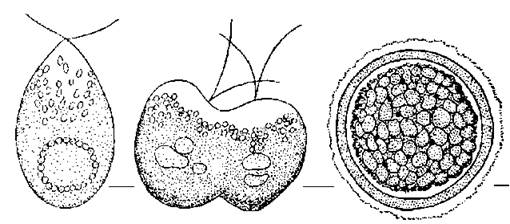
Fig. 26. Different Developmental Stages of Dunaliella salina: vegetative cell, its division, and cyst.
The genus Dunaliella - Dunaliella (Fig. 26). It unites unicellular algae with a symmetrical cell shape, lacking a Cell wall (naked), having only a densified outer layer of the Plasmalemma and two isokont flagella originating from the apical pole. Reproduction occurs by simple binary fission, and the sexual process is hologamy.
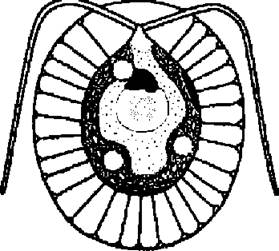
Fig. 27. Schematic representation of a vegetative cell of Haematococcus pluvialis
Dunaliella salina (Dunaliella salina) is the CAUSATIVE AGENT OF the red "bloom" of brine in salt lakes, an object of commercial aquaculture, and a producer of β-carotene and glycerin.
The genus Haematococcus - Haematococcus (Fig. 27). Unicellular biflagellate algae with a mucilaginous cell wall, in which the protoplast is located in the central part of The Cell, somewhat demarcated from The cell wall and connected to it only by radial cytoplasmic strands. There is a single parietal chloroplast with several pyrenoids. Characteristic features include the loss of motility and transition to a coccoid type (under unfavorable conditions) or The formation of akinetes colored red due to present carotenoids.
Haematococcus pluvialis (Haematococcus pluvialis) is the causative agent of the red water "bloom" in ephemeral water bodies and on the soil surface, the coloration of snow and ice (usually in mountainous areas), an object of commercial aquaculture, and a carotene producer.
The genus Chlamydomonas - Chlamydomonas (Fig. 28). Unicellular monad green algae ranging from ellipsoidal-cylindrical to spherical shapes, with a sturdy Cellulose-pectin cell wall, two apical flagella, a cup-shaped chloroplast with a single pyrenoid, a stigma, two pulsating vacuoles, and a clearly visible Nucleus in the center of the cell.
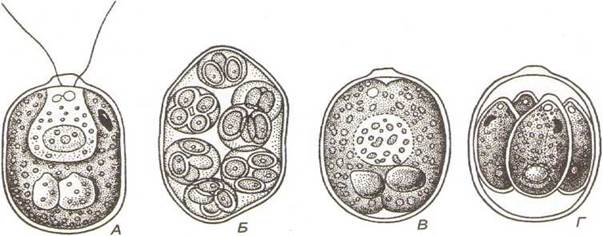
Fig. 28. Schematic representation of the developmental stages of species of the genus Chlamydomonas:
A - vegetative cell, B - palmelloid state, C - initial stage of protoplast division under asexual reproduction conditions,
D - daughter cells within the mother cell wall
Sometimes the cell wall is impregnated with iron or manganese salts and forms an additional strong armor - the theca. Reproduction occurs sexually and asexually via zoospores or hemizoospores (upon transition to the palmelloid state) and through iso-, hetero-, and oogamous types. Under unfavorable conditions, the loss of motility, mucilaginization of cells, and their transition to a palmelloid state are common (similarly to Representatives of the order Tetrasporales), which sometimes lasts significantly longer than the active movement period.
Species of the genus inhabit various biotopes, are frequently found on snow and ice, are typical representatives of ephemeral water bodies (ditches, puddles) and soils, and cause water "blooms." Model organisms (Chlamydomonas
reinhardtii and Ch. moewusii) for physiological-genetic and molecular-biological research.
The genus Pandorina - Pandorina (Fig. 29).
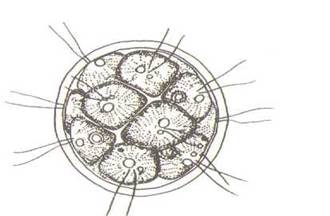
Fig. 29. General view of the coenobium of Pandorina morum with an outer mucilaginous capsule
A representative of the coenobial forms of the order. It features an oval, motile 16-celled coenobium with cells tightly arranged at the periphery, acquiring an angular shape and enclosed within a common mucous capsule. Reproduction occurs through the formation of a new coenobium from daughter cells upon the division of each mother cell, as well as sexually via isogamy. Following a resting period and meiotic division, the zygote produces a zoospore, from which daughter cells develop and unite into a new coenobium.
A typical representative of the plankton in various types of freshwater bodies, particularly ephemeral ones.
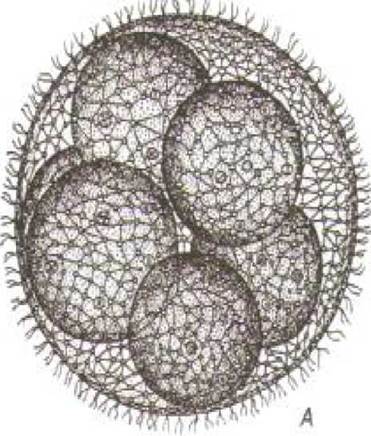
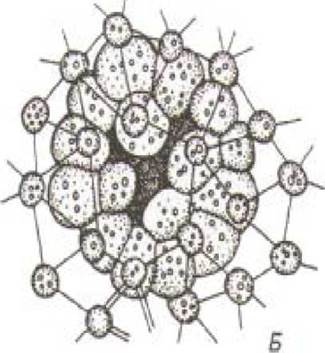
Fig. 30. General view of a mature coenobium with daughter colonies
(A) and a fragment of a young coenobium of Volvox globator (B) during the Formation of the spherical Structure
The genus Volvox (Fig. 30). A representative coenobial Organism up to 2–3 mm in diameter, characterized by a hollow spherical form consisting of 500 to 60,000 small vegetative biflagellate cells arranged in a single peripheral layer and interconnected by fine plasmodesmata. The internal cavity contains a fluid mucous substance, and the basal ends of the cells facing this mass are gelatinized. Cell Differentiation into vegetative and reproductive cells (gonidia) is observed, the latter being few in number (about 10) and capable of forming new daughter coenobia. The sexual process is oogamy, resulting in the formation of a zygote in which, after reduction division, only a single viable nucleus remains; it then germinates into a single zoospore, giving rise to a new coenobium. Both monoecious and dioecious species are known.
A typical planktonic organism found in various types of water bodies (lakes, ponds, swamps, rivers, and ephemeral pools). Volvox globator is an agent responsible for the "blooming" of water in ephemeral habitats such as puddles and ditches.
Last update: 07/08/2026
Editorial and Educational Adaptation: This material has been compiled based on the primary/original source text. The project team performed an editorial review, corrected technical inaccuracies, structured sections, and adapted the content for an educational format.
What was processed:
- elimination of formatting defects (OCR errors, structural breaks, corrupted characters);
- editorial organization of content;
- standardization of terminology in accordance with academic sources;
- verification of factual statements against the original source text.
All mentions of the author, publication year, and origin of the primary text have been preserved in accordance with the source.