BOTANY WITH BASICS OF HYDROBOTANY (AQUATIC PLANTS OF UKRAINE) - B.Ye. Yakubenko - 2011
X. SEED PLANTS
Family Evening Primrose (Onagraceae)
Predominantly herbaceous plants or subshrubs with simple leaves and opposite or alternate phyllotaxis. Flowers actinomorphic or sometimes slightly zygomorphic, mostly 4-merous, solitary in leaf axils or gathered in racemes. Calyx deeply 2- to 4-partite. Corolla consisting of 2 to 4 (5) free petals. Stamens equal in number or twice as many. Pistil with a 2- to 4-locular inferior Ovary; style with a capitate or 4-lobed stigma. Ovary inferior, adnate to the concave receptacle. Fruit a multiseeded (rarely 1- to 2-seeded) capsule, berry, or nutlet. Seeds small, smooth or papillate, often bearing a tuft of hairs at the apex.
There are 21 genera and 680 species known, distributed across almost all latitudes, mainly in the western regions of North and South America. Ukraine features 4 genera and 33 species of this family.
Water purslane (Ludwigia palustris (L.) Ell.). An annual aquatic/marsh plant with a thread-like creeping rhizome and a slender, 4-angled stem (Fig. 136). Phyllotaxis is opposite. Leaves petiolate, somewhat fleshy, glossy. Flowers solitary, axillary, nearly sessile, with two bracts. Perianth simple, calyx-like, formed of four segments persisting near the fruits. Pistil with a thread-like style and a capitate, 2-partite stigma. Flower formula: *P4A4G(4). Blooms in May–August (September). Fruit a 4-locular, many-seeded capsule. Seeds smooth, glossy.
Class="center">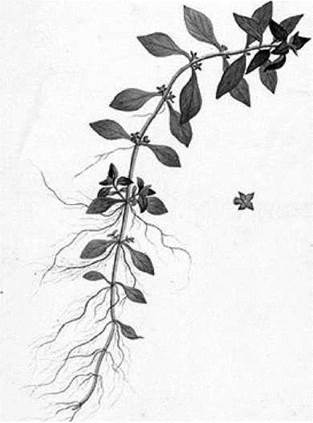
Fig. 136. Water purslane (Ludwigia palustris)
Water purslane is used for dyeing fabrics yellow.
Grows in standing and slow-flowing waters. In Ukraine, it is rarely found in Transcarpathia (Berehove District, vicinities of Berehove, Zmyvka village, Chorny Mochar tract). The plant is listed in the Red Data Book of Ukraine.
The genus Willowherb (Epilobium) is the largest genus in the family Onagraceae, represented by about 200 species. Mostly perennial herbaceous plants with long creeping shoots. Leaves exstipulate, sessile or short-petiolate, lower ones opposite, upper ones alternate. Flowers actinomorphic, bisexual, ebracteate, solitary (in the axils of upper leaves) or gathered in inflorescences. Calyx deeply 4-partite or deciduous. Corolla of 4 pink or white petals. Stamens eight, of which four are longer than the rest. Pistil with a 4-locular ovary, filiform style, and 4-partite or entire clavate stigma. Flower formula: *K4C4A4+4G(4). Fruit a linear, 4-angled, 4-locular, ribbon-like capsule opening by four Valves from apex to base. Seeds small, numerous, with a small tuft of white hairs at the end.
In Ukraine, 17 species of this genus are known; some of them are quite common in bogs, marshy riverbanks, damp meadows, and shrublands.
Hairy willowherb (Epilobium hirsutum L., Chamaenerion hirsutum Scop.). A perennial plant, 50-150 cm tall; uliginosophyte, entomophile, anemochore (Fig. 137). Rhizome shortened, ascending, with numerous adventitious roots. In autumn, long fleshy ROOT shoots develop, covered with scale-like leaves. Stem ascending, angled at the base, cylindrical higher up; rooting at the lower nodes. Stem, leaves, and ovary pubescent. Leaves 6-10 cm long, 1-2 cm wide, sessile, semi-amplexicaul, somewhat decurrent, oblong-lanceolate, densely serrate-dentate along the margin.

Fig. 137. Hairy willowherb
Flowers exceptionally large, 30 mm in diameter, perianth double, 4-merous. Sepals acute, petals purple, slightly emarginate at the apex. Ovary inferior, well-developed. Stigma 4-partite. Blooms in June–August. Fruit an elongated pod-like capsule opening to the base with four valves. Seeds up to 2 mm long, brown, densely papillate. Propagated by seeds and vegetatively—by rhizomes and fleshy shoots with scale-like leaves formed in autumn at the Base of the stem.
The plant is a honey plant, a source of Vitamins, and medicinal.
Grows on marshy riverbanks, damp meadows, and among shrubs throughout Ukraine, in the Carpathians only at the foothills, and in the Steppe and Crimea mainly along river and stream valleys.
Hoary willowherb / Pale willowherb (Epilobium parviflorum Schreb.). A perennial herbaceous plant, 20-60 cm tall; uliginosophyte, entomophile, anemochore. Rhizome shortened, ascending. Stem erect, branched. Leaves in the lower part of the stem narrowed into a winged petiole, in the middle part sessile, with a cuneate base, pubescent.
Flowers small, up to 8 mm in diameter, petals lilac, shallowly emarginate. Stigma 4-partite. Blooms in June–September. Hairs five times longer than the seed, spreading. Pappus hairs much longer than the seed. Propagated vegetatively by rhizomes and basal rosette shoots formed in autumn.
Grows in damp and marshy places along the banks of rivers, ponds, and ditches, mainly in the Forest-Steppe zone, less frequently in the Steppe.
Marsh willowherb (Epilobium palustre L.). A perennial herbaceous plant, 10-70 cm tall; uliginosophyte, entomophile, anemochore (Fig. 138). Rhizome plagiotropic, shortened, slender. Stem erect, glabrous, 2-3 mm in diameter. Additional ascending shoots develop at the base of the stem. Leaves up to 6 cm long, 2-4 mm wide; sessile, lanceolate, with a cuneate base, nearly entire-margined, lateral shoots forming in the leaf axils.
Plant few-flowered. Flowers small, 5-7 mm in diameter. Petals pink, deeply emarginate. Pistil stigma entire. Seeds fusiform, 1.4-1.7 mm long, with a tuft of reddish hairs. Blooms in June–September.

Fig. 138. Marsh willowherb
A medicinal, forage, and honey plant. It serves as food for weevils.
It grows in bogs, meadows, along damp banks of rivers and lakes in forest regions and the Forest-Steppe, and occasionally in the Steppe.
Last update: 07/08/2026
Editorial and Educational Adaptation: This material has been compiled based on the primary/original source text. The project team performed an editorial review, corrected technical inaccuracies, structured sections, and adapted the content for an educational format.
What was processed:
- elimination of formatting defects (OCR errors, structural breaks, corrupted characters);
- editorial organization of content;
- standardization of terminology in accordance with academic sources;
- verification of factual statements against the original source text.
All mentions of the author, publication year, and origin of the primary text have been preserved in accordance with the source.