BOTANY WITH BASICS OF HYDROBOTANY (AQUATIC PLANTS OF UKRAINE) - B.Ye. Yakubenko - 2011
X. SEED PLANTS
Loosestrife Family (Lythraceae)
Herbs, or trees and shrubs in the tropics and subtropics, with opposite leaves. Flowers actinomorphic, rarely zygomorphic; perianth double, 4- or 6-merous. Stamens equal in number to the petals or twice as many. Pistil consisting of two to five carpels, Ovary free from the concave receptacle. Fruit a capsule.
About 25 genera and over 560 species are known, distributed across almost all latitudes, primarily in the tropics and subtropics. In the flora of Ukraine, the family is represented by four genera and 13 species.
The genus *Lythrum* is the primary representative of the family in Ukraine, comprising nine species that grow everywhere along Water banks, in marshes, and on damp meadows. Flowers regular, solitary, axillary, or arranged in cymes gathered into a terminal racemose-paniculate or spicate inflorescence. Calyx tubular or tubular-campanulate with four to six sepals and an equal number of large toothed appendages between them. Corolla of four to six petals, sometimes absent. Stamens 4-12, rarely 2-3. Ovary bi- or quadrilocular, sessile. Style with a capitate stigma. Fruit an elongated, rarely short-ellipsoid capsule, bi- or quadrilocular, many-seeded, with cartilaginous or coarse-membranous walls, opening by two Valves.
Class="center">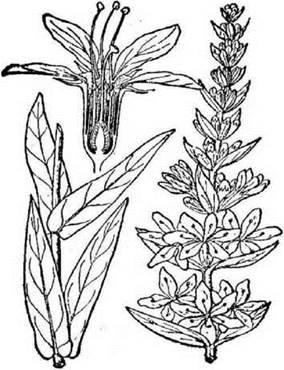
Fig. 135. Purple loosestrife (Lythrum salicaria)
Purple loosestrife (*Lythrum salicaria* L.). Perennial herbaceous plant 25-200 cm tall; uliginosophyte, entomophile, anemochore, epizoochore. Rhizome shortened, thickened, woody (Fig. 135). Stem erect, slightly angled, pubescent, branched above. Leaf arrangement opposite, leaves sessile, with a rounded or cordate base, broadly to narrowly lanceolate, 3-9 cm long, 0.7-1.5 cm wide, directed at a right angle to the stem, with each successive pair of leaves positioned cross-wise (decussate) to the previous one.
In the axils of the upper, closely spaced leaves, flowers are gathered into cymes that form an elongated spicate panicle. Flowers bisexual, actinomorphic, with a double perianth. Calyx tubular, 12-toothed, with Teeth of various shapes and lengths: awl-shaped teeth twice as long as the triangular ones; outer surface covered with stiff hairs, with nectar secreted at the base. Corolla 6-petaled, purple or pink. Petals free, up to 10 mm long. Androecium of 12 stamens, of which six are long and six are short. Gynoecium with a capitate stigma. Flowers exhibit pronounced heterostyly, manifesting in Three types of flowers: with short, long, or medium-length styles; in each flower, the anthers of the long and short stamens and the stigma of the style are positioned at different heights, forming three tiers. Floral formula: *K6C6A6+6G(2)*. Blooms from June to August. Fruit a bilocular capsule, up to 4 mm long and 2 mm wide, shorter than the persistent calyx. Propagates by seeds and vegetatively.
A tanning, ornamental, medicinal, fodder, and honey-producing plant. It serves as a food source for cyst-forming nematodes, leaf beetles, and beavers.
Grows along riverbanks, lakeshores, and on moist floodplains throughout Ukraine.
European wand loosestrife (*Lythrum virgatum* L.). Perennial herbaceous plant, 40-120 cm tall; uliginosophyte, entomophile, anemochore, epizoochore. Rhizome shortened, thickened, woody. Stem erect, sparsely branched, quadrangular, glabrous. Lower leaves opposite, upper alternate, narrowly lanceolate, cuneate at the base, obliquely directed upwards. Pubescence on the stem and leaves is absent.
Inflorescence a lax spicate panicle, flowers gathered in cymes in the axils of the upper leaves. Flowers bisexual, actinomorphic, with a double perianth. Calyx teeth of equal length or awl-shaped. Corolla pink. Blooms from June to August. Fruit a capsule. Propagates by seeds and vegetatively.
A tanning, fodder, medicinal, honey-producing, and ornamental plant. Grows along water bodies, in marshes, and on waterlogged meadows. Widespread throughout Ukraine.
Last update: 07/08/2026
Editorial and Educational Adaptation: This material has been compiled based on the primary/original source text. The project team performed an editorial review, corrected technical inaccuracies, structured sections, and adapted the content for an educational format.
What was processed:
- elimination of formatting defects (OCR errors, structural breaks, corrupted characters);
- editorial organization of content;
- standardization of terminology in accordance with academic sources;
- verification of factual statements against the original source text.
All mentions of the author, publication year, and origin of the primary text have been preserved in accordance with the source.