BIOLOGY Volume 3 - A Guide to General Biology - 2004
25. APPLIED GENETICS
25.7. Human Genetics
25.7.3. Cystic Fibrosis
Cystic fibrosis is a genetic disorder that is most common among populations of northern European descent and white Americans. The Gene responsible for the disease is located on an autosome (it is not sex-linked) and is inherited in an autosomal recessive manner. In the aforementioned populations, roughly 1 in 20 to 25 individuals is a carrier, and about 1 in 2,000 is affected. Among Africans and Asians, the incidence is less than 1 in 100,000 newborns. Cystic fibrosis is of particular interest not only because of its high prevalence, but also because it was one of the first inherited diseases for which Gene Therapy was attempted (Section 25.7.11). Much like Sickle-Cell Anemia, The high frequency of cystic fibrosis suggests that carriers under certain conditions may have a selective advantage over individuals with a normal genotype. While the exact nature of this advantage remains unclear, it may have conferred increased resistance to cholera—a disease that was a major killer in Europe up until the late 19th century.
Cause
The condition is caused by a recessive mutation in a gene located on chromosome 7. This gene encodes a 1480-amino-acid protein situated in the membrane of epithelial Cells, which serves as a channel for chloride ions to enter and leave the cells. In cystic fibrosis patients, this channel fails to function. Because the gene is recessive, affected individuals are homozygous, carrying two copies of the defective gene.
The gene responsible for cystic fibrosis was cloned in 1989. This breakthrough made it easier to elucidate The Nature of the mutation and improve carrier-screening Methods (Section 25.7.9), while prenatal Diagnosis has also become widely available. It has been established that in Central and Western Europe, approximately 70% of cases are caused by a three-base-pair deletion resulting in the loss of codon 508 in the mRNA. As a consequence, The amino acid phenylalanine (F) is missing at position 508 of the protein. Hence, the mutation is designated as AF508 (where Δ is the Greek letter delta, denoting a deletion). Although over 400 other Mutations in the same gene have been found to cause cystic fibrosis, more than 15% of all cases result from just five of these. Some mutations have been identified in only a single patient.
Symptoms
One of the primary Functions of epithelial cells is The production of mucus. In cystic fibrosis patients, the mucus is abnormally thick due to disrupted chloride ion transport out of the cells. Since chloride ions carry a negative charge, an influx of more sodium ions into The Cell occurs to balance this intracellular negative charge, which in turn prevents Water from leaving the cell. The Organs most severely affected by the disease are the Lungs, Pancreas, and Liver. The thick mucus obstructs airflow in the lungs and plugs the ducts that transport pancreatic secretions and Bile from the liver into the intestine. This leads to recurrent pulmonary infections, as well as digestive difficulties due to insufficient pancreatic enzyme delivery and poor nutrient absorption. Affected males are almost universally sterile, and female fertility is also frequently impaired. Another characteristic symptom is abnormally salty sweat, caused by elevated sodium ion concentrations in the patients' cells. As an old saying aptly puts it: "Woe to that child which when kissed on the forehead tastes salty, he is doomed to die young." In 95% of cases, death results from pulmonary complications. Although modern medical treatments have increased the average life expectancy of cystic fibrosis patients from 1 year to 20–30 years, nearly half of all patients still die before reaching the age of 20.
Treatment is primarily directed at preventing pulmonary complications. It typically includes chest physical therapy, postural drainage, Percussion, and coughing techniques—Procedures designed to help clear mucus from the lungs (Fig. 25.24). Enzyme supplements are recommended with meals to improve Digestion, and Antibiotics are prescribed to combat infections. In selected cases, Heart-lung transplantation is performed. Aerosolized human DNase has proven quite successful in breaking down the DNA of dead leukocytes, which otherwise contribute to mucus viscosity. However, the most radical treatment approach is gene therapy (Section 25.7.11).
Class="center">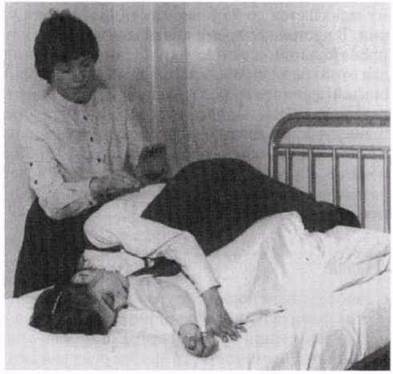
Fig. 25.24. A patient with cystic fibrosis undergoing physiotherapy.
Last update: 06/08/2026
Editorial and Educational Adaptation: This material has been compiled based on the primary/original source text. The project team performed an editorial review, corrected technical inaccuracies, structured sections, and adapted the content for an educational format.
What was processed:
- elimination of formatting defects (OCR errors, structural breaks, corrupted characters);
- editorial organization of content;
- standardization of terminology in accordance with academic sources;
- verification of factual statements against the original source text.
All mentions of the author, publication year, and origin of the primary text have been preserved in accordance with the source.