BIOLOGY Volume 2 - A Guide to General Biology - 2004
17. COORDINATION AND REGULATION IN ANIMALS
17.6. The Endocrine System
17.6.3. The Parathyroid Glands
Humans have four small Parathyroid glands embedded in the tissue of The Thyroid Gland. These glands produce only one hormone—parathyroid hormone (PTH, or parathormone), which is a polypeptide consisting of 84 amino acid residues. Parathyroid hormone and the thyroid hormone Calcitonin (see below) act antagonistically to regulate calcium and phosphate concentrations in the plasma. Parathyroid hormone maintains normal plasma calcium levels and lowers phosphate concentration. The activity of the parathyroid glands is regulated by negative feedback (Fig. 17.51).
Class="center">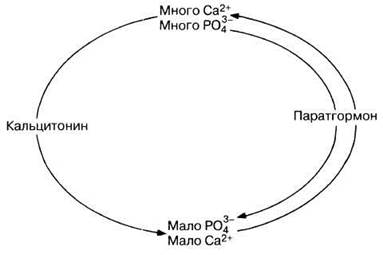
Fig. 17.51. The Role of parathyroid hormone and calcitonin in regulating Blood calcium levels.
Underactivity of the parathyroid glands (hypoparathyroidism) leads to a decrease in calcium levels in the blood (hypocalcaemia) and other Tissues due to its increased excretion in the urine. This can lead to tetany—sustained Muscle contraction. At the same time, phosphate excretion in the urine is reduced, and its plasma levels rise.
Last update: 06/08/2026
Editorial and Educational Adaptation: This material has been compiled based on the primary/original source text. The project team performed an editorial review, corrected technical inaccuracies, structured sections, and adapted the content for an educational format.
What was processed:
- elimination of formatting defects (OCR errors, structural breaks, corrupted characters);
- editorial organization of content;
- standardization of terminology in accordance with academic sources;
- verification of factual statements against the original source text.
All mentions of the author, publication year, and origin of the primary text have been preserved in accordance with the source.