BIOLOGY Volume 1 - A Guide to General Biology - 2004
7. AUTOTROPHIC NUTRITION
7.5. Photosynthetic Pigments
Photosynthetic Pigments in higher plants are divided into two classes: chlorophylls and carotenoids. The primary function of these pigments is to absorb light energy and subsequently convert it into chemical energy. The pigments are located on the chloroplast membranes (thylakoids), and METABOLISM/14.html">Chloroplasts within The Cell are typically oriented so that the membranes lie at right angles to the light source to maximize Light absorption.
7.5.1. Chlorophylls
Chlorophylls absorb primarily red and blue-violet light, while green light is reflected, giving plants their characteristic green color unless masked by other pigments. Fig. 7.9 shows the absorption spectra of chlorophylls a and b in comparison with carotenoids.
The chlorophyll molecule (Fig. 7.10) consists of a flat, light-absorbing HEAD with a magnesium atom at its center. This explains why plants require magnesium and why a magnesium deficiency leads to reduced chlorophyll production and yellowing of the leaves. The chlorophyll molecule also features a long, hydrophobic (Water-repelling) hydrocarbon tail. Because the internal membranes are likewise hydrophobic (Section 5.9.6), these tails become embedded within the thylakoid membranes, acting as an anchor. The hydrophilic heads are positioned on the plane of the membrane surfaces like solar panels. Different chlorophylls have distinct side chains attached to their heads, which slightly alters their Absorption Spectra and thereby widens the range of wavelengths of light that can be absorbed.
Chlorophyll a is the most common photosynthetic pigment. It exists in several forms depending on its Location within the membrane. Each form differs slightly in THE POSITION OF its absorption peak in the red region; for example, maximum values may occur at 670, 680, 690, or 700 nm.
Class="center">
Fig. 7.9. Absorption spectra of chlorophylls a and b and carotenoids. Absorption spectra illustrate The amount of light at various wavelengths absorbed by a pigment.
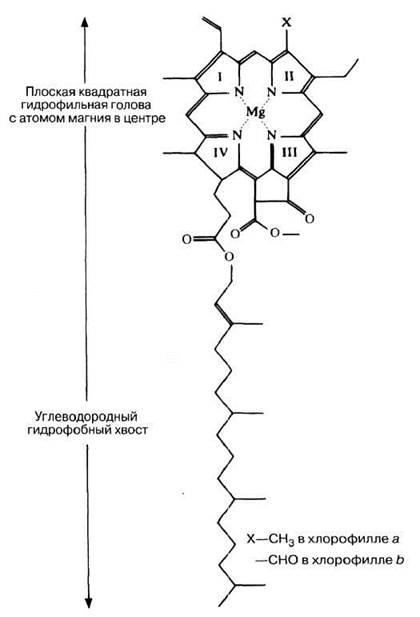
Fig. 7.10. Structure of a chlorophyll molecule
7.3. What are the differences between the absorption spectra of chlorophylls a and b?
Last update: 06/08/2026
Editorial and Educational Adaptation: This material has been compiled based on the primary/original source text. The project team performed an editorial review, corrected technical inaccuracies, structured sections, and adapted the content for an educational format.
What was processed:
- elimination of formatting defects (OCR errors, structural breaks, corrupted characters);
- editorial organization of content;
- standardization of terminology in accordance with academic sources;
- verification of factual statements against the original source text.
All mentions of the author, publication year, and origin of the primary text have been preserved in accordance with the source.