BIOCHEMISTRY - L. Stryer - 1984
VOLUME 2
PART III. BIOSYNTHESIS OF MACROMOLECULE PRECURSORS
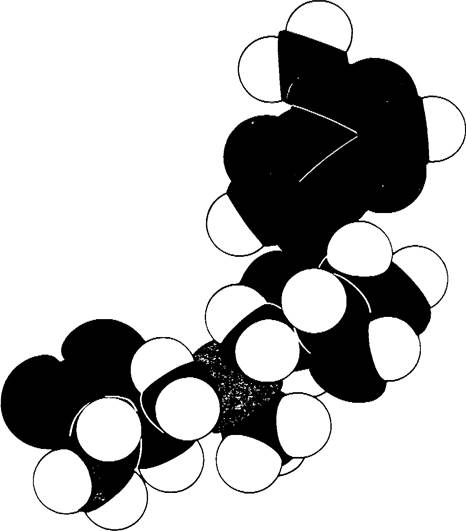
Class="center">Model of 5-adenosylmethionine, a methyl group donor in many biosynthetic pathways
CHAPTER 20. BIOSYNTHESIS OF MEMBRANE LIPIDS AND STEROID HORMONES
We now turn from the generation of metabolic energy to The Biosynthesis of macromolecular precursors and related molecules. This chapter examines the biosynthesis of phosphoacylglycerols (phosphoglycerides), Sphingolipids, and Cholesterol—three crucial components of Introduction/36.html">Biological Membranes (Ch. 10). The synthesis of triacylglycerols (triglycerides) is also described here, as the corresponding reactions partially overlap with those of phosphoacylglycerol synthesis; finally, the synthesis of Steroid Hormones is detailed, as they are derived from cholesterol. Cholesterol Biosynthesis serves as an example of a complex reaction system in which large carbon skeletons are assembled from five-carbon building blocks.

20.1. Phosphatidic Acid Is an Intermediate in the Synthesis of Phosphoacylglycerols and Triacylglycerols
Phosphatidate (1,2-diacylglycerol 3-phosphate) is a common intermediate in the synthesis of both phosphoacylglycerols and triacylglycerols. Synthesis begins with glycerol 3-phosphate, formed primarily by the reduction of dihydroxyacetone phosphate and, to a lesser extent, by the phosphorylation of glycerol. Glycerol 3-phosphate is acylated by acyl-CoA to yield lysophosphatidate, which is further acylated by acyl-CoA to produce phosphatidate. These acylation reactions
are catalyzed by glycerophosphate acyltransferase.
Following The formation of phosphatidate, the metabolic pathways diverge. In triacylglycerol synthesis, phosphatidate is hydrolyzed by a specific phosphatase to yield diacylglycerol (diglyceride). This intermediate is then acylated to form triacylglycerol in a reaction catalyzed by diacylglycerol acyltransferase. These Enzymes are associated in a membrane-bound triacylglycerol synthetase complex.
Anabolism refers to the set of biosynthetic processes.
Catabolism refers to the set of degradative processes. These terms originate from the Greek words ana, meaning "up," and kata, meaning "down," combined with ballein, "to throw."
20.2. CDP-Diacylglycerol Is an Activated Intermediate in Phosphoacylglycerol Synthesis
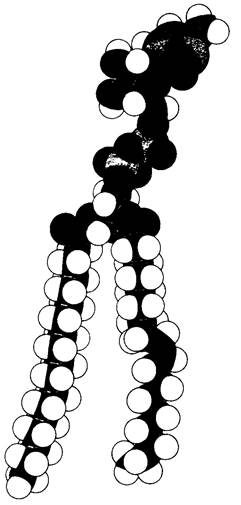
Several pathways exist for the de novo Synthesis of Phospholipids. De novo synthesis begins with the formation of cytidine diphosphate diacylglycerol (CDP-diacylglycerol) from phosphatidate and cytidine triphosphate (CTP). The equilibrium of this reaction is driven toward product formation by the Hydrolysis of pyrophosphate. The activated phosphatidyl moiety then reacts with the hydroxyl group of a polar alcohol. If Serine serves as the polar alcohol, phosphatidylserine and cytidine monophosphate (CMP) are formed.
Fig. 20.1. Spatial model of CDP-diacylglycerol
Thus, cytidine NUCLEOTIDES play the same role in phosphoacylglycerol synthesis as uridine nucleotides do in Glycogen formation. In both cases, activated intermediates (UDP-glucose or CDP-diacylglycerol) are formed from a phosphorylated substrate (glucose 1-phosphate or phosphatidate) and a nucleoside triphosphate (UTP or CTP). The activated intermediate then reacts with a hydroxyl group (the C-4 OH group at the end of a glycogen molecule or the side-chain hydroxyl group of serine).

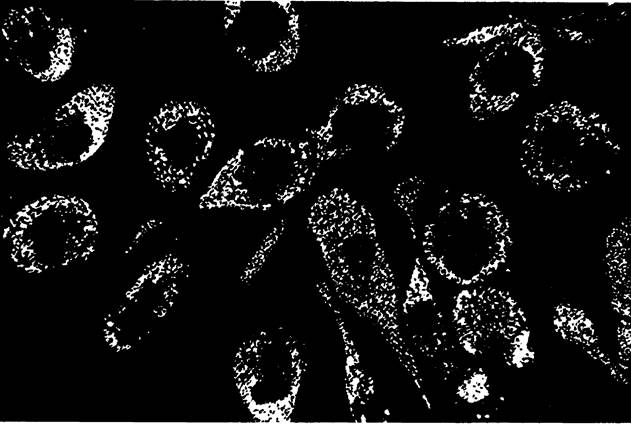
Micrograph of macrophages containing birefringent crystals of cholesterol esters, viewed under polarized light
20.3. Phosphatidylethanolamine and Phosphatidylcholine Can Be Formed from Phosphatidylserine
The decarboxylation of phosphatidylserine, catalyzed by enzymes containing Pyridoxal phosphate as a prosthetic group, yields phosphatidylethanolamine. Subsequent triple methylation of the amino group of this phosphoacylglycerol produces phosphatidylcholine. The Role of S-adenosylmethionine as a methyl group donor in this and many other methylation reactions is discussed below (Sec. 21.7).
Last update: 06/08/2026
Editorial and Educational Adaptation: This material has been compiled based on the primary/original source text. The project team performed an editorial review, corrected technical inaccuracies, structured sections, and adapted the content for an educational format.
What was processed:
- elimination of formatting defects (OCR errors, structural breaks, corrupted characters);
- editorial organization of content;
- standardization of terminology in accordance with academic sources;
- verification of factual statements against the original source text.
All mentions of the author, publication year, and origin of the primary text have been preserved in accordance with the source.