Pharmacognosy with the Basics of Plant Biochemistry - Kovalyov V. M. 2004
Special Part
Vitamins
Aliphatic Vitamins
Vitamins of this group are Water-soluble. They include ascorbic, pangamic, and pantothenic acids, as well as methylmethionine sulfonium chloride.
Chemically, ascorbic acid (Vitamin C, antiscorbutic) is a group of compounds derived from L-gulonic acid. The most important of these are the physiologically active isomer L-ascorbic acid and dehydroascorbic acid, which readily convert into each other under appropriate conditions.
Class="center">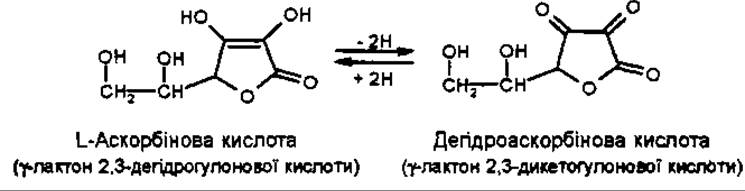
Ascorbic acid is involved in oxidation-reduction reactions, Carbohydrate METABOLISM, Blood clotting, tissue regeneration, steroid hormone synthesis, and the normalization of capillary permeability; it also improves appetite and enhances the body's vitality. The Biochemical Mechanisms of vitamin C action are diverse and not yet fully understood.
Ascorbic acid is neither synthesized nor stored in The Human Body. This explains the rapid onset of Primary and secondary hypovitaminosis and The Development of scurvy. Hypovitaminosis manifests as fatigue, impaired Heart function, bleeding tendencies, and reduced resistance to infections.
Vitamin C acts as a synergist to the hormone cortin, gonadotropic Hormones, thiamine, group P vitamins, and as an antagonist to thyroxine (thyroid hormone).
Ascorbic acid is synthesized by all chlorophyll-containing plants. It is abundant in the fruits of rose hips, rowan, black currant, ripe walnuts, juicy fruits, berries, vegetables (potatoes, cabbage), pine needles, and others. During cooking, drying, or the canning of fruits and vegetables, vitamin C can be destroyed due to oxidation catalyzed by traces of Iron and copper, especially by oxidative Enzymes; therefore, it is best to cook vegetables by plunging them into boiling water or steaming them. The daily requirement is 70-100 mg.
Chemically, pangamic acid (vitamin B15) is an ester of D-gluconic and dimethylaminoacetic acids (dimethylglycine).

Pangamic acid
It is found in rice bran and the seeds of many plants. It improves Lipid Metabolism, increases tissue oxygen uptake, raises Glycogen levels in Muscles and the Liver, relieves Hypoxia, and increases diuresis.
Vitamin B15 is used to treat Various Forms of atherosclerosis, cardiovascular diseases, chronic hepatitis, pulmonary emphysema, and other conditions. The daily requirement is 2 mg.
Pantothenic acid (vitamin B3, antidermatitic) is found in peas, rice, liver, fats, egg white, fish liver, Yeast, and other sources.
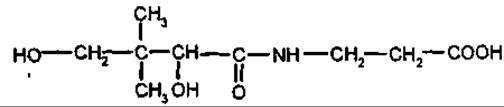
Pantothenic acid
This vitamin is synthesized in the human body by Escherichia coli. Unlike in animals, vitamin B3 deficiency has not been observed in humans. Pantothenic acid is involved in carbohydrate and lipid metabolism, the synthesis of acetylcholine and hormones, and stimulates The formation of corticosteroids. It is used to treat Metabolic Disorders, neuralgia, polyneuritis, allergies, eczema, toxicosis, and other conditions. The daily requirement is 10-12 mg.
Methylmethionine sulfonium (Vitamin U, anti-ulcer) was first discovered in the juice of garden cabbage, Brassica oleracea, Brassicaceae, and derives its name from the Latin ulcus (ulcer). It is present in many vegetables (parsley leaves, onions, lettuce, peppers, carrots, turnips, asparagus, tomatoes). Asparagus shoots (100-160 mg/100 g) and white cabbage (80-85 mg/100 g) are considered its richest sources. It serves as a donor of CH3 groups in biological methylation.
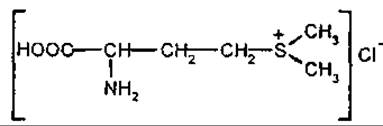
Methylmethionine sulfonium chloride
Vitamin U has a beneficial effect on the functioning of The Stomach, intestines, liver, and Gallbladder, as it helps reduce gastric secretion and heals ulcers. This vitamin is used in the Treatment of chronic cholecystitis, Ulcerative Colitis, and PEPTIC ULCER DISEASE of the stomach and duodenum. The daily requirement is 15-20 mg.
Last update: 06/08/2026
Editorial and Educational Adaptation: This material has been compiled based on the primary/original source text. The project team performed an editorial review, corrected technical inaccuracies, structured sections, and adapted the content for an educational format.
What was processed:
- elimination of formatting defects (OCR errors, structural breaks, corrupted characters);
- editorial organization of content;
- standardization of terminology in accordance with academic sources;
- verification of factual statements against the original source text.
All mentions of the author, publication year, and origin of the primary text have been preserved in accordance with the source.