Biochemistry - Chemical Reactions in Living Cells Volume 2 - D. Metzler 1980
Biosynthesis; how new molecules are formed
Steroid compounds
Biosynthesis of sterols
Most Steroids in animal organisms are synthesized from Cholesterol, which in turn is a derivative of squalene1). The conversion of squalene, which takes place in most animal Tissues, begins with The formation of squalene 2,3-oxide under the action of a microsomal enzyme system in the presence of O2 and NADPH [91–94]. The reaction apparently proceeds via a carbonium ion intermediate formed by proton attack on the oxygen atom of the epoxy ring [Equation (12-31)] [77]. An electron flow (simultaneous or stepwise) leads to the closure of all four rings, with the carbonium ion remaining at the site of attachment of the side chain to ring D [Equation (12-31), step a]. The structural rearrangement leading to the formation of lanosterol [Equation (12-31), step b] is a remarkable reaction accompanied by the migration of one hydride ion and two methyl groups, as indicated by the arrows in Equation (12-31). In addition, this process involves the loss of hydrogen in the form of a proton from the C-9 position. Lanosterol1) is utilized in animal organisms as a precursor for other sterols. In plants, however, where cholesterol is absent or present in very small amounts, cycloartenol serves as the primary precursor in sterol Biosynthesis. As shown in Equation (12-31), step c, the formation of cycloartenol requires the displacement of a proton (as a hydride ion) and its replacement by a methyl group at C-8. The elimination of a proton from the adjacent methyl group enables the closure of the cyclopropane ring.
Class="center">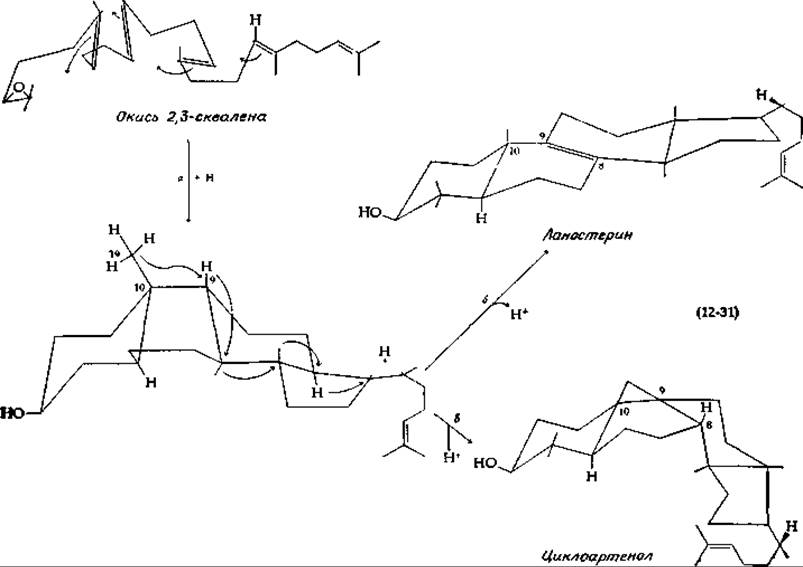
The conversion of lanosterol to cholesterol is a complex process consisting of at least 25 steps. Many of the Enzymes involved are membrane-bound to The Endoplasmic reticulum [95]. The process also involves at least one soluble cytoplasmic protein. This sterol-carrier Protein Functions as a transporter of the sterol from one enzyme to another during the conversion pathway and additionally influences the reactivity of the attached Structure [96, 97].
It has been established that the removal of the three methyl groups of lanosterol, the migration of the double bond in the ß-ring, and the saturation of the side-chain double bond can proceed via various reaction sequences. Two alternative pathways are illustrated in Fig. 12-15. The Mechanism of the demethylation reaction at the junction of rings C and D remains unclear, but analogous Reactions Involving the removal of methyl groups from the C-4 position of ring A have been well studied [95]. Each of the methyl groups undergoes sequential hydroxylation mediated by a microsomal system similar to cytochrome P-450 (Chapter 10, Section G, 2, e) [97a], but utilizing NADH rather than NADPH as the electron donor. Oxidation of the resulting alcohol to a carboxylic acid, followed by the Conversion of the 3-OH group into a ketone, facilitates subsequent ß-decarboxylation.
1) A component of lanolin, a waxy fat from sheep's wool consisting primarily of cholesterol.
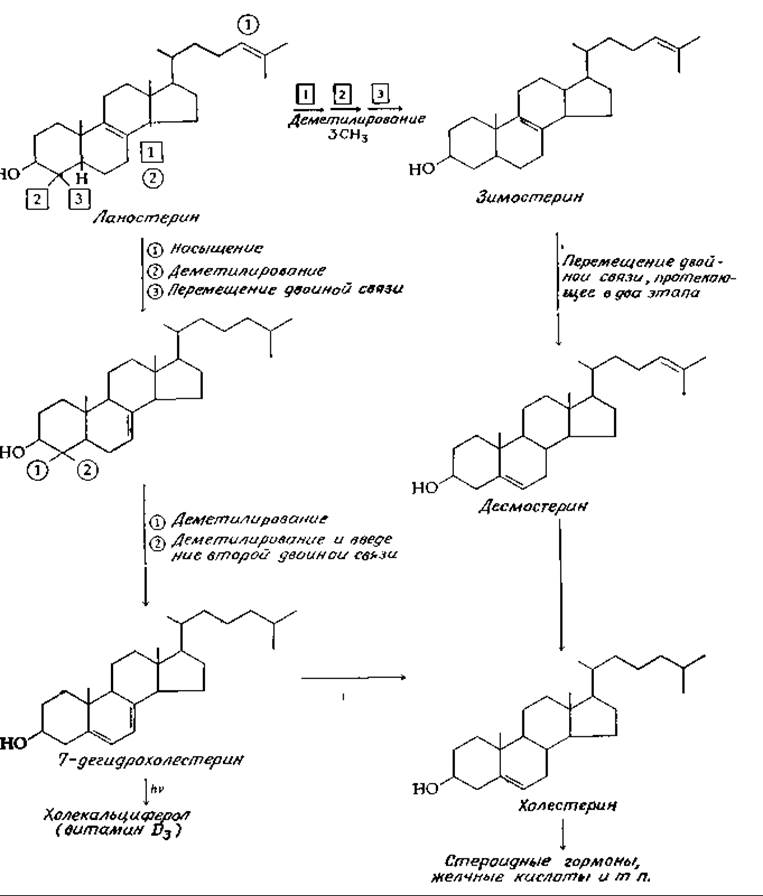
FIG. 12-15 Conversion of lanosterol to cholesterol. Numbers in circles and squares indicate The sequence of involvement of specific molecular regions in the process.
Sterols produced in animals also include dehydrocholesterol, a vitamin D precursor found in significant amounts in the Skin. In the intestinal tract, bacterial action yields ß-cholestanol and its isomer ß-coprostanol. Many plant sterols differ from cholesterol by the presence of additional
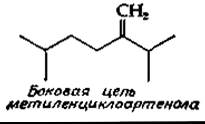
(one or more) carbon atoms in the side chain. The source of these carbon atoms is S-adenosylmethionine. As already mentioned, plant sterols appear to be synthesized from cycloartenol. Sterols with an additional carbon atom include methylenecycloartenol, a compound present in grapefruit peel and many other plants. Its side chain has the following structure:
Another plant sterol, campesterol, contains a ∆5-unsaturated ring like cholesterol, but its side chain possesses an additional methyl group.
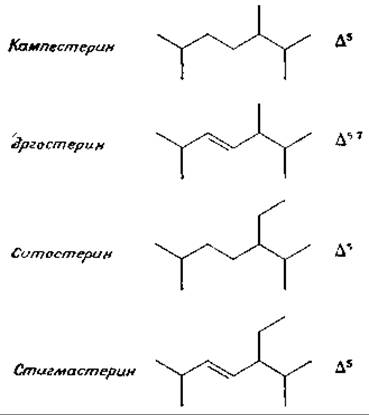
Ergosterol, a characteristic fungal sterol, contains a ∆5,7 ring system, similar to 7-dehydrocholesterol, as well as an additional double bond in the side chain. Sitosterol and stigmasterol are widespread among higher plants. A distinctive feature of these sterols is the presence of an additional ethyl group in the side chain. Sitosterol is formed by the methylation (mediated by S-adenosylmethionine) of ergosterol. Stigmasterol serves as a vitamin for guinea pigs, in which it prevents joint ossification (the "flexibility factor").
Last update: 06/08/2026
Editorial and Educational Adaptation: This material has been compiled based on the primary/original source text. The project team performed an editorial review, corrected technical inaccuracies, structured sections, and adapted the content for an educational format.
What was processed:
- elimination of formatting defects (OCR errors, structural breaks, corrupted characters);
- editorial organization of content;
- standardization of terminology in accordance with academic sources;
- verification of factual statements against the original source text.
All mentions of the author, publication year, and origin of the primary text have been preserved in accordance with the source.