Biochemistry of Amino Acids - A. Meister 1961
Naturally Occurring Amino Acids
Other Naturally Occurring Amino Acids
Diaminomonocarboxylic Acids
Class="center">L-Canavanine (α-amino-γ-guaninoxybutyric acid)
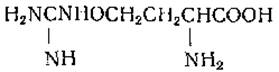
Canavanine has been found in the free state in soybean flour and Canavalia beans [185, 186]. Upon Treatment with arginase, canavanine undergoes Hydrolysis to yield urea and canaline [187, 188]:

Upon catalytic reduction, canaline breaks down into ammonia and homoserine:

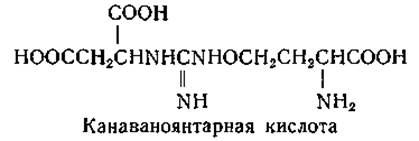
Canavanine inhibits the growth of certain microorganisms [169, 189, 190], likely As a result of competition with Arginine during arginase action, enzymatic desimidation [191], or the Condensation of arginine with fumaric acid; the latter two compounds yield canavanosuccinic acid [192] (p. 339).
L-Ornithine (α,δ-diaminovaleric acid)
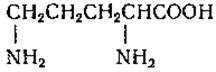
There is still no Evidence for the presence of ornithine in Proteins, although it can be formed from arginine during Protein Hydrolysis. Ornithine occurs in the free state in plants [208]; peptide-bound ornithine has been found in several Antibiotics (p. 77). Its role in The Urea Cycle is discussed below (p. 338). δ-Acetylornithine has been isolated from plants [209]. Dinicotinoylornithine and dibenzoylornithine (ornithuric acid) are found in avian urine. α-Acetylornithine appears to be an intermediate in ornithine METABOLISM in certain microorganisms (p. 345).
L-α,γ-Diaminobutyric acid
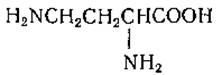
This amino acid has been isolated from antibiotic hydrolysates, including antibiotics of the polymyxin group [210–212].
α,β-Diaminopropionic acid
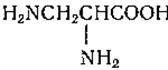
This amino acid was found in hydrolysates of Biomycin [213], which also contains L-Serine and β-Lysine.
δ-Hydroxy-L-lysine (α,ε-diamino-δ-hydroxycaproic acid)
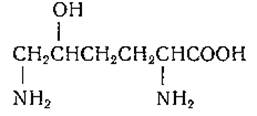
This amino acid was first isolated from gelatin hydrolysates [214–216]. THE POSITION OF the hydroxyl group was established by synthesizing this compound [217–219]; all 4 possible isomers of δ-hydroxy-L-lysine have been obtained [220].
δ-Hydroxy-L-lysine is a component of a phosphatide isolated from Mycobacterium phlei; it is linked to the rest of the molecule through the ε-amino and δ-hydroxy groups [221]. Evidence exists for the presence of a phosphorylated form of hydroxylysine in calf embryos and other Tissues [222, 223]. An allo-form of hydroxylysine is presumably contained in human tooth dentin [224].
β-Lysine (β,ε-diaminocaproic acid)
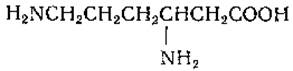
β-Lysine was isolated from the antibiotics viomycin, streptolin, and streptothricin [213, 225, 226]. The Structure of The amino acid was determined by cleaving the isolated Amino Acid and comparing the natural product with a synthetically prepared sample.
Last update: 06/08/2026
Editorial and Educational Adaptation: This material has been compiled based on the primary/original source text. The project team performed an editorial review, corrected technical inaccuracies, structured sections, and adapted the content for an educational format.
What was processed:
- elimination of formatting defects (OCR errors, structural breaks, corrupted characters);
- editorial organization of content;
- standardization of terminology in accordance with academic sources;
- verification of factual statements against the original source text.
All mentions of the author, publication year, and origin of the primary text have been preserved in accordance with the source.