Biochemistry, Vol. 3 - A. Lehninger 1985
Molecular Mechanisms of Genetic Information Transmission
DNA: Structure of Chromosomes and Genes
Eukaryotic cells also contain cytoplasmic DNA
Besides the DNA found in The Nucleus of Eukaryotic Cells, The Cytoplasm also contains a very small amount of DNA that differs from nuclear DNA in its nucleotide composition; this cytoplasmic DNA is localized in the Cell/35.html">Mitochondria. METABOLISM/14.html">Chloroplasts of photosynthetic Cells also contain DNA. Typically, in resting somatic cells, the DNA of these Organelles makes up less than 0,1% of total cellular DNA; however, in fertilized and dividing egg cells, where the number of mitochondria is greatly increased, The amount of Mitochondrial DNA is significantly higher. Mitochondrial DNAs (mtDNAs) are double-stranded circular molecules of very small size compared to nuclear chromosome DNA molecules. In animal cells, mtDNA has a Molecular Weight of only ~10∙106. Chloroplast DNA molecules are significantly larger than mitochondrial DNA. The DNA of both of these organelles is not associated with Histones.
Class="center">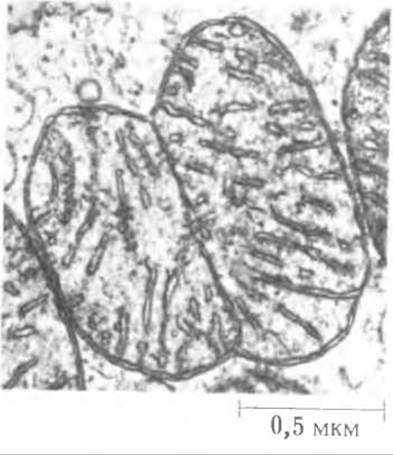
Fig. 27-24. A dividing mitochondrion from an insect fat body.
Numerous hypotheses have been proposed regarding THE ORIGIN OF Mitochondrial and Chloroplast DNA. One of them is that they represent remnants of Chromosomes from ancient Bacteria that entered the cytoplasm of a host cell and became the precursors of these organelles. Mitochondrial DNA encodes mitochondrial tRNAs and rRNAs, as well as several mitochondrial Proteins. Since over 95% of mitochondrial proteins are encoded by nuclear DNA, the reason for the existence of mitochondrial and chloroplast DNA remains one of the puzzles of cell genetics. During host Cell Division, Mitochondria and chloroplasts also divide (Fig. 27-24). Prior to and during mitochondrial division, their DNA replicates, and the daughter mtDNAs are distributed into the daughter mitochondria.
Last update: 06/08/2026
Editorial and Educational Adaptation: This material has been compiled based on the primary/original source text. The project team performed an editorial review, corrected technical inaccuracies, structured sections, and adapted the content for an educational format.
What was processed:
- elimination of formatting defects (OCR errors, structural breaks, corrupted characters);
- editorial organization of content;
- standardization of terminology in accordance with academic sources;
- verification of factual statements against the original source text.
All mentions of the author, publication year, and origin of the primary text have been preserved in accordance with the source.