Principles of Biochemistry Volume 3 - A. Lehninger 1985
Some aspects of human biochemistry
Human nutrition
Calcium and phosphorus are essential for the development of bones and teeth
An adult human body contains over 1 kg of calcium, almost entirely located in bones and Teeth, where it combines with phosphate to form the insoluble crystalline mineral calcium hydroxyapatite. In addition, calcium acts as a vital intracellular regulator or messenger in all Cells (Section 25.23), helping to modulate The activity of skeletal and cardiac Muscle Tissues, as well as many other Organs. Calcium is abundant in many foods, particularly milk, cheese, cereal grains, beans, nuts, and vegetables. It plays a crucial role in Human Nutrition; the requirement for calcium is especially high in growing children due to bone development, as well as in pregnant and nursing women. Intestinal absorption of calcium depends on numerous factors, including pH, the dietary calcium-to-phosphorus ratio, the presence of dietary Fatty acids (including certain plant-derived acids), and, most importantly, vitamin D, which regulates the absorptive process. Consequently, only a fraction of the dietary calcium is actually absorbed in the intestine.
Investigating The Role of calcium in nutrition is complicated by the large and labile reserve of calcium in the bones, which can be mobilized during dietary deficiency. For instance, in pregnant or nursing women with inadequate calcium intake, bone calcium reserves are drawn upon to support fetal growth or The production of calcium-rich milk. The majority of bone calcium undergoes continuous remodeling. Approximately 700-800 mg of calcium leaves and returns to the skeletal bones daily. This substantial skeletal reservoir can readily satisfy short-term demands of other tissues.
Adults are advised to consume 800 mg of dietary calcium daily (Table 26-2), while pregnant women, nursing mothers, and adolescents require 1200 mg per day. Intestinal absorption of calcium from cereal grains is hindered because the bulk of it is tightly bound to Inositol hexaphosphate (or phytate, Fig. 26-24), forming phytin, a calcium-magnesium salt. As we will see later, phytate also binds other essential nutritional elements, most notably zinc.
The amount of phosphorus in The Human Body is likewise substantial. It is a constituent not only of bones, but also of Nucleic Acids, nucleotide Coenzymes, and the ATP-ADP phosphate system, which drives energy storage and conversion in the body. Phosphorus is so widely distributed in foods that overt deficiency is practically unheard of. However, not all dietary phosphorus is absorbable, as absorption is governed by many factors similar to those affecting calcium, particularly the presence of vitamin D in the diet.
Class="center">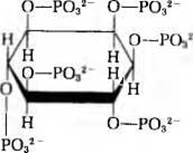
Fig. 26-24. Phytate anion. The multiple phosphate groups of phytate can bind Ca2+, Mg2+, and Zn2+ ions very tightly, thereby preventing their absorption. Phytates are found exclusively in plant foods and are particularly abundant in cereal grains.
Last update: 06/08/2026
Editorial and Educational Adaptation: This material has been compiled based on the primary/original source text. The project team performed an editorial review, corrected technical inaccuracies, structured sections, and adapted the content for an educational format.
What was processed:
- elimination of formatting defects (OCR errors, structural breaks, corrupted characters);
- editorial organization of content;
- standardization of terminology in accordance with academic sources;
- verification of factual statements against the original source text.
All mentions of the author, publication year, and origin of the primary text have been preserved in accordance with the source.