Principles of Biochemistry, Volume 2 - A. Lehninger 1985
Bioenergetics and Metabolism
Lipid Biosynthesis
Triacylglycerols as an Energy Source for Certain Hibernating Animals
Many animals utilize stored body fat as an energy source during hibernation, migration periods, and other situations requiring radical metabolic adaptations. Camels, for instance, can even use the metabolic Water produced by fat oxidation.
One of the most striking and well-known Examples of metabolic adaptation to harsh environmental conditions is the winter hibernation of grizzly bears. Their winter Sleep lasts continuously for 7 months. Unlike other hibernating animals, a grizzly's body Temperature is maintained between 32 and 35°C during sleep, which is close to normal. Although the bear expends about 6,000 calories a day in this state, it neither eats, drinks, nor excretes urine or feces for several months. Upon sudden awakening, a grizzly almost immediately becomes alert and ready for self-defense.
Experimental studies have shown that the fat stored in a bear's body serves as its sole energy source during hibernation. The energy released from fat oxidation is sufficient to maintain body temperature, actively synthesize Amino Acids and Proteins, and fuel other energy-requiring processes, such as membrane transport. Large amounts of water produced by fat oxidation (Sec. 18.6) compensate for respiratory water loss. Furthermore, The breakdown of triacylglycerols yields glycerol, which is subsequently converted into glucose via enzymatic phosphorylation to form glycerol phosphate, followed by The oxidation of the latter to dihydroxyacetone phosphate. The urea generated during amino acid degradation is reabsorbed in the bear's body and reused to synthesize amino acids needed for de novo protein construction.
In preparation for extended periods of hibernation, grizzlies accumulate massive amounts of fat. In late spring and summer, an adult animal typically consumes about 9,000 kcal per day. However, as winter approaches and seasonal hormonal shifts occur, the bears begin feeding for up to 20 hours a day, consuming as much as 20,000 kcal. The CARBOHYDRATES ingested in vast quantities during this period are converted into triacylglycerols. Other hibernating species, notably small rodents such as dormice, also store large fat reserves (Fig. 21-14). Although camels do not hibernate, they can synthesize and store large amounts of triacylglycerols in their humps, which simultaneously serve as sources of water and energy in desert environments.
Triacylglycerol reserves can also be repurposed for other vital biological Functions. As you already know, Arctic walruses and seals use a thick subcutaneous layer of triacylglycerols for thermal insulation (Sec. 12.3). Triacylglycerols contained within a specialized cranial organ in sperm whales serve an entirely different function (Box 21-1).
Class="center">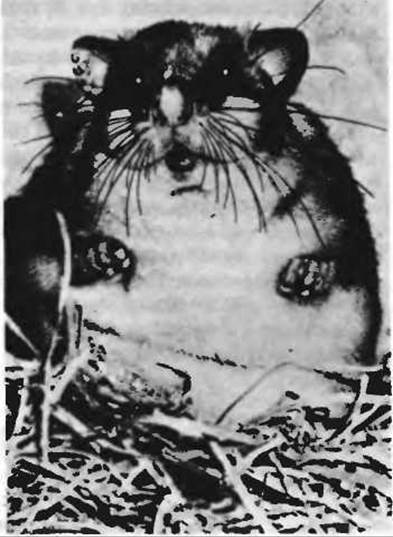
Fig. 21-14. A well-fed dormouse just prior to hibernation. Hibernating animals accumulate large fat reserves, which function not only as an energy source but also as thermal insulation against the cold.
During hibernation, a dormouse curls into a tight ball, which ensures a minimal surface-area-to-volume ratio and reduces heat loss to a minimum.
Box 21-1. Another Biological Function of Triacylglycerols
Recent studies of sperm whale anatomy and feeding behavior have revealed yet another biological function of triacylglycerols. Sperm whale body length averages nearly 20 m, with the massive HEAD accounting for roughly one-quarter of the animal's total length and over one-third of its total weight (Fig. 1). About 90% of the head's weight is attributed to the spermaceti organ, located directly above the long upper jaw. This Structure functions as a lipid cushion composed of adipose Connective Tissue interspersed with Muscle fibers. It contains up to 4 tons of spermaceti—a complex mixture of triacylglycerols rich in Unsaturated Fatty acids. At the normal body temperature of a resting sperm whale (about 37°C), spermaceti is liquid; however, at 31°C it begins to crystallize, and when the temperature drops by a few more degrees, it solidifies.
The biological function of spermaceti remained a mystery for a long time. Only recently, through investigations of sperm whale anatomy and foraging habits, has a plausible explanation emerged. Sperm whales feed almost exclusively on squid, which they hunt at great depths. When diving for prey, they can remain submerged for about 50 minutes, and upon surfacing, they manage to replenish their oxygen stores and eliminate СО2 in just 10 minutes. In search of food, sperm whales can dive to depths of 1,000 m or more (the record is approximately 3,000 m). At such depths, populated by abundant squid, sperm whales face virtually no competition for prey.
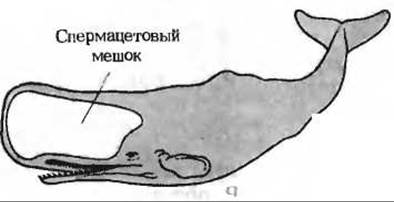
Fig. 1. Silhouette of a sperm whale illustrating the massive spermaceti organ, formed by the marked enlargement of the head and positioned directly above the upper jaw.
When submerging, a sperm whale spends only about 25% of its total dive time actively hunting squid; the remainder is spent resting passively at great depths, waiting for a school of squid to approach so it can launch an attack. Let us now return to spermaceti. For a marine animal to maintain a specific depth, its body density must match that of the surrounding water. To achieve this, some marine species possess air- or nitrogen-filled swim bladders, whereas others rely on fat reserves, which are less dense than seawater. However, sperm whales are capable of adjusting their buoyancy to match the density of water not only at The surface of tropical seas but also at great depths, where the water is significantly colder and consequently denser. The key to understanding how sperm whales alter their buoyancy lies in the freezing point of spermaceti. As liquid spermaceti cools by a few degrees during a deep dive, it crystallizes and becomes denser, altering the whale's buoyancy to match the higher density of deep seawater. To allow the fat to cool rapidly during a dive, the spermaceti organ is supplied with a dense network of capillaries. Heat dissipation driven by rapid Blood Circulation is further enhanced by the whale's ability to draw water through the spermaceti organ, which can open and fill with colder water during the descent. Upon ascent, the spermaceti warms up and melts, decreasing its density and providing the buoyancy required at the water's surface.
This remarkable feature of sperm whales serves as a striking example of evolutionary anatomical and biochemical adaptation. The triacylglycerols synthesized by the sperm whale contain fatty acids whose chain lengths and degrees of unsaturation provide the precise melting point required for spermaceti function. Consequently, the animal can forage at great depths effortlessly while expending a minimum amount of energy.
Last update: 06/08/2026
Editorial and Educational Adaptation: This material has been compiled based on the primary/original source text. The project team performed an editorial review, corrected technical inaccuracies, structured sections, and adapted the content for an educational format.
What was processed:
- elimination of formatting defects (OCR errors, structural breaks, corrupted characters);
- editorial organization of content;
- standardization of terminology in accordance with academic sources;
- verification of factual statements against the original source text.
All mentions of the author, publication year, and origin of the primary text have been preserved in accordance with the source.