Biochemistry and Molecular Biology - Belyasova N.A. 2002
Metabolism. Processes Leading to Energy Storage
Tricarboxylic Acid Cycle
Other Pathways for the Oxidation of One- and Two-Carbon Substrates
The Tricarboxylic Acid Cycle operates within the Cells of Bacteria, Fungi, Protozoa, plants, and animals, standing out as one of the most vital cycles in aerobic organisms. However, certain bacteria and plants employ alternative pathways to oxidize one- and two-carbon molecules. Typically, the adoption of these alternative routes is prompted by The Use of a non-carbohydrate substrate as the sole carbon and energy source. In such cases, cells must find an oxidation mechanism that yields intermediate products capable of being converted into essential cellular metabolites.
A prime example of this is the operation of The Glyoxylate cycle in higher plant seeds. When triacylglycerols serve as the primary reserve material of the seed—with their fatty acid residues converting into acetyl-CoA upon oxidation—cells rely on the glyoxylate cycle (Figs. 11.6, 11.7). A key feature of this pathway is that isocitrate does not undergo decarboxylation, unlike in the TCA cycle; instead, it is cleaved by isocitrate lyase into succinate (which feeds back into ß-Oxidation) and glyoxylate (Fig. 11.6).
Glyoxylate then condenses with another molecule of acetyl-CoA, a reaction catalyzed by malate synthase, to form L-malate. This four-carbon compound can either be oxidized to oxaloacetate or undergo decarboxylation to yield Pyruvate. Both oxaloacetate and pyruvate can serve as precursors for The Biosynthesis of numerous essential cellular compounds, including glucose (Fig. 11.7).
This process is also utilized by bacteria such as E. coli and Pseudomonas, as well as certain protozoa, when acetate acts as the sole carbon source. In bacteria, the TCA and glyoxylate cycles are not spatially separated, whereas in eukaryotes, some of the Enzymes required for the glyoxylate pathway are localized in specialized Organelles known as glyoxysomes. Structurally, glyoxysomes closely resemble Peroxisomes. Because the glyoxylate pathway can be viewed as anaplerotic reactions—replenishing pools of succinate, malate, and oxaloacetate—it is frequently considered an integral part of the TCA cycle (Fig. 11.6).
Class="center">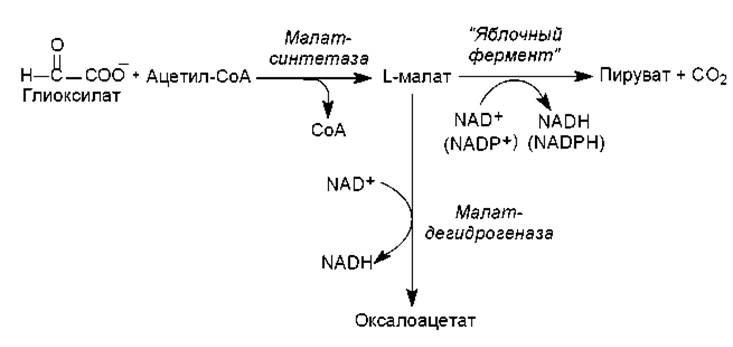
Fig. 11.7. Reactions of the glyoxylate cycle
Certain bacteria thrive in environments where two-carbon compounds like glycolate, Glycine, and oxalate serve as the sole carbon source. All of these substances can be converted into glyoxylate (Fig. 11.8), which is subsequently oxidized to СО2 and Н2О via the Dicarboxylic Acid Cycle. In this cycle, acetyl-CoA acts as the glyoxylate acceptor and is regenerated through a series of reactions. Each turn of the cycle is accompanied by The production of two carbon dioxide molecules and the release of two pairs of electrons, which enter the Respiratory Chain as two molecules of NADH.
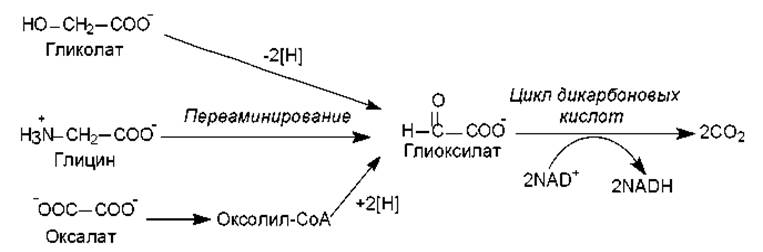
Fig. 11.8. Oxidation of two-carbon substrates
The cells of many microorganisms, along with certain plants and animals, are capable of oxidizing various other unusual substrates, including one-carbon compounds (such as formate), to extract energy. In each instance, a distinct metabolic pathway is deployed, enabling the electrons stripped from the substrate to be harnessed in the respiratory chain for ATP synthesis.
Last update: 06/08/2026
Editorial and Educational Adaptation: This material has been compiled based on the primary/original source text. The project team performed an editorial review, corrected technical inaccuracies, structured sections, and adapted the content for an educational format.
What was processed:
- elimination of formatting defects (OCR errors, structural breaks, corrupted characters);
- editorial organization of content;
- standardization of terminology in accordance with academic sources;
- verification of factual statements against the original source text.
All mentions of the author, publication year, and origin of the primary text have been preserved in accordance with the source.