Textbook - BIOLOGICAL CHEMISTRY - Hubsky Y.I. - 2000
Section III. METABOLISM OF MAJOR CLASSES OF BIOMOLECULES
CHAPTER 18. AMINO ACID METABOLISM. II. SPECIALIZED METABOLIC PATHWAYS
18.3. SPECIALIZED PATHWAYS OF CYCLIC AMINO ACID METABOLISM
Class="center">METABOLISM of Phenylalanine and Tyrosine
A distinctive feature of the metabolism of the cyclic Amino Acids Phenylalanine and Tyrosine in animals is the generation of numerous physiologically active compounds with hormonal and neurotransmitter Functions, specifically catecholamines (epinephrine, norepinephrine), THYROID Hormones, and Melanins (Fig. 18.3).
1. Metabolic pathways of Phenylalanine
1.1. The catabolic pathway involves the removal of the amino group from phenylalanine via Transamination, yielding phenylpyruvate and the end metabolite phenylacetate, which is excreted from the body.
1.2. The biosynthetic pathway of physiologically active compounds begins with The conversion of phenylalanine to tyrosine, catalyzed by the enzyme phenylalanine hydroxylase, followed by the subsequent metabolism of tyrosine (see below).
2. Metabolic Pathways of Tyrosine
2.1. The catabolic pathway involves the transamination of tyrosine into p-hydroxyphenylpyruvate, which is oxidized to homogentisic acid in a complex reaction co-catalyzed by ascorbic acid (Vitamin C). Subsequent steps include The oxidation of homogentisate to fumarylacetoacetate (catalyzed by homogentisate oxidase) and the Cleavage of fumarylacetoacetate into fumarate and acetoacetate.

Fig. 18.3. Metabolic pathways of cyclic amino acids.
 — sites of metabolic blocks: (1) — phenylketonuria; (2) — alkaptonuria; (3) — albinism.
2.2. Biosynthetic pathway of catecholamines and melanins (Skin pigments). This pathway starts with the oxidation of tyrosine, mediated by a specific hydroxylase, to 3,4-dihydroxyphenylalanine (DOPA). At this juncture, the pathway diverges into two routes: the synthesis of catecholamines (via decarboxylation to dopamine) and the synthesis of melanins (via oxidation by tyrosinase to dopaquinone).
2.3. Biosynthetic pathway of thyroid hormones — takes place in the thyroid follicular Cells and involves The formation of iodinated thyronines.
Inborn Errors of Cyclic Amino acid metabolism
The first inborn error of cyclic amino acid metabolism—alkaptonuria—was discovered in 1902 by the English physician A. Garrod, who also demonstrated its genetic basis, marking a pivotal moment in the understanding of inherited Metabolic Disorders.
Phenylketonuria is an enzymopathy caused by a genetic defect in the synthesis of phenylalanine hydroxylase. Due to the blocked conversion of phenylalanine to tyrosine, excess phenylalanine is diverted into The production of phenylpyruvate and phenylacetate, which accumulate in toxic amounts within the body. Blood phenylalanine levels in affected individuals increase dozens of times, reaching 100-800 mg/L (compared to the normal range of 10-40 mg/L). This condition manifests early as developmental and mental impairments in children—Phenylpyruvic Oligophrenia (oligophreniaphenylpyruvica).
Alkaptonuria is an enzymopathy caused by a genetically determined deficiency of the enzyme homogentisate oxidase. A characteristic feature of the disease is the excessive excretion of homogentisic acid in the urine, which turns dark upon The addition of alkalis. The accumulation of homogentisate in joint Tissues leads to The Development of Arthritis.
Albinism is an enzymopathy whose biochemical basis is the inherited deficiency of tyrosinase, an enzyme that catalyzes the reactions required for the synthesis of dark melanin pigments. The absence of melanin in skin melanocytes results in hypopigmentation (or complete lack of pigmentation) of the skin and Hair, increased photosensitivity, and visual impairments.
Tryptophan Metabolism
L-Tryptophan is an essential amino acid for humans and higher animals because their bodies lack the enzymatic systems required to synthesize its carbon Skeleton. At the same time, tryptophan serves as a precursor in The Biosynthesis of such physiologically active compounds as the hormone and neurotransmitter serotonin and nicotinic acid (Vitamin PP), which is synthesized in the animal body in the form of NAD. There are two main biochemical pathways for tryptophan degradation (Fig. 18.4):
- the kynurenine pathway, through which over 95% of endogenous tryptophan is metabolized;
- the serotonin pathway, which accounts quantitatively for about 1% of the total tryptophan pool in the body.
1. The entry of tryptophan into the serotonin pathway begins with the hydroxylation of The amino acid to 5-hydroxytryptophan, which is subsequently converted into serotonin via decarboxylation.
In The Human Body, serotonin undergoes Oxidative Deamination to form hydroxyindoleacetic acid, which is excreted in the urine. The excretion of hydroxyindoleacetate is significantly increased in carcinoid syndrome, where up to 60% of tryptophan is metabolized via the serotonin pathway.
2. The Catabolism of tryptophan via the kynurenine pathway begins with the oxidation of tryptophan by the heme-containing enzyme tryptophan pyrrolase to formylkynurenine, which, following the cleavage of formic acid, is converted into kynurenine and 3-hydroxykynurenine. Subsequent transformations of 3-hydroxykynurenine involve the action of the PLP-dependent enzyme kynureninase, which cleaves this intermediate into Alanine and 3-hydroxyanthranilic acid. 3-Hydroxyanthranilic acid is a metabolite that, following complex multi-step transformations, yields quinolinic acid—a precursor in the synthesis of nicotinamide in the form of the coenzyme NAD.
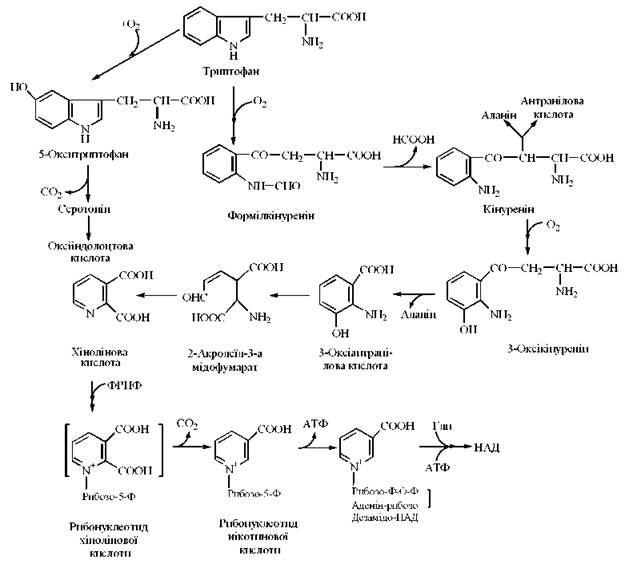
Fig. 18.4. Metabolic transformations of tryptophan.
Last update: 06/08/2026
Editorial and Educational Adaptation: This material has been compiled based on the primary/original source text. The project team performed an editorial review, corrected technical inaccuracies, structured sections, and adapted the content for an educational format.
What was processed:
- elimination of formatting defects (OCR errors, structural breaks, corrupted characters);
- editorial organization of content;
- standardization of terminology in accordance with academic sources;
- verification of factual statements against the original source text.
All mentions of the author, publication year, and origin of the primary text have been preserved in accordance with the source.