BIOTECHNOLOGY - V. H. Gerasymenko - 2006
Part II. Special Biotechnologies
CHAPTER 11. BIOTECHNOLOGY OF ANTIBIOTIC PRODUCTION
11.2. MODIFICATION OF β-LACTAM ANTIBIOTICS
11.2.1. Production of 6-Aminopenicillanic Acid (6-APA)
This is a key intermediate in the synthesis of novel Penicillins. Semisynthetic penicillins are derivatives of 6-APA, which is obtained via the Hydrolysis of benzylpenicillin (penicillin G). Treated with the enzyme penicillin amidase—produced by a specialized bacterial strain of E. coli—penicillin G is converted into 6-aminopenicillanic acid through the Selective Cleavage of the benzyl group from the molecule at 37 oC in an aqueous medium.
The second by-product generated during the hydrolysis process is phenylacetic acid:
Class="center">
In the early stages (1976), 6-APA was produced by treating benzylpenicillin with E. coli Cell biomass—specifically, intact Cells containing the enzyme penicillin amidase, which cleanly cleaved the precise amide bond required for 6-APA formation without Side Reactions.
The application of immobilized bacterial cells (E. coli) containing penicillin amidase, followed by the USE OF IMMOBILIZED penicillin amidase itself, significantly enhanced the efficiency and cost-effectiveness of industrial 6-APA production. In 1975, the process for manufacturing 6-APA using immobilized penicillin amidase was implemented in the former Soviet Union, marking a milestone as the first industrial enzymatic engineering process.
Methods OF IMMOBILIZATION vary across different countries. An Italian company utilizes immobilized penicillin amidase entrapped in Cellulose triacetate hollow fibers, achieving an overall 6-APA yield of 85% with 96% purity. According to the technology developed by the Japanese company Tanabe Seiyaku, whole bacterial cells immobilized within a polyacrylamide gel are employed (exhibiting a half-inactivation time of 42 days at 30 oC or 17 days at 40 oC), yielding approximately 80% 6-APA. In the former USSR, the entire volume of 6-APA was produced using penicillin amidase immobilized by entrapment in a polyacrylamide gel modified with glutaraldehyde.
The resulting 6-APA exhibits weak antibacterial activity and is not used independently as a therapeutic agent. However, the 6-APA core serves as a convenient structural backbone for chemical modifications; attaching various side chains significantly boosts its antibacterial potency. For instance, substituting these side chains yields methicillin—which is resistant to inactivation by bacterial Enzymes—as well as ampicillin, which is effective against gram-positive Bacteria.
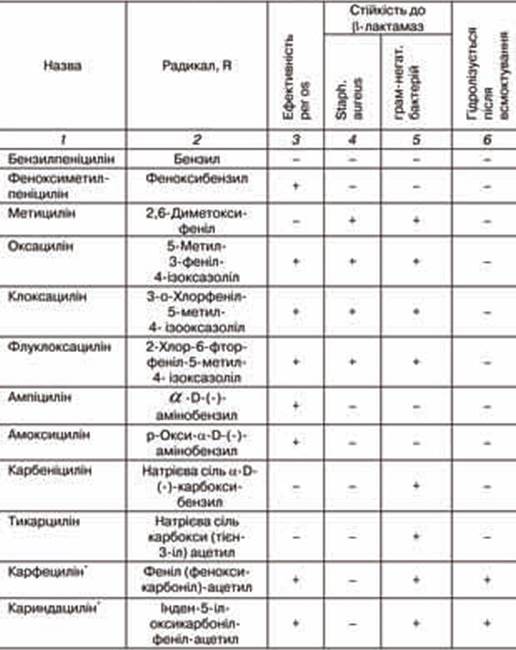
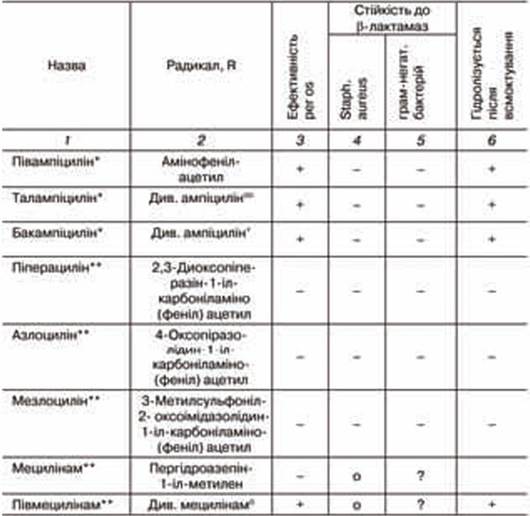
Today, biosynthetic Antibiotics (produced using Penicillium notatum or P. chrysogenum) and derivative semisynthetic β-lactam antibiotics are manufactured globally (Table 11.2).
Table 11.2.
Natural and Semisynthetic Penicillins
(Yelinov N. P., 1995)
6-APA can also be produced from penicillin G via chemical synthesis through multi-step transformations under rather harsh conditions (low temperatures, specific Solvents, and the complete exclusion of even trace amounts of moisture from the reaction mixture). Due to The complexity of the chemical approach, the enzymatic method is preferred, as it is also fewer steps.
Last update: 11/08/2026
Editorial and Educational Adaptation: This material has been compiled based on the primary/original source text. The project team performed an editorial review, corrected technical inaccuracies, structured sections, and adapted the content for an educational format.
What was processed:
- elimination of formatting defects (OCR errors, structural breaks, corrupted characters);
- editorial organization of content;
- standardization of terminology in accordance with academic sources;
- verification of factual statements against the original source text.
All mentions of the author, publication year, and origin of the primary text have been preserved in accordance with the source.