BIOTECHNOLOGY - V. H. Herasymenko - 2006
Part II. Special Biotechnologies
CHAPTER 9. APPLICATION OF IMMOBILIZED ENZYMES IN ANALYTICAL PRACTICE
9.2. ENZYME MICROCALORIMETRIC SENSORS
In 1975, K. Mosbach and coworkers (Sweden) were the first to propose The Use of a microcalorimetric sensor in packed-bed enzyme reactors for metabolite analysis. The sensor (Fig. 9.1) consists of two identical columns packed with an enzyme immobilized on Glass or Sepharose. A thermistor is located at the bottom of each Column. When a buffer solution is pumped through the columns, no reaction occurs, and the Temperature difference between the two thermistors is zero. Upon introducing a buffer solution containing the analyte (substrate) into the column, enzymatic Conversion of the substrate generates heat. The temperature in that column rises, and the temperature difference between the two thermistors is proportional to The amount of substrate converted.
Class="center">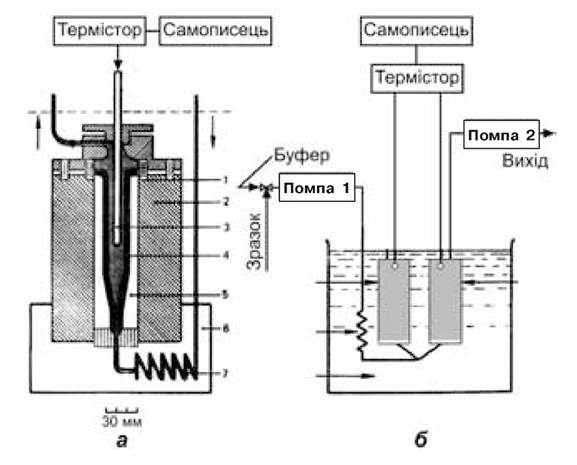
Fig. 9.1. Microcalorimetric sensor for metabolite analysis using immobilized enzymes
(after Berezin et al., 1987):
a — layout of the measuring unit: 1 — upper and lower column mountings; 2 — metal block; 3 — thermistor; 4 — microcolumn packed with immobilized enzyme; 5 — inner part of the block; 6 — Water bath; 7 — heat exchanger;
b — general setup diagram: arrows indicate the direction of the analyzed solution flow; 1 — enzyme column; 2 — heat exchanger; 3 — reference column; 4 — water bath.
The advantage of this method is that it can be applied to virtually any enzyme system, opaque media, and reactions that do not yield colored products. The sensitivity of the method allows for the detection of micromolar quantities of various substances.
Last update: 11/08/2026
Editorial and Educational Adaptation: This material has been compiled based on the primary/original source text. The project team performed an editorial review, corrected technical inaccuracies, structured sections, and adapted the content for an educational format.
What was processed:
- elimination of formatting defects (OCR errors, structural breaks, corrupted characters);
- editorial organization of content;
- standardization of terminology in accordance with academic sources;
- verification of factual statements against the original source text.
All mentions of the author, publication year, and origin of the primary text have been preserved in accordance with the source.