BIOTECHNOLOGY - V. H. Gerasymenko - 2006
Part II. Applied Biotechnologies
Chapter 22. BIOTECHNOLOGIES FOR WASTE UTILIZATION AND BIORECYCLING IN THE AGRO-INDUSTRIAL COMPLEX
22.3. NON-TRADITIONAL METHODS. BIOTECHNOLOGY FOR BIOGAS PRODUCTION VIA ANAEROBIC DIGESTION OF WASTE
22.3.6. Current State of Biogas Production in Europe and Worldwide
The escalating environmental crisis caused by various organic wastes, including livestock industry effluents, alongside a growing energy deficit, serve as the primary drivers for intensifying European research into biogas production and efficient utilization. Biogas technologies are further sustained by proactive environmental legislation and state subsidies for unconventional renewable Energy Sources (especially in Germany), as well as the Structure/175.html">Implementation of global environmental pollution quotas.
The potential of organic waste suitable for biogas production across 15 EU countries is as follows (million tons): manure - Н24; municipal solid waste - 46.9; wastewater - 22.32; industrial organic waste - 35.04 (Jens Bo Holm-Nielsen, Theodorit Al Seadi, 2002).
Three main concepts of biogas production have become most widespread in modern Europe:
1) on-farm biogas plants for individual agricultural holdings;
2) centralized manure Processing facilities designed to meet the shared needs of several farms;
3) large-scale commercial biogas plants specialized in processing organic waste from diverse origins.
On-farm systems are designed to generate biogas from manure while meeting the farm's heating and electricity demands. The processed manure is utilized as organic fertilizer. Excess electricity can be sold to power companies, providing an additional source of revenue for the farm. Typically, such setups comprise pre-storage manure tanks, anaerobic reactors equipped with control and heating systems, loading and unloading pumps, digestate storage tanks, gas storage and transport systems, and a combined heat and power (CHP) unit.
Centralized processing plants are established to handle manure generated across multiple livestock farms—predominantly swine, dairy, and poultry farms (ranging from 5 to 100 enterprises). Biogas can be produced from manure co-digested with other organic substrates. Such a plant consists of several units. The pre-storage unit features separate tanks for manure and organic wastes, homogenization tanks, and heat exchangers that utilize the thermal energy of the processed mass to pre-heat incoming raw Materials.
Anaerobic reactors, equipped with automated control systems, are typically steel tanks with conical bottoms. The process operates under either mesophilic or thermophilic Temperature regimes. Thermophilic plants are increasingly common due to better compliance with sanitary requirements, whereas mesophilic Digestion requires an additional pasteurization stage.
The generated biogas is converted into heat and electricity via a universal cogeneration module. Thermal energy is utilized to meet the plant's operational needs, with the surplus supplied to neighboring households. Electricity is sold to utility companies. Some facilities transport biogas via pipelines to supply nearby municipal power and heating stations. In Sweden, Switzerland, and several other countries, biogas undergoes upgrading and purification to be used as vehicle fuel.
Plants specialized in processing diverse organic wastes feature the most technologically advanced production lines for generating biogas from both liquid and solid organic feedstocks. The anaerobic digestion process is largely identical to that of centralized plants, though it is sometimes preceded by an additional Hydrolysis stage.
Centralized processing plants have achieved the widest adoption in Northern European countries such as Sweden and Denmark, as well as in certain regions of Germany.
The economic efficiency of these plants is directly proportional to their scale; that is, processing costs per cubic meter of biomass decrease as plant capacity increases. An additional advantage of centralized plants over individual farm units is the high level of staff qualification and specialization.
In Germany, over 1,300 farms currently feature biogas production equipment, and this number is projected to grow. The latest generation of equipment is distinguished by structural simplicity and a high degree of standardization. According to German farmers, biogas production yields the most tangible economic benefits for small-scale operations where generator capacity does not exceed 500 kW. The feed-in tariff for energy produced by farmers is 0.2 DM per kilowatt-hour.
In Austria, the number of farms equipped with biogas installations exceeds one hundred. These facilities utilize manure and pasture grass or pasture grass exclusively as feedstock. Large swine farms with inventories exceeding 500 sows face challenges regarding the disposal of excess manure, the volume of which far exceeds agricultural
requirements for use as organic fertilizer, thereby exerting a negative impact on the environment. This issue is particularly acute in Greece, Spain, Portugal, Ireland, the United Kingdom, France, the Netherlands, and Denmark. These countries are keen to adopt biogas biotechnology to achieve energy independence and resolve environmental issues related to foul odors and sanitary-epidemiological violations.
It is projected that the share of electricity generated from renewable sources in Europe will double by 2010. Purchase prices for "green electricity" are expected to rise and be maintained at high levels to incentivize European farmers to adopt waste-to-biogas conversion systems.
Organic waste-to-biogas technologies, actively developed over the past decade, have now matured sufficiently for industrial implementation. The next critical milestone will be the establishment of standardized, mass-produced equipment, which will significantly reduce capital and operational costs.
Regarding equipment complexity, an analysis of available sources indicates that the global development of biogas plants follows two main trajectories (Yasenetsky V., Klimenko V., 2001). The first involves the rational simplification and consequent cost reduction of units tailored for small farms. The second focuses on creating advanced, high-performance, fully integrated biogas plants based on state-of-the-art bioreactor designs, modern automated process control systems, and highly efficient thermal, electrical, and technological equipment.
Typical Examples of the first approach are units developed by German companies ITT Flygt Pumpen GmbH and U.T.S. Umwelt-Technik-Süd GmbH. Such systems feature two microbiologically linked reactors—essentially top-covered standard manure storage tanks equipped with propeller-type mixers and homogenizers. Liquid manure is fed into the reactors using a chopper pump. Biogas flows directly from the reactors to a modular cogeneration unit, where it is converted into thermal and electrical energy.
Class="center">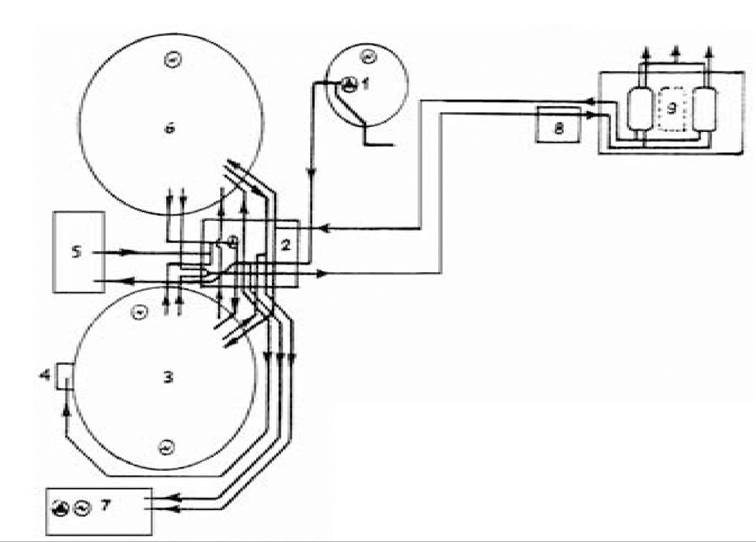
Fig. 22.8. Process flow diagram of the biogas plant in Nebelschütz (Germany):
1 — manure storage tank; 2 — pumping station; 3 — fermenter 1;
4 — solid waste processing unit; 5 — liquid organic waste storage tank; 6 — fermenter 2; 7 — digested mass storage;
8 — gas holder; 9 — modular cogeneration unit
The U.T.S. Umwelt-Technik-Süd GmbH company has also developed a larger-capacity biogas plant currently in operation in Nebelschütz, Germany. The plant (Fig. 22.8) comprises a manure storage tank, two fermenters, a storage tank for other organic wastes, a digested biomass settling tank, a gas holder, and a modular cogeneration unit. The capacity of the manure storage tank is 115 m3, and each of the two concrete, thermally insulated fermenters has a volume of 883 m3. Biogas is accumulated in a 300 m3 gas holder, from which it is supplied to modular cogeneration units with a capacity of 75 kW each. Plant performance: 1100–1400 m3/day of biogas, 2000–2500 kWh/day of electricity, and 3300–4200 kWh/day of heat. The capital cost of the installation is DM 625 per 1 m3 of Reactor volume.
The German company Farmatic Biotech Energy AG has developed and built over 20 biogas plants of various capacities for the disposal of liquid manure and other organic wastes, which are now operated not only in Germany but also in other Western European and Asian countries. In 2000, a biogas plant for two-stage mesophilic co-Fermentation of liquid manure and organic wastes was commissioned in Neubukow, Germany. The annual processing capacity of the plant is 80,000 tons of waste, with a cost of DM 9.8 million. The plant
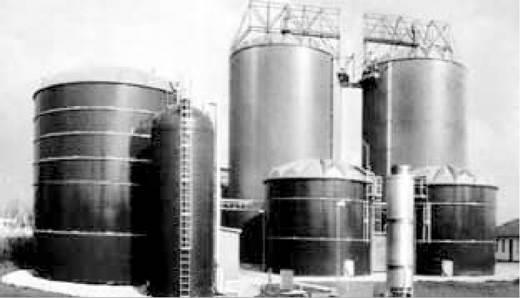
Fig. 22.9. Biogas plant in Neubukow (Germany) developed by Farmatic Biotech Energy AG
(after Yasenetsky V., Klimenko V., 2001)
consists of two fermenters with a volume of 2,300 m3 each, two 550 m3 hydrolyzers, a 550 m3 mixing tank, a 1,000 m3 gas holder, a 5,000 m3 storage facility for digested biomass, and a modular cogeneration unit. Sanitary Treatment of the waste is carried out by holding it at a temperature of 70 oC for one hour (up to 90 oC if necessary). The biogas plant is equipped with an automated control system (Fig. 22.9).
An original biogas plant was developed by the Danish company Bioscan A/S. The "Biorek" technology makes it possible to convert liquid manure from livestock farms and liquid organic wastes (wastewater and sewage sludge) into purified Water, fertilizer, and energy. The digested effluent from the bioreactor enters an ultrafiltration unit, which passes only water with dissolved substances while returning Bacteria and undigested organic residues to the bioreactor for reprocessing. The filtered effluent then enters an ammonia plant, where nitrogen is recovered in the form of an ammonia concentrate, and subsequently passes to a reverse osmosis unit, where it is separated into purified water and a potassium-phosphorus fertilizer.
For the processing of solid and pasty organic wastes, the "Babrek" technology has been developed. It additionally incorporates technological operations for homogenization, hydrolysis, and sanitary treatment of the initial biomass.
A fully automated biogas plant was developed by the German company TEWE-Elektronik GmbH & Co. KG in cooperation with Lipp GmbH (Fig. 22.10). A distinctive feature of this process design is the preliminary heating of the biomass prior to anaerobic digestion. The substrate preheater is a high-grade stainless steel tank with overall dimensions of 4.0 x 2.0 x 2.1 m and a mass of 1000 kg. Inside the tank, There is a 2000-liter cylindrical biomass accumulation reservoir equipped with a mixer and a heating coil through which biomass is fed into the accumulator. The substrate is heated by hot water (90–95 oC) supplied to the tank. The design of the preheater makes it possible to regulate the temperature of the incoming substrate.
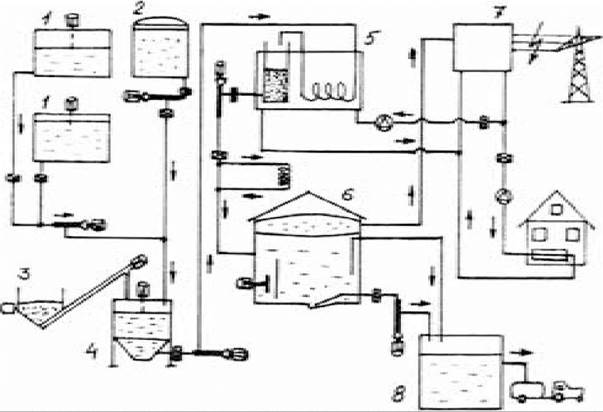
Fig. 22.10. Process flow diagram of a fully automated modular biogas plant developed by TEWE-Elektronik GmbH and Lipp GmbH:
1 — manure storage tank with a stirrer; 2 — storage tank for liquid preserved feed crop biomass; 3 — shredding device for Other types of biomass; 4 — weighing and dosing unit with a stirrer; 5 — substrate preheater; 6 — bioreactor with a Lipp mixer and integrated gas holder; 7 — modular cogeneration unit; 8 — digested mass storage
This plant includes an anaerobic digester with an integrated "ComBio-Reactor" gas holder (Fig. 22.11). The reactor volume can range from 100 to 800 m3 depending on The amount of biomass to be processed. The mixing system, which utilizes a patented Lipp mechanical stirrer, provides simultaneous horizontal and vertical agitation of the biomass and prevents The formation of scum and sediment. The Use of such a bioreactor helps reduce the length of process pipelines and the footprint required for the plant layout, while also lowering capital investment in construction. Anaerobic digesters with integrated gas holders are also used in biogas plants built by the German companies EnviTec Biogas AG, Biogas Weser-Ems GmbH & Co. KG, and Henze Harvester GmbH.
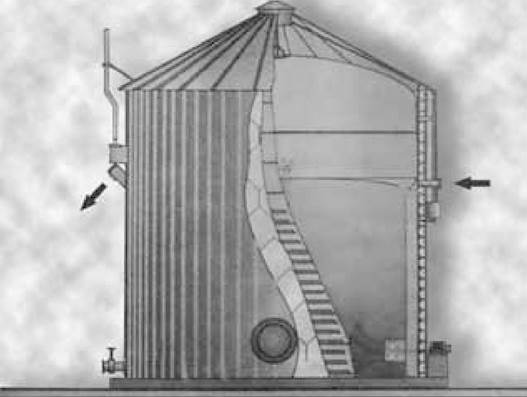
Fig. 22.11. Schematic diagram of the anaerobic digester with an integrated "Com-Bio-Reactor" gas holder developed by Lipp GmbH
(after Yasenetsky V., Klimenko V., 2001)
An original vertical-type bioreactor design was developed by the Austrian company Enteq GmbH. The "BIMA fermenter" bioreactor (Fig. 22.12) features two chambers—a main fermentation chamber and a post-fermentation chamber—separated by an intermediate partition. The chambers are interconnected by a vertical central pipe equipped with mixing blades at the bottom, a mixing shaft located near the sidewall of the bioreactor, and a gas dome with an automatic valve. The reactor
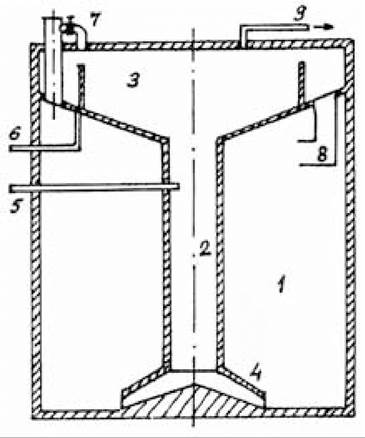
Fig. 22.12. Schematic diagram of the "BIMA Fermenter"
(after Yasenetsky V., Klimenko V., 2001):
1 — main fermentation chamber; 2 — central pipe; 3 — post-fermentation chamber; 4 — paddle mixer;
5 — feed pipeline; 6 — discharge pipeline; 7 — gas dome with an automatic valve;
8 — mixing shaft; 9 — gas outlet
It is also equipped with a feed pipeline connected to the central pipe, as well as discharge and gas outlet pipelines connected to the post-fermentation chamber. The biomass mixing process in such a reactor occurs due to fluid overflow during biogas extraction.
Bioreactors of this design with a capacity ranging from 750 to 1,700 m3 are successfully operated as part of biogas plants in the Netherlands and Austria. Depending on the type of waste (municipal sewage, a mixture of livestock farm waste with industrial organic waste, liquid waste from the processing industry), the organic loading rate of these bioreactors ranges from 2.0 to 6.5 kg of volatile solids per 1 m3 of reactor volume per day, with a digestion retention time of 6.5 to 30 days.
Several companies (Novatech GmbH, Schmack Biogas GmbH, Borsig Energy) utilize horizontal-type reactors (both metal and concrete) with mechanical biomass mixing in their biogas plants. Some of these are also equipped with inclined screw conveyors for sludge removal.
In the described biogas plant designs, standard tanks are predominantly used for receiving, accumulating, and conditioning waste, as well as storing processed products, or these tanks of a specific volume are assembled from corresponding structural elements. This frequently applies to bioreactor designs as well.
An analysis of technological and engineering solutions for modern biogas plants worldwide has revealed the following major development trends:
- simplification of farm-scale biogas plant designs by shifting them to a psychrophilic regime and assembling them with off-the-shelf equipment (standard monolithic or modular metal tanks, chopper pumps, propeller mixers);
- development of high-performance, turnkey, fully automated industrial biogas plants for processing various types of organic waste;
- further improvement of bioreactor designs aimed at reducing the Energy Consumption of the substrate mixing process and creating optimal conditions for the accumulation of active biomass;
- widespread use of bioreactors with integrated gas holders, which reduces The Need for process piping and operational footprint;
- manufacturing of various tanks that make up biogas plants, including bioreactors, from modular elements made of sheet or corrugated metal with high-quality anti-corrosion coatings;
- a decrease in the share of horizontal-type bioreactors in biogas plants;
- the development and widespread implementation of novel engineering solutions aimed at increasing the efficiency of biogas plants: post-fermentation conditioning of biomass in additional tanks, co-fermentation (fermentation of mixtures of Different types of organic waste), pre-heating of the feed biomass (up to 79 oC) followed by temperature control in the bioreactor, etc.
Given sufficient investment in R&D and programs aimed at the further development of biogas production and utilization technologies, total European bioenergy capacities are expected to increase to 1,000 MW within the next few years (starting from 2002).
Last update: 11/08/2026
Editorial and Educational Adaptation: This material has been compiled based on the primary/original source text. The project team performed an editorial review, corrected technical inaccuracies, structured sections, and adapted the content for an educational format.
What was processed:
- elimination of formatting defects (OCR errors, structural breaks, corrupted characters);
- editorial organization of content;
- standardization of terminology in accordance with academic sources;
- verification of factual statements against the original source text.
All mentions of the author, publication year, and origin of the primary text have been preserved in accordance with the source.