Tuberculosis - I.T. Pyatnochka 2005
Prevention of tuberculosis
The preventive approach in healthcare in general, and regarding tuberculosis in particular, must be a top priority. Tuberculosis prevention involves a comprehensive set of various measures. These are categorized into social, sanitary, specific prevention (vaccination and revaccination), and Chemoprophylaxis.
Social prevention is implemented through nationwide socio-economic preventive measures. These are state-level initiatives, as their Structure/175.html">Implementation requires the participation not only of government bodies, but also of a broad network of tuberculosis clinics, public organizations, and other entities. Social prevention aims to promote a healthy lifestyle by improving environmental conditions, raising the material well-being of the population, and strengthening public health through The Development of mass physical culture, sports, recreation centers, and sanatoriums, as well as improving Nutrition and housing conditions, and combating alcoholism and other harmful habits.
Sanitary prevention is the systematic planning and implementation of a system of sanitary-hygienic and preventive measures aimed at preventing tuberculosis infection and disease. Essentially, sanitary prevention is an integral component of social tuberculosis prevention. It is directed toward sanitizing the foci (foci)
of tuberculosis infection, conducting health education, veterinary surveillance, early and timely detection, and treating tuberculosis patients. Sanitary prevention is primarily carried out within the focus of tuberculosis infection. An epidemiological focus of tuberculosis is defined as a tuberculosis patient who excretes mycobacteria, the dwelling where the Bacteria excretor lives, and the people living with them. Anti-epidemic measures in a tuberculosis focus include disinfection, examination of contacts, administering chemoprophylaxis to them, isolating children from the bacteria excretor, Sanitary and hygienic education of the patient and their family members, improving living conditions, and treating the patient. Preventive work in a focus is carried out in accordance with its epidemiological hazard level, which is determined jointly by a phthisiologist and an epidemiologist, taking into account the following factors: 1) the massiveness of bacterial excretion; 2) the presence of children and adolescents in the family; 3) the sanitary conditions in which the patient and their family live. Therefore, the Criteria for the epidemiological hazard of a tuberculosis infection focus are the massiveness and constancy of MBT excretion by the patient, the patient's family and domestic conditions, and the behavior, general culture, and sanitary literacy of the patient and their surroundings.
Depending on the massiveness and duration of bacterial excretion, the following are distinguished: A. Massive, when MBTs are detected by simple direct smear Cell/15.html">Microscopy or by culture yielding more than 100 colonies; B. Moderate, if 20–100 colonies are detected; C. Scanty, if MBTs are detected only by Bacteriological examination yielding no more than 20 colonies; D. Conditional (formal): 1) in newly diagnosed tuberculosis, when the cessation of bacterial excretion is achieved As a result of Treatment and confirmed by two consecutive negative results of microscopy and culture Methods at intervals of 2-3 months (within 10-12 months from the moment of the negative test result); 2) in chronic Pulmonary Tuberculosis, when the cessation of bacterial excretion as a result of treatment is confirmed by repeated microscopic and cultural examinations at intervals of 2-3 months over 1.5-2 years from the moment of the first negative result.
According to these conditions, foci of tuberculosis infection are divided into 3 groups.
The first and most hazardous group includes foci where patients with massive bacterial excretion reside, or those with scanty excretion if there are children and adolescents in the family or aggravating circumstances exist, such as poor housing conditions, violation of hygienic rules, or alcohol abuse. The epidemiologist and district phthisiologist must visit such a focus once a quarter, and the district nurse at least once a month.
The second group, which is epidemiologically less hazardous, includes foci of tuberculosis infection where patients with scanty bacterial excretion live and the aforementioned unfavorable factors are absent, or patients considered conditional bacteria excretors, but with children and adolescents in the family or at least one of the listed aggravating factors present. The doctor visits these foci once every six months, and the nurse once every two months.
The third group includes foci where only adults reside, the patients are formal bacteria excretors, and there are no aggravating circumstances whatsoever. This group also includes families that keep livestock affected by tuberculosis on their private farmsteads. The doctor visits these foci once a year, and the nurse once every six months.
The complex of preventive measures in a focus of tuberculosis infection includes concurrent and terminal disinfection, isolation of children from the bacteria excretor through hospitalization or placement in specialized children's institutions, vaccination of newborns and revaccination of uninfected contacts with the BCG vaccine, regular examination of contacts, administration of chemoprophylaxis among them, sanitary and hygienic education of patients and their families, improvement of living conditions, and intensive inpatient Treatment of the patient followed by controlled outpatient Chemotherapy.
Following the hospitalization of a patient with newly diagnosed bacilli-positive tuberculosis, terminal disinfection in the patient's dwelling is carried out by the local epidemiological station (SES) or disinfection station. Terminal disinfection is performed in all cases of temporary or permanent departure of the patient (hospitalization, change of residence, after death at home). Low-value items should preferably be burned. Ceilings, walls, floors, and furniture (except polished ones) are sprayed with a 5% chloramine solution using a hydro-pump, and the room is tightly closed for 2 hours. Afterward, it is ventilated and cleaned. An effective method for room disinfection is ultraviolet irradiation. This primarily applies to valuable items that are easily damaged by disinfecting solutions; they are irradiated with bactericidal lamps.
Prior to the patient's hospitalization, or when they remain at home for various reasons, concurrent disinfection is systematically carried out by the patient themselves or their family members, which consists of the following:
1) daily ventilation and wet cleaning of the premises and household items; the bacteria excretor must use only personal tableware, towels, and bed linen, which are systematically disinfected;
2) collecting sputum in an individual pocket sputum cup filled to a quarter of its volume with a 5% chloramine solution, and disinfecting it, along with tableware and food leftovers;
3) collecting used linen, packing it into bags, storing it separately, and subsequently disinfecting it.
In general, disinfection is carried out using physical methods (boiling, autoclaving, chamber disinfection, burning, quartz lamp irradiation, insolation, ventilation, ironing with a hot iron) and chemical agents (bleaching powder, chloramine, benzylphenol, etc.).
After a tuberculosis patient is hospitalized, all individuals who have been in contact with them are examined. Adults and adolescents undergo chest fluorography, children undergo radiography, and children and adolescents additionally receive the Mantuu test with 2 TU. Contact persons are registered under group 5.2 of dispensary observation and prescribed chemoprophylaxis.
Many species of mammals and birds suffer from tuberculosis. However, the greatest threat to humans is posed primarily by cattle, and less frequently by poultry, goats, pigs, cats, and dogs. The veterinary service is responsible for the prevention and detection of tuberculosis among animals. Examination of cattle is carried out using tuberculin Skin testing. Farm workers undergo annual fluorographic examinations. Tuberculosis patients are not permitted to work on farms.
The successful resolution of the main tasks of the phthisiotherapy service (prevention, timely detection, treatment, and measures in the focus of tuberculosis infection) largely depends on health education work among medical personnel, the general public, and patients.
Tuberculosis vaccination and revaccination. The most effective method of specific tuberculosis prevention is vaccination and revaccination with the BCG vaccine, or vaccine prophylaxis. In 1921, Calmette and Guerin first administered the BCG vaccine to an infant from a bacillary environment. In 1923, the Health Committee of the League of Nations decided to widely implement the BCG vaccine in all countries worldwide for tuberculosis immunization.
In Ukraine, dry tuberculosis vaccine (BCG) for intradermal administration is used for active specific tuberculosis prevention. It consists of live mycobacteria of the vaccine strain, freeze-dried in a 1.5% sodium glutamate solution. It appears as a white dried mass. It is available in ampoules containing 1 mg of vaccine, which equals 20 doses of 0.05 mg of the preparation each. The BCG vaccine is administered intradermally in a dose of 0.05 mg in a volume of 0.1 ml. Primary vaccination is performed on healthy full-term newborns on the 3rd to 5th day of life.
In addition to the BCG vaccine, the BCG-M vaccine is produced in a half-dose (0.5 mg in one ampoule, which equals 20 doses of 0.025 mg of the preparation each), intended for the vaccination of premature newborns and children who were not immunized at birth due to contraindications, as well as for the vaccination and revaccination of children living in radionuclide-contaminated areas (zones III-IV).
For each vaccination, single-use one-gram syringes and viable vaccine are required. The dry vaccine (1 ampoule) is dissolved in 2 ml of isotonic solution to obtain the correct dilution, i.e., 1 dose in 0.1 ml of solution. The vaccine must be used within 2-3 hours; leftovers are destroyed by boiling. After mixing, 0.2 ml of the diluted vaccine is drawn into a one-gram syringe, air is expelled through the needle, and part of the preparation is adjusted to the 0.1 ml mark. The vaccine is administered strictly intradermally at the border between the upper and middle thirds of the shoulder, after wiping the skin with 70° alcohol. With proper technique, a whitish papule 5-6 mm in diameter forms, which resolves in 15-20 minutes. After 3-4 weeks, a small infiltrate forms at the injection site—a bluish nodule, in which a small fistula with serous discharge develops in half of the cases. Subsequently, a brown crust forms, which falls off after 2-4 months, revealing a pink scar (4-10 mm in diameter) that gradually depigments (Fig. 33). With proper vaccination technique, a scar forms in 90-95% of cases, indicating the effectiveness of the immunization.
Contraindications for BCG Vaccination include:
1) prematurity, when the birth weight is less than 2000 g;
2) intrauterine infection;
3) purulent-septic diseases;
4) hemolytic disease of the newborn (moderate and severe forms);
5) severe Birth injuries with neurological symptoms;
6) generalized skin lesions;
7) any acute illnesses;
8) generalized BCG infection in other children in the family.
Children who are not immunized in the maternity hospital due to contraindications are vaccinated with the BCG-M vaccine within 1-6 months after recovery at a pediatric clinic or a paramedic-midwife station. However, if the child has reached 2 months of age or older, a Manttu test with 2 TU must be performed prior to vaccination. Children with a negative tuberculin reaction are vaccinated. The interval between the Manttu test and vaccination should be at least 3 days and no more than 2 weeks.
Post-vaccination Immunity develops within 6-8 weeks; therefore, vaccinated children from the family of a tuberculosis patient are isolated from the bacterium carrier for the period of immunity development, i.e., for at least 2 months.
In children vaccinated with BCG at birth, immunity persists for 5-7 years. After this, revaccination becomes necessary, which is mandatory in Ukraine at the ages of 7 and 14. Only healthy individuals with a negative Manttu test reaction are revaccinated. BCG vaccination and revaccination are effective preventive measures that reduce the risk of disease by 5 times, and if the disease does develop, it runs a much milder and localized course. The revaccination technique is the same as for BCG vaccination. Tuberculin Diagnostics (screening for revaccination) is carried out by trained mid-level medical personnel, members of specialized teams headed by a pediatrician.
Class="center">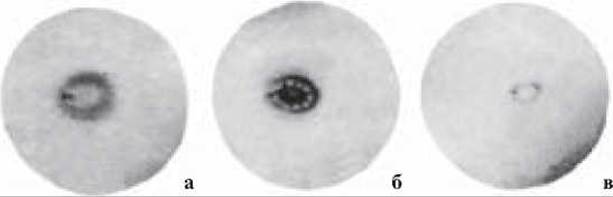
Fig. 33. Post-vaccination reactions:
a) infiltrate; b) infiltrate with pustule; c) scar
Contraindications for revaccination of children and adolescents:
1) tuberculosis infection or a history of tuberculosis;
2) acute and chronic diseases in the acute stage;
3) complications from previous BCG administration;
4) allergic diseases in the acute stage;
5) malignant Blood diseases and neoplasms;
6) immunodeficiency states, treatment with immunosuppressants;
7) HIV-infected children.
Other routine vaccinations can be administered no earlier than 2 months after revaccination.
In revaccinated individuals, local reactions begin to develop faster, within a week, but their regression also takes 2-4 months. Vaccinated children develop tuberculin allergy, showing positive reactions to tuberculin (2 TU) in 55-65% of cases, and when using 100 TU, in 90% of immunized children and adolescents. The post-vaccination scar and positive tuberculin reaction are criteria for the quality of vaccination and the development of anti-tuberculosis immunity. The district pediatrician monitors the Development of the local post-vaccination reaction and records it in medical documentation at 1, 3, and 12 months after vaccination. In the absence of a post-vaccination scar and a negative tuberculin reaction, immunization is considered ineffective. Such children and adolescents should be revaccinated under unfavorable conditions, but no earlier than 2 years after vaccination and one year after revaccination.
The Use of the BCG vaccine can lead to various complications. The frequency of complications after vaccination and revaccination ranges from 0.02% to 4.0%. Most often, complications after BCG vaccination and revaccination are local and rare (0.02%).
The WHO International Union Against Tuberculosis classifies post-vaccination complications into 4 categories:
Category 1: local skin lesions (cold abscesses, ulcers, keloid scars, regional lymphadenitis);
Category 2: persistent and disseminated BCG infection without fatal outcome (lupus, osteitis, etc.);
Category 3: disseminated BCG infection, generalized fatal lesions observed in severe immunodeficiency;
Category 4: post-BCG syndrome (conditions occurring immediately after BCG vaccination, primarily of an allergic nature, such as erythema nodosum, rashes, and keloid scars).
The most common manifestations include: subcutaneous cold abscesses, superficial ulcers 10 mm or more in diameter at the site of intradermal BCG administration; regional lymphadenitis involving Lymph Nodes (axillary, cervical, supraclavicular, and subclavian) measuring 1.5 cm or more; and keloid scars 10 mm or more in diameter.
Chemoprophylaxis. Specific prophylaxis aims not only to enhance the body's resistance to tuberculosis infection through active immunization (vaccination and revaccination), but also through the administration of Antimycobacterial agents (chemoprophylaxis).
While the effectiveness of BCG vaccination and revaccination becomes apparent after 1–1.5 months, chemoprophylaxis is regarded as urgent tuberculosis prevention because its protective effect begins within the first few hours after taking the antimycobacterial drug. Chemoprophylaxis is recognized as the most effective among all methods of tuberculosis prevention.
Primary and secondary chemoprophylaxis are distinguished. Primary chemoprophylaxis is administered to uninfected individuals with a negative tuberculin skin test. Secondary chemoprophylaxis aims to prevent the development of active tuberculosis in previously infected individuals—namely, those with a positive tuberculin reaction who show no active clinical or radiological signs of tuberculosis.
Candidates for chemoprophylaxis include:
1) clinically healthy children, adolescents, and young adults under 30 years of age who have been newly infected with Mtb;
2) individuals with persistent hyperergic reactions to tuberculin or an increase in reaction size by 6 mm or more compared to previous results;
3) children, adolescents, and adults in constant contact with epidemiologically dangerous tuberculosis patients;
4) individuals with inactive tuberculosis lesions during Pregnancy or in the presence of risk factors (acute illnesses, surgeries, trauma) capable of triggering a tuberculosis relapse;
5) individuals with traces of past tuberculosis who have co-existing conditions (Bronchial Asthma, collagenosis, sarcoidosis, gastric ulcer) and are undergoing various drug therapies, including corticosteroid Hormones, which may provoke the exacerbation or relapse of tuberculosis.
Among individuals who underwent chemoprophylaxis, the incidence of tuberculosis is 5–7 times lower compared to corresponding groups of people who did not receive it.
Chemoprophylaxis is primarily carried out using isoniazid for 2–3 months; if the epidemiological risk persists, it is repeated twice a year. For adults and adolescents, the daily dose of isoniazid for daily administration is 0.3–0.45 g, and for children, 8–10 mg/kg of body weight. Thirty minutes after taking the medication, a vitamin complex is prescribed, which must include vitamin B6 (30–50 mg daily) and Vitamin C.
It should be noted that modern approaches to chemoprophylaxis require a more tailored methodology. Specifically, adults who are uninfected with tuberculosis but in contact with a patient shedding Mtb in tuberculosis foci are administered isoniazid at a dose of 0.45 g daily or 0.6 g every other day for at least 2 months. For individuals cured of tuberculosis, chemoprophylaxis is recommended using at least 2 anti-tuberculosis drugs—combinations of isoniazid with ethambutol or pyrazinamide. The duration of the chemoprophylaxis course is 2–3 months, and if epidemiological risk persists, it is repeated twice a year.
In individuals cured of drug-resistant tuberculosis and within foci of tuberculosis infection where patients harbor drug-resistant Mtb, chemoprophylaxis is performed using drugs to which the Mtb strains retain susceptibility.
CONTROL QUESTIONS
1. Tuberculosis prevention and its types.
2. The Essence of social tuberculosis prevention.
3. Definition of sanitary tuberculosis prevention.
4. What constitutes a focus of tuberculosis INFECTION AND ITS Classification into groups.
5. Specific tuberculosis prevention, characteristics of BCG and BCG-M Vaccines.
6. Indications and contraindications for BCG vaccination.
7. Vaccination methodology. Timeframes for immunity development, its duration, and criteria for effectiveness.
8. Indications and contraindications for revaccination, and its scheduling.
9. Chemoprophylaxis and its types, indications (in children, adolescents, and adults).
10. Anti-tuberculosis drugs used for chemoprophylaxis, their dosages, and duration of administration.
TESTS
1. Patients with newly diagnosed pulmonary tuberculosis may be eligible for a sick leave certificate for a period of up to:
A. 1 month
B. 4 months
C. 6 months
D. 10 months
E. 14 months
2. The greatest danger to humans is posed by tuberculosis patients who are:
A. cows,
B. horses,
C. chickens,
D. goats,
E. dogs.
3. What do the BCG and BCG-M vaccines represent?
A. Killed mycobacterial culture
B. Metabolic products of mycobacteria
C. Live attenuated mycobacterial culture
D. Mixture of purified tuberculin and killed mycobacteria
E. Incompletely purified dry tuberculin
4. What is the value of the BCG vaccine?
A. Milder course of tuberculosis
B. Prevents infection
C. Guarantee against the disease
D. Lower chance of contracting tuberculosis
E. Prevents tuberculosis relapse
5. How long after the BCG vaccination is immunity developed?
A. In 6-8 days
B. In 6-8 weeks
C. In 6-8 months
D. In 9-12 months
E. In 5-7 years
6. In which cases is BCG revaccination performed?
A. In infected individuals
B. In uninfected individuals
C. In contacts with a doubtful reaction to the 2 TU Mantoux test
D. In tuberculosis patients
E. In individuals who have had tuberculosis
7. Schedule for BCG revaccination in Ukraine.
А. On the 3rd-5th day after birth
B. On the 3rd-5th week after birth
C. At 3, 5 years
D. At 7, i4 years
E. At 17, 30 years
8. A healthy child weighing 3200 g was born. On which day after birth is the BCG vaccination performed?
A. 1-2
B. 3-5
C. 7-11
D. 13-15
E. 25-30
9. BCG vaccination and revaccination are administered:
A. Percutaneously
B. Intradermally
C. Subcutaneously
D. Intramuscularly
E. Orally
10. A 7-year-old girl, 5 months after BCG revaccination, developed a Swelling with a bluish skin discoloration at the injection site, with fluctuation upon Palpation. What type of complication is this?
A. Lymphadenitis
B. Cyst
C. Keloid scar
D. Ulcer
E. Cold abscess
11. What is indicated by a 5 mm scar formed 4 months after BCG vaccination?
A. High reactogenicity of the vaccine
B. A complication in the form of a keloid scar
C. Violation of the vaccination technique
D. Absence of anti-tuberculosis immunity
E. Presence of post-vaccination immunity
12. Which antimycobacterial drug is used for chemoprophylaxis?
A. Streptomycin
B. Rifampicin
C. Pyrazinamide
D. Isoniazid
E. Ethambutol
13. Chemoprophylaxis is carried out for:
A. 3 days
B. 3 weeks
C. 3 months
D. 6 months
E. 9 months
14. After BCG vaccination, some vaccine remains unused. What should be done with it?
A. 2-3 hours after reconstitution, the unused vaccine must be destroyed by boiling
B. After 24 hours, the unused vaccine must be destroyed
C. Store for 2-3 days, then destroy
D. Store in the refrigerator for a week
E. Store in the refrigerator for a year
PROBLEMS
1. A 3-month-old child is healthy. The child was not vaccinated with the BCG vaccine at birth due to moderately severe hemolytic disease.
a) Will you vaccinate the child?
b) Under what conditions?
c) Which vaccine preparation?
2. A 7-year-old girl has a negative Mantoux test with 2 TU. The mother has pulmonary TB (07.23.2003) of the upper lobe of the right lung (infiltrative), Dest+, MBT+M+ K+, Resist-, HistO, Kati Kog3(2003).
a) Will you administer a BCG revaccination? b) Will you conduct chemoprophylaxis? c) In what sequence?
3. A kindergarten teacher has pulmonary TB (11.17.2003) of the upper lobe of the left lung (focal), Dest-, MBT-M-K-, Hist0, Cat3 Kog4(2003). General condition is good.
a) Can the teacher continue working?
b) What is the management strategy regarding the children attending the kindergarten?
4. A mother, whose family includes her husband and a 7-year-old child, has pulmonary TB (07.26.2003) of the lower lobe of the right lung (Tuberculoma), Dest+, MBT+M-K+, Resist-, Hist0, Cat1 Kog3(2003).
a) Your management strategy regarding the female patient.
b) Will you administer chemoprophylaxis to her contacts, and for how long?
c) Which medication will you use?
5. Can revaccination and chemoprophylaxis be performed simultaneously?
a) Yes, b) no.
6. Child Z., 8 years old, from a tuberculosis infection focus. At the age of 7, a BCG revaccination was performed, but there is no post-vaccination scar.
a) What does this indicate? b) Your management strategy.
7. Child A. received the BCG vaccination on the 3rd day after birth. Three months later, an ulcer with a diameter of 12 mm formed at the injection site.
a) What does this indicate? b) Your management strategy.
8. Woman K., 25 years old, PTB (22.09.2003) (disseminated) (infiltrative), Dest+, MBT+M+K+, Resist+(H), Hist0, RESP I-II st., Cat2 Cog3(2003), has given birth to a child.
a) Your management strategy regarding the mother.
b) Can the child be vaccinated?
c) Can the woman be allowed to breastfeed the infant?
Last update: 10/08/2026
Editorial and Educational Adaptation: This material has been compiled based on the primary/original source text. The project team performed an editorial review, corrected technical inaccuracies, structured sections, and adapted the content for an educational format.
What was processed:
- elimination of formatting defects (OCR errors, structural breaks, corrupted characters);
- editorial organization of content;
- standardization of terminology in accordance with academic sources;
- verification of factual statements against the original source text.
All mentions of the author, publication year, and origin of the primary text have been preserved in accordance with the source.