Military Hygiene and Hygiene in Emergency Situations - K.O. Pashka 2005
Fundamentals of organizing and conducting sanitary supervision and medical control over the nutrition of military personnel and the population in field conditions.
Technical equipment of the food service in field conditions
For the procurement, Processing, transportation, and storage of food supplies, as well as for cooking hot meals in the field and delivering them to personnel, the food service is equipped with appropriate technical means.
The military equipment of the food service includes:
1. Field technical equipment:
- technical means for cooking and transporting food in field conditions (automobile, trailer, portable, and gas field kitchens, mobile kitchen-dining rooms (Fig. 4.1), trailer and portable stoves, automobile and trailer dining rooms, portable Water boilers, thermal containers, insulated food boxes, etc.);
- technical means for field baking (automobile and trailer baking units, trailer and portable baking ovens, trailer dough-mixing units, sifting machines, dough dividers, and portable dough-shaping machines, etc.) (Fig. 4.2 a, b);
- technical means for the supply of food and water (refrigerated trucks, refrigerated trailers, bread vans, isothermal and combined trailers and vans, trailer warehouses, container trailers, water tankers, water tanker trailers, portable water tanks, etc.) (Fig. 4.3);
- technical means for food and livestock processing in the field (mills, hulling mills, trailer meat processing units, pasta-making units, etc.) (Fig. 4.4 a, b, c);
- field refrigeration equipment (trailer refrigeration units, modular cold rooms, etc.) (Fig. 4.5 a, b).
Class="center">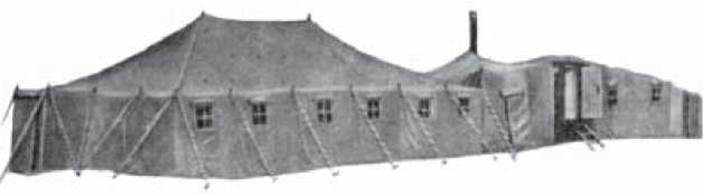
Fig. 4.1. PKI-2M mobile kitchen-dining room deployed.
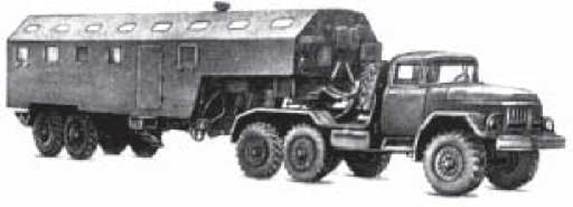
Fig. 4.2 a. AKHB-2.5 automobile baking unit prepared for movement.
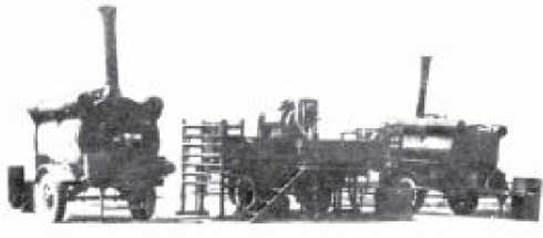
Fig. 4.2 b. PMKh mobile field bakery section kit with two HPK-50M2 ovens deployed.
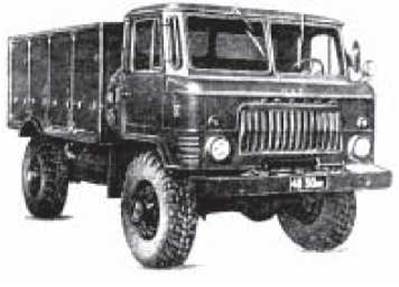
Fig. 4.3. AFKh-66 bread delivery van in marching order.
2. Field repair equipment:
- repair workshops for food service equipment;
- workshops for the repair of refrigeration and technical equipment of the food service.
3. Technological equipment for military unit dining facilities:
- mechanical equipment (universal kitchen machines, potato peeling machines, vegetable cutting machines, shredders, meat grinders, patty forming and breading machines, bread slicers, fish scalers, whipping machines, dishwashing machines, etc.);
- thermal equipment (ranges, cooking kettles, electric frying pans and deep fryers, roasting and baking cabinets, water boilers, etc.).
4. Refrigeration equipment for dining facilities and food warehouses (refrigerators and cold rooms, household refrigerators, display counters, refrigeration units, etc.).
5. Technological equipment for stationary military bakeries (baking ovens, dough mixers, dough dividers and rounders, sifters, salt dissolvers, sugar dissolvers, etc.).
6. Weighing and measuring instruments (counter scales, platform scales, weights, etc.).
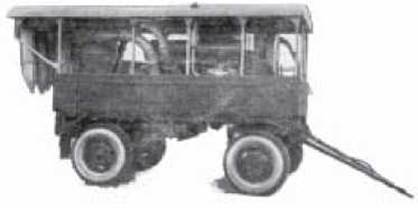
Fig. 4.4 a. General view of the MPU-2 trailed mill.

Fig. 4.4 b. PKRM trailed grain crusher.
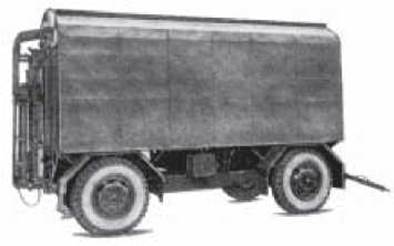
Fig. 4.4 c. PM-40 trailed field kitchen/butchery unit in traveling position.
Military property of the food service includes:
- table and kitchen utensils, and equipment;
- non-mechanical equipment for dining facilities, food warehouses, and military bakeries (self-service lines, tables, production sinks, dish racks, carts for transporting prepared food and collecting tableware, etc.);
- special tents and tarpaulins used by the food service, as well as tablecloths, oilcloths, and napkins;
- spare parts, Materials, devices, tools, and accessories for the operation and repair of food service equipment;
- laboratory instruments and Reagents for food warehouses and military bakeries;
- all types of packaging, racks, pallets, and containers;
- accounting and reporting books and forms, posters, and other food service documentation.
Food products are placed in polyethylene and kraft paper bags, cardboard and plywood boxes, and are transported and stored using food service trucks, which typically feature canvas-covered truck beds.
To prepare meals at field feeding stations, the food service utilizes field kitchens mounted on single-axle car trailers complete with frame tents, such as KP-125 and KP-130 (Fig. 4.6 a, b) (the KP-130 kitchen can be used for food preparation in radioactive contaminated areas), as well as vehicle-mounted field kitchens such as PAK-170 and PAK-200 (the numbers indicate the capacity of persons for whom meals can be prepared), with the latter allowing food preparation while on the move (Fig. 4.7).
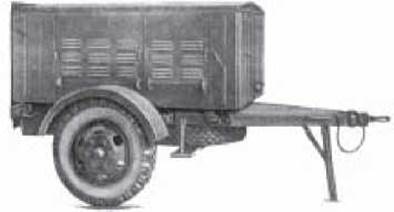
Fig. 4.5 a. PRHU trailed refrigeration unit in traveling position.
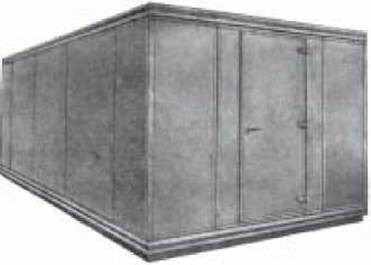
Fig. 4.5 b. KHR-8 modular walk-in cold room assembled.
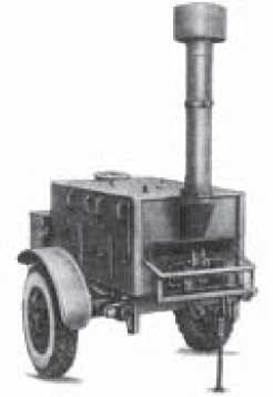
Fig. 4.6 a. General view of the KP-125M trailed kitchen.
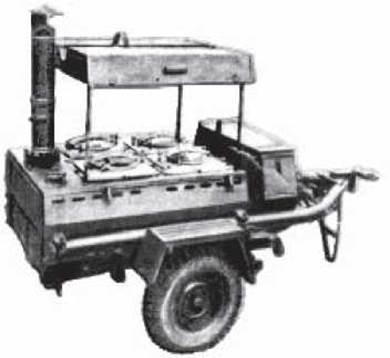
Fig. 4.6 b. KP-130 trailed kitchen prepared for operation.
Food for units of up to 50 personnel that are forced to perform missions detached from their main units for extended periods can be prepared using portable kitchens and stoves, such as the KO-75, MK-30, and MK-10 portable kitchens, PP-40 type portable stoves, etc. (Fig. 4.8 a, b, c).
Kitchens and stoves operate on liquid (diesel) or solid (coal, firewood) fuel.
The field kitchen kit includes essential kitchen equipment (a table and a set of cutting boards with a set of "chef's trio" knives, a paddle with a ladle, a handwashing basin, a spare liquid fuel nozzle, etc.).
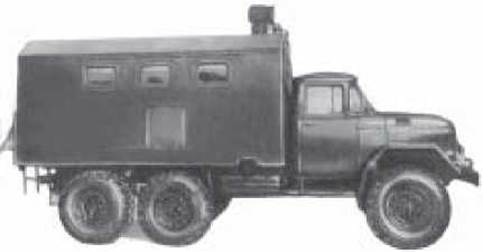
Fig. 4.7. General view of the PAK-200 mobile automotive kitchen.
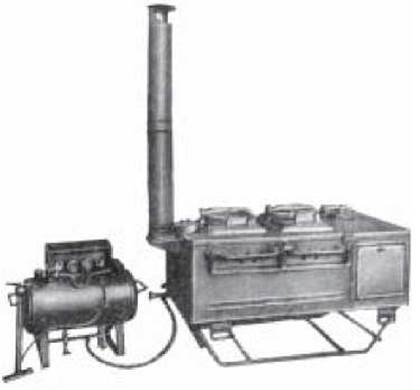
Fig. 4.8 a. KO-75M portable kitchen with a liquid fuel tank.
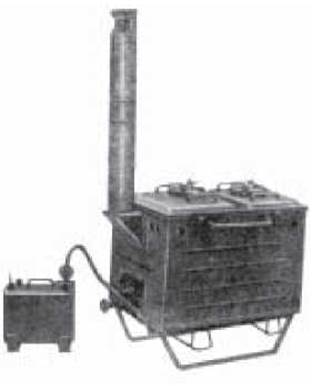
Fig. 4.8 b. MK-30 portable kitchen prepared for operation.
To boil hot water, each field kitchen is equipped with a boiler; additionally, portable water boilers of various types, such as the PNK-2, can be used for this purpose.
Hot food from the kitchens is dispensed to specially designated food carriers in military thermal containers for delivery to combat units (to the sites of emergency rescue and Other types of operations). In such containers, food remains hot for several hours even at ambient temperatures as low as -15 °C.
Every serviceman is issued personal mess gear from the food service depots for preparing or receiving food: a mess tin, a mug, a spoon, and a flask for water or tea (Fig. 4.9).
Qualitative water is drawn, transported, stored, and in some cases disinfected using CV-4 containers (320 L), CV-50 trailer tankers (1200 L), AVC-28 tank trucks (2800 L), etc.

Fig. 4.8 c. MK-10 portable kitchen.

Fig. 4.9. Individual mess tin, spoon, mug, and flask of servicemen.
In large headquarters and hospitals, field kitchen-dining facilities are deployed for food preparation and consumption.
Organization and Structure/175.html">Implementation of Sanitary supervision and medical control over personnel Nutrition in the field
The nutrition of unit personnel in the field is organized within supply-type units, namely separate battalions or divisions and separate companies. Smaller military units that lack their own technical means for food preparation are usually attached to them by order of the unit commander's deputy for logistics to receive meals. The organization of personnel nutrition in the field provides for supplying all categories of servicemen with foodstuffs according to ration standards in accordance with the requirements of Resolution of the Cabinet of Ministers of Ukraine No. 426 dated March 29, 2002, "On the Nutrition Standards for Servicemen of the Armed Forces and Other Military Formations" (Appendix 4.1).
Before a military unit (sub-unit) deploys to the field, the food service chief draws up a draft plan for food supply and the organization of personnel nutrition in the field, which, after coordination with the military medical (Sanitary and epidemiological) service, is approved by the unit commander. The plan provides for: establishing necessary food reserves, including in packaging that effectively protects it against certain weapons of mass destruction factors; supplementing standard equipment, inventory, and service property; determining the Procedure for delivering food, bread, and water to designated probable deployment sites of food service facilities, as well as specifying the meal schedule.
The preparation of hot meals, distribution of bread, butter, sugar, tea (or boiling water), as well as the receipt and storage of food supplies, are carried out at the field feeding station (FFS). Officers and contract servicemen take their meals in accordance with the standards of the general military soldier's ration (for a fee in peacetime, free of charge in wartime) within their respective units. A separate dining facility is deployed for the unit headquarters officer corps, and food is prepared according to a separate menu approved by the unit commander. Given appropriate conditions, all officers, warrant officers, and contract servicemen may dine at military trade (voyen-torg) dining facilities for a fee.
In the field, the feeding of the affected population is carried out at food stations specially organized by local authorities. If feeding is organized using military forces and assets, field (battalion) feeding stations (FFS or BFS) are more frequently deployed. A battalion feeding station (BFS) includes three field kitchens of the KP-125 and KP-130 types with frame tents (at The rate of one kitchen per company), three trucks for transporting kitchens and hauling food and property, one water tank truck, and one portable water-boiling heater.
The BFS is deployed on an 80x100 m plot of land with a slight slope for drainage of rainwater or melting snow and with sufficient camouflage properties to allow covert vehicle approach. The site must be located away from potential sources of contamination (cattle farms, landfills, cemeteries, etc.) and in close proximity to the personnel of the units for which the BFS is deployed. In peacetime, it is set up 50-70 m from their Location; in wartime, depending on the situation, type of combat, etc. (Fig. 4.10).
The functional units of the BFS are deployed in tents or adapted premises.
In wartime, it is advisable to place field kitchens in shelters and no closer than 30 m apart from one another so that they are not simultaneously destroyed by the blast of a single shell (mine or bomb). Vehicles are also parked near the kitchens in shelters and camouflaged.
In peacetime, during emergency response operations or when personnel (or the civilian population) are stationed in camps, kitchens should conversely be arranged side-by-side in a single line. One or two kitchens are used to prepare the first course, while the others prepare the second and third courses. Ready-to-serve meals are then distributed continuously, directly from the kitchens into mess kits following the standard sequence used in public catering. Bread, sugar, and butter are issued separately. A dedicated room or area is typically designated for slicing bread and portioning sugar and butter, equipped with scales for weighing these products. Butter may be served in specially calibrated pre-stamped portions or distributed as blocks of a specified weight to subunits.
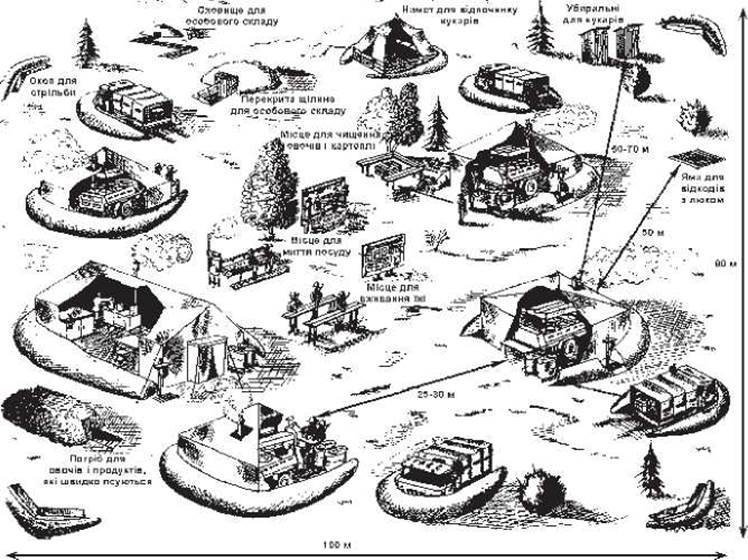
Fig. 4.10. Layout of a battalion field feeding point in the field.
Meat and fish preparation may be combined in a single room (tent), provided it is equipped with separate tables and properly marked processing utensils (cutting boards, knives, etc.).
At a distance of approximately 15 m from the kitchens, a designated area (utility space) is set up for peeling potatoes and vegetables. Benches for seating are installed here, along with containers for peeled vegetables and waste collection; a pit may be dug for the latter. Peeled potatoes can be stored in cold water for up to 2-4 hours.
Field dining facilities for officers and contract service personnel may be set up at the field feeding point (FFP), alongside separate facilities made from makeshift materials for enlisted and non-commissioned personnel. In such cases, In addition to sinks for kitchen utensils and tableware, a separate area is designated 20-25 m away from the kitchens for washing personal mess kits, mugs, and spoons. For this purpose, water is heated in advance in field kitchen boilers or specialized devices.
It is more convenient to wash mess kits, mugs, and spoons on tables improvised from available materials. Hot water for washing personal tableware is dispensed into thermal containers exclusively by duty personnel assigned from the FFP staff. Food residues are scraped from individual mess kits into food waste containers. Soakage pits are dug to collect wastewater.
Provisions are stored in a food storage tent or room. Doors and windows are fitted with mesh screens, and other measures are taken to protect food from flies and rodents. The storage area is equipped with shelving, pallets, and tightly-lidded, labeled storage boxes ("meat", "vegetables", "bread", etc.), as well as a chopping block, an axe for cutting meat, a serving table, and scales. Areas for storing water and fuel are also designated near the field kitchen.
A separate tent or room is set up to allow FFP personnel to rest before going on duty.
The latrine for FFP personnel and the lidded pit for garbage and refuse from the FFP must be constructed at least 50-70 m away from the kitchens.
A handwashing station equipped with soap and a brush is installed near each kitchen for staff to wash their hands during work and after every visit to the latrine.
Field catering does not fundamentally differ from garrison feeding. Hot meals are prepared three times a day using both fresh and concentrated or canned products.
During independent or small-group feeding, service members cook hot meals themselves or consume ready-to-eat canned (concentrated) rations without thermal processing. Small-footprint kitchens (stoves), tripods, or campfires are used to prepare hot food. Sometimes soldiers pair up, using one mess kit to cook the first course and another for the second course or tea.
With mixed catering, hot food is served twice a day—at breakfast and dinner. In between, service members consume interim rations, such as salt pork or meat-vegetable canned goods with bread or hardtack, drawn from daily supply quotas and subsidiary farm produce.
In certain situations, such as prior to a march or when operating away from the main FFP, personnel are issued an emergency reserve (ER) ration, which may only be consumed with a commander's permission (Fig. 4.11). The ration includes one can of canned meat, two cans of porridge, sugar, and tea, supplemented by bread, hardtack, or crackers.
In winter, it is advisable to issue hardtack instead of bread with dry rations, as it does not freeze. Hardtack is also issued during disruptions in bread baking or delivery. Hardtack can be restored to a bread-like state before consumption by placing 2-3 pieces vertically into a mess kit, breaking them up with spoons, and pouring drinking water over them for 10-15 seconds. The water is then drained, the mess kit is covered with a lid, and heated over a fire for 5 minutes to soften the crackers.
Meals at each field feeding point are normally prepared according to a unified menu schedule approved by the unit commander, though menus may occasionally vary. In field conditions, preference is given to foods that require minimal preparation: canned goods, which replace fresh meat and fish in the summer; food concentrates for quick preparation of porridges, soups, and fruit jellies; and vegetable medleys. Food preparation controls focus on minimizing product loss caused by excessive soaking, trimming, thermal processing, or other factors.
The preparation, delivery, and distribution of cooked meals to subunits are organized by the FFP chief in accordance with the instructions of the deputy battalion commander for logistics.
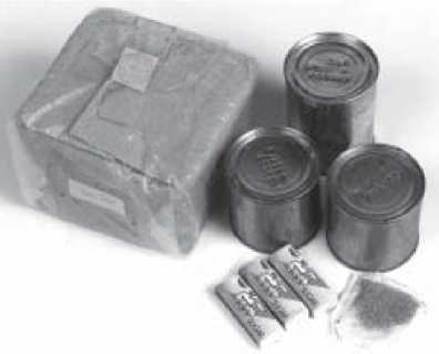
Fig. 4.11. Emergency reserve dry ration
Food must be ready by the time specified in the daily routine. The Internal Service Regulations of the Armed Forces of Ukraine require the unit duty officer and medical personnel (paramedic) to inspect food quality before each meal service, perform control weighings of portions, and check the sanitary condition of kitchens, storage areas, and the FFP grounds, as well as the cleanliness of kitchenware and utensils. After inspection, they record their authorization or prohibition for issuing the food to personnel in the food quality control log. If distribution is prohibited, these officials must immediately report the reasons to the unit commander so that appropriate decisions regarding personnel nutrition can be made.
Food may only be stored for service members who arrive late for meals due to official duties. In such cases, cooked meals may be kept on a warm stove (80 °C) for no longer than 1.5 hours, in thermal containers for up to 2 hours, and in a refrigerator for no more than 4 hours. The delivery and distribution of hot food, bread, butter, and tea to subunits are organized by order of the battalion (divizion) commander. Along with hot meals at breakfast and dinner, tea or boiling water for tea is also delivered. If necessary, carriers are assigned to transport thermal containers with food and boiling water from the FFP to subunits. When conditions permit, cooks may dispense food directly from the kitchens into mess kits.
Under no circumstances during field food processing and cooking are any deviations from the culinary and sanitary rules established for permanent facilities permitted.
However, certain specifics apply to food preparation. For instance, frozen meat is not thawed beforehand; instead, it is chopped into 1.5-2 kg pieces, which are immediately placed into the cauldron after cleaning and rinsing. Once boiled, the meat is portioned onto baking sheets, covered with broth, and simmered for 15 minutes after boiling. Serving it without additional thermal processing is prohibited. Meat is normally served with the second course, and only under exceptional circumstances with the first course.
Tin cans are opened immediately before being added to the cauldron. First, they are cleaned of protective grease, carefully inspected for integrity, and immersed in hot water for 10-15 minutes to test hermetic sealing. If the packaging is damaged, gas bubbles will escape. Canned goods from containers with compromised seals, Swelling (bombage), or an unpleasant odor must not be consumed. Before distribution, the contents of canned meat or fish must be boiled in cauldrons for at least 20 minutes from the moment of boiling. Opened canned goods must not be stored or issued.
In winter field conditions, it is not always possible to protect vegetables and bread from freezing. Therefore, frozen potatoes and other vegetables are peeled and washed without thawing and placed directly into boiling water or broth in the cauldron, which helps preserve the taste and Nutritional Value of the meals prepared from them.
Frozen bread can be restored to a fresh-like state in the ovens of field kitchens, well-heated tents, or other shelters. For this purpose, it should be arranged in no more than two layers on clean boards (tables) or sheets.
The Temperature of ready-to-eat food upon serving must be at least: 75 °C for first courses, 65 °C for second courses, and 80 °C for third courses.
In field conditions, when sanitary rules cannot be strictly observed, the preparation of cold appetizers (salads, vinaigrettes, etc.), dishes made from minced meat and fish, cutlet mass, stuffing, and similar items is strictly prohibited. Kissel or compote must be prepared no earlier than thirty minutes before serving. They should be ladled directly from the cauldron into mugs, and under no circumstances into thermoses.
Serving boiled milk is permissible, but it is much safer to use it to prepare milk soup or porridge.
Only cooks—not personnel from the daily duty roster—are permitted to issue ready meals from kitchens and wash the cauldrons. The cauldrons must be cleared of food scraps with a special brush; then, the internal surfaces should be washed with hot water containing soda or other approved detergents, after which they must be rinsed two or three times with boiling water.
Kitchen utensils and tableware are likewise cleared of food leftovers, washed with hot water, degreased with detergents, rinsed with boiling water, and placed on drying racks. Table surfaces, cutting boards, and knives used for food preparation must be washed with hot water and scalded after each meal service.
The dishwashing procedure for officers does not differ from that in stationary conditions. Food residues are scraped off the dishes, which are then washed sequentially in two basins with hot water (45-50 °C) containing degreasing agents, and rinsed in a third basin with boiling water (above 60 °C). It is advisable to place the washed dishes in a specially fabricated wire basket and submerge them for 5-7 minutes into the boiling water of a field kitchen cauldron, after which they should be dried on racks. Mugs and cutlery—spoons and forks—must be washed in a similar manner (knives should not be submerged in boiling water as it blunts their blades).
Brushes and Sponges used for washing dishes and equipment must be boiled in a 2% soda solution after clearing them of food scraps, then rinsed and dried on racks.
At the end of each day, general cleaning of the entire field food preparation site (FFPS) is mandatory, along with the disinfection of kitchen production equipment, dining table surfaces for officers and personnel, containers for vegetables and other products, and the designated areas for washing soldiers' mess tins, mugs, and spoons, using a 1% clarified solution of bleaching powder, Neochlor, or Septodor. The consumption rate of the disinfecting solution should be 0.3-0.5 L per 1 m2 (0.1 L per 1 m2 for the Septodor solution) with a 30-minute exposure time. Afterward, it must be rinsed off with warm water.
Field latrines (trenches) for FFPS personnel, as well as pits for collecting garbage and waste, must be disinfected at least once every three days with a 5% aqueous solution of Lysol "A" or Ryapan-M solution.
Special containers with tightly fitted lids must be designated for the collection and storage of food waste. Their removal must be carried out immediately after completing the cleanup of the FFPS, as well as the cleaning and washing of kitchen and tableware. These containers must be cleaned, washed, and disinfected daily.
At catering facilities and in field conditions, control measures against flies and rodents—which serve as sources of infection or vectors for various acute infectious diseases such as dysentery and leptospirosis—must be carried out regularly.
Food supplies are delivered to military units by specialized transport. For all specialized transport, as well as trailers, containers, or specially equipped crates intended for food delivery, the HEAD of the sanitary and epidemiological institution of the area of responsibility shall issue a sanitary passport for the military unit's transport designated for the carriage of perishable foods and bread (Appendix No. 4.2 to the Regulations), which must be presented by the representative upon receiving supplies. Food shall not be issued into transport vehicles or crates that lack sanitary passports. The receipt and issuance of food must be carried out while wearing clean special clothing. The Use of transport that has not been cleared from a sanitary standpoint for food delivery is strictly prohibited. The head of the military unit's medical service exercises continuous oversight over the sanitary condition of specialized transport.
Depending on its purpose, each specialized vehicle is equipped with the necessary property and tools for its cleaning. After each use, vehicles are cleaned and rinsed with boiling water; moreover, at least once a week, they must be disinfected with a 1% clarified solution of bleaching powder, Neochlor, or Septodor solutions, followed by scalding with boiling water. The driver-expeditor is provided with a set of special clothing, a towel, and soap. They must possess a personal medical record clearing them for work.
Specially equipped van trucks are used for delivering bread. The transportation of meat, fish, and bread to the FFPS to supply a small number of personnel is permitted in special crates lined on the inside with galvanized iron or white tinplate with soldered seams, equipped with tightly closing lids.
Perishable products are delivered in refrigerators, isothermal, and combined transport vehicles, and via rail and water transport in isothermal railcars, refrigerators, and refrigerated vessels. Vegetables, fruits, and potatoes may be transported in covered railcars during the warm season, and in refrigerator railcars or insulated railcars equipped with heating devices during the winter. Insulation of the railcars is carried out by the sender using their own resources, while the heating devices are installed by the railway administration.
For military units stationed more than 200 kilometers from the food depot or supplying bases, the delivery of food, military equipment, and supplies is generally carried out by rail and water transport, and by motor transport only with the authorization of officials granted such authority.
All military personnel and civilian staff involved with foodstuffs (transportation, storage, issuance, receipt, and food preparation), as well as equipment repair specialists, must be provided with special clothing. Cooks are issued three sets consisting of a white jacket, trousers, apron, cap, and towel. The daily duty detail is issued a jacket, apron, and cap. Before assuming duty, cooks must wash in the field bathhouse. They, as well as persons assigned to the daily duty roster at the FFPS, must undergo a medical examination by the on-duty physician (feldsher) before starting their shift (galley watch). During the examination, they are questioned about gastro-intestinal disorders, and checked for the condition of the oral mucosa, throat, and Skin lesions (boils, Pyoderma, etc.). If necessary, body temperature is measured, and the sigmoid colon is palpated. The results of the medical examination are recorded in the daily duty medical log. The first pages of this log must contain a list of individuals who have suffered from intestinal infections and those who, for health reasons, are contraindicated from working at the FFPS. Individuals who have suffered from acute intestinal infectious diseases may be permitted to work at the FFPS no earlier than three months after discharge from a medical institution, following appropriate clinical-laboratory and instrumental examinations for bacillary carriage. Individuals who have not undergone a medical examination are not permitted to work at the FFPS.
Special attention in field conditions is paid to monitoring the health status of catering facility workers, who could become the source of epidemic outbreaks of infections with a fecal-oral transmission mechanism. All permanent workers are permitted to work provided they timely and fully complete mandatory medical examinations (pre-employment upon hiring and periodic ones) within the scope and timeframes established by current legislation, and pass a test on sanitary minimums.
The officials of the respective catering facilities and the head of the unit's food service bear responsibility for employing and clearing for work individuals who have not undergone a medical examination or have violated its deadlines.
Individuals applying for jobs at catering facilities are subject to mandatory screening:
- for carriage of intestinal infection pathogens (three times at one-day intervals); subsequently once a quarter; in the presence of epidemiological indications – as directed by the head of the medical service or an epidemiologist;
- for typhoid-paratyphoid carriage in urine and duodenal contents – as indicated;
- for helminths – once, subsequently – as indicated;
- for gonococci - once, thereafter - as indicated;
- Blood test for Syphilis - once, thereafter - as indicated;
- chest fluoroscopy (X-ray) upon hiring, thereafter - once a year;
- medical examinations - once a week (for personnel of military trade facilities - once a month).
The results of the medical examination of food service personnel are recorded by a physician in their personal medical books.
Thus, Sanitary supervision of military nutrition in the field includes:
- participation of the unit's medical service chief in developing the dietary schedule and food rations, taking into account physiological and hygienic requirements and The Nature of combat training;
- inspection of the readiness of food service units to transport and store food supplies and drinking water, as well as to prepare and serve meals;
- verification that food service personnel have undergone medical examinations, that field kitchen cooks know hygienic standards and sanitary rules, and that they follow them during work;
- oversight of compliance with hygienic requirements when Setting up field feeding sites in the field, organizing their supply of safe drinking water, cleaning the area, and disposing of waste and garbage;
- inspection of storage conditions for mobile food reserves, especially perishable items, as well as drinking water at field feeding sites;
- monitoring compliance with hygienic requirements for the primary thermal processing of food products;
- monitoring the provision of personnel with individual mess tins, mugs, spoons, and flasks, as well as checking their knowledge and observance of personal and collective hygiene rules;
- inspection of the conditions for eating at field feeding sites and monitoring food delivery to units and its consumption deadlines;
- inspection of the quality of washing and disinfection of individual mess tins, mugs, spoons, tableware, equipment, and thermos containers at field feeding sites;
- oversight of the organization of meals for military personnel using ration packs on the march, when separated from their units, etc.;
- organization of health education among personnel regarding compliance with hygienic requirements for field nutrition, and Prevention of the consumption of unverified trophy food products or PLANT AND ANIMAL products obtained from the local population.
Last update: 10/08/2026
Editorial and Educational Adaptation: This material has been compiled based on the primary/original source text. The project team performed an editorial review, corrected technical inaccuracies, structured sections, and adapted the content for an educational format.
What was processed:
- elimination of formatting defects (OCR errors, structural breaks, corrupted characters);
- editorial organization of content;
- standardization of terminology in accordance with academic sources;
- verification of factual statements against the original source text.
All mentions of the author, publication year, and origin of the primary text have been preserved in accordance with the source.