Military Hygiene and Hygiene in Emergency Situations - K.O. Pashka 2005
History of the Development of Military Hygiene in the Armed Forces
The experience of wars, local military conflicts, and natural disasters, during which troops engage in combat operations, perform rescue missions, and mitigate emergency aftermaths, convincingly demonstrates the growing importance of preventive and operational sanitary inspection in preserving and strengthening the health of military personnel (and the affected population) while maintaining high troop combat readiness (and population operability).
The earliest accounts of sanitary measures in armies appear in the works of Varro (116–27 BC) and Vegetius (late 4th to early 5th centuries AD), describing the practical necessity of sanitary measures for organizing Roman military camps, supplying them with safe drinking Water, and preventing infectious diseases. By the 16th century, a direct correlation had been established between the sanitary condition of troops and the incidence of disease among military personnel.
The challenges of clearing battlefield corpses are also mentioned in the chronicles of the Zaporozhian Sich. When the Cossacks, led by Kish Otaman Ivan Dmytrovych Sirko (in the latter half of the 17th century), repelled an attack by the united Turkish-Tatar forces and annihilated the vast majority of them, "so many bodies littered the Sich that it was entirely impossible to bury them in pits. Dragging the corpses out into the steppe to be devoured by beasts and birds was likewise unfeasible, as come spring, the bodies would putrefy and spark plagues throughout the Sich. Therefore, the Zaporozhian elders, having consulted with the fellowship, decided to haul all the bodies to the Chortomlyk River and submerge them through an ice hole... yet it took the Zaporozhian men three full days just to drag them all away."
Following the reunification of Ukraine with the Russian Empire (1654), the ESTABLISHMENT AND DEVELOPMENT of military hygiene as a distinct discipline took place within the Russian army, which included many ethnic Ukrainian service members, particularly among medical personnel.
Under the Military Regulations of Peter I (1716), which placed significant emphasis on the medical support of the imperial army, specific staffing positions were introduced: a staff physician for each division, a regimental doctor for each regiment, and a barber-surgeon for each company.
In 1780, the first official Russian manual on military hygiene was published, authored by Andrei Gavrilovich Bakherakht (1724–1806), a naval physician by profession. It formulated the fundamental requirements for maintaining a "proper and orderly lifestyle" among military personnel.
Beginning in 1797, military physicians were required to conduct medical and police inspections regarding the quality of food supplies, the condition of barracks, and the general sanitary state of the troops. Particular emphasis on military hygiene was laid by the renowned Russian commander of that era, A.V. Suvorov. Of the seven conditions for achieving victory listed in his treatise *The Science of Victory*, three directly mandate safeguarding the soldier's health (cleanliness, health, and tidiness).
In 1813, Dr. of Medical Sciences Ilya Ivanovich Eneholm (1764–1838) published *A Pocket Book of Military Hygiene or Observations on Preserving the Health of Russian Soldiers*, which became the first original work addressing military hygiene during peacetime, marching campaigns, and active combat operations.
During this same period, Matvey Yakovlevich Mudrov (1776–1831)—a professor of therapy at the medical faculty of Moscow University, who delivered a course of lectures on military hygiene in 1808—commenced his prominent activities (Fig. 1.1).
He is well known for his ceremonial academic address entitled *On the Benefits and Subjects of Military Hygiene, or the Science of Preserving the Health of Military Personnel*. On this basis, M.Ya. Mudrov is regarded as one of the founding figures of military hygiene, which he classified among the four core disciplines that constituted military medicine at the time: military hygiene, military therapy, military surgery, and military pharmacology.
A quite tangible role in The Development of military hygiene was played by Dr. of Medical Sciences and military physician Yakym Oleksiyovych Charukovsky (1798–1848). In his work *Military Field Medicine* (1836–1837), he laid out the foundational principles of military hygiene.
A significant practical contribution to military hygiene was made by General Staff Physician and Dr. of Medical Sciences Roman Serhiyovych Chetyrkin (1797–1865), who authored a series of manuals and guidelines concerning the preventive and therapeutic support of troops. These included *An Essay on Military Medical Police, or Rules for Preserving the Health of Russian Soldiers in Land Service* (1834) and *Manual on Practical Military Medical Police* (1850) (Fig. 1.2).
Class="center">
Fig. 1.1. M.Ya. Mudrov.
Many progressive figures insisted on the necessity of establishing a dedicated department of hygiene at the Medical-Surgical Academy.
However, it was not until 1871 that Dr. of Medical Sciences Oleksiy Petrovych Dobroslavin (1842–1889) was elected as the HEAD of the newly created Department of Hygiene. He authored the first textbook on general and military hygiene, titled *Course of Military Hygiene* (1885–1887), alongside nearly a hundred other scholarly works (Fig. 1.3).
Following O.P. Dobroslavin's passing, the department was headed from 1889 to 1909 by Professor Sergei Vladimirovich Shidlovsky (1846–1912). Together with his students, he investigated water supply hygiene and facility disinfection, and he was also the first to formulate recommendations concerning the moral and psychological conditioning of soldiers during wartime.
Succeeding S.V. Shidlovsky, Professor Viktor Oleksandrovych Levashev (1864–1916) assumed leadership of the Department of Hygiene, directing research into disinfection, military clothing hygiene, and nutritional hygiene.
An outstanding hygiene scientist was Professor Hryhoriy Vitaliyovych Khlopin (1863–1929) (Fig. 1.4). He headed the Department of General and Military Hygiene at the Military Medical Academy (1918–1929). His major scholarly achievements include such fundamental works as the two-volume *Fundamentals of Hygiene* (1921–1923), *Fundamentals of Anti-Gas Operations*, and numerous others dedicated to water supply and nutritional hygiene.
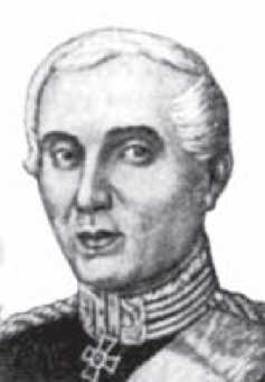
Fig. 1.2. R.S. Chetyrkin.

Fig. 1.3. O.P. Dobroslavin.
During the Great Patriotic War, a streamlined system of military-hygienic Organization was implemented across the active army, extending from the Main Military Sanitary Directorate (GVSU) down to the divisional level. A hygiene department was established within the GVSU's anti-epidemic administration, led by a department head holding THE POSITION OF chief hygienist. Nutritional and water supply inspectors were introduced into the military-sanitary directorates of the fronts, as well as the sanitary departments of the armies. At the division level, all sanitary and prophylactic duties were carried out by a sanitary-anti-epidemic platoon. Thanks to the timely execution of sanitary-hygienic and anti-epidemic measures, it was possible to prevent outbreaks of infectious diseases, deficiency-related illnesses, mass frostbite, and other conditions that had historically been constant companions of all wars.
A prominent role in the development of military hygiene was played by Academician of the USSR Academy of Medical Sciences and Major General of the Medical Service Fedir Hryhorovych Krotkov (1896–1983) (Fig. 1.5). The reference books, manuals, textbooks, and guidelines on military and radiation hygiene authored by him served for many years as the primary educational and methodological resources for students at the Military Medical Academy, military and civilian physicians, and university students. F.H. Krotkov published a series of works dedicated to the hygiene of armored troops, troop billeting hygiene, Field water supply hygiene, Nutrition, and other related topics.
The development of military hygiene in the postwar period is closely associated with the name of Professor Porfiry Yevdokymovych Kalmykov (1901–1971). He introduced fundamentally new approaches to studying The properties of military clothing, establishing standards for The chemical composition of drinking water, and determining quantitative water supply norms. P. Ye. Kalmykov was also among the pioneers in addressing Structure/149.html">The problem of parenteral nutrition, authored A number of monographs and textbooks on military hygiene, and established a prominent school of military hygienists.

Fig. 1.4. H. V. Khlopin.

Fig. 1.5. F. H. Krotkov.
For a long time, students of military-medical academies and faculties, instructors, and military physicians used the textbook General and Military Hygiene (1978), edited by Professor Nikolai Fedorovych Koshelev (1915–1996), Head of the Department of General and Military Hygiene at the Military Medical Academy in St. Petersburg.
Leading Ukrainian scientists have made a significant contribution to the development of military hygiene. Corresponding Member of the USSR Academy of Medical Sciences, Honored Scientist of Ukraine, Professor Denys Mykolayovych Kaliuzhnyi (1900–1976) summarized his scientific observations from the Great Patriotic War in his scholarly work Hygiene of field Troop Quartering (Fig. 1.6).
Professor Rafail Davydovych Habovych (1909–2002), a student of Academician F. H. Krotkov of the USSR Academy of Medical Sciences, developed a range of specialized equipment for water purification, disinfection, and decontamination in field conditions (Fig. 1.7). The hygienic equipment he designed was adopted by the army, and some of these solutions remain relevant today:
- universal portable and pack-mounted filter;
- field water softener;
- auto-filter-300;
- water supply company hygienic laboratory;
- kit for sanitary control of water chlorination in the field;
- army and divisional laboratory hygiene equipment sets.

Fig. 1.6. D. M. Kaliuzhnyi.

Fig. 1.7. R. D. Habovych.
He also prepared and published monographs on field water supply, authored over 20 papers, and contributed several chapters to textbooks and reference books on military hygiene.
Today, military hygiene specialists focus primarily on studying the IMPACT OF ENVIRONMENTAL hazards, military occupational conditions, and everyday living standards on service members across various branches and arms of the Armed Forces of Ukraine. Their work also centers on finding new ways and Methods to preserve and strengthen service members' health, thereby enhancing their combat readiness and working capacity.
Self-Control Questions
1. Outline the major Milestones in the history of military hygiene.
2. Which Ukrainian hygienic scientists made a major contribution to the development of military hygiene?
Last update: 10/08/2026
Editorial and Educational Adaptation: This material has been compiled based on the primary/original source text. The project team performed an editorial review, corrected technical inaccuracies, structured sections, and adapted the content for an educational format.
What was processed:
- elimination of formatting defects (OCR errors, structural breaks, corrupted characters);
- editorial organization of content;
- standardization of terminology in accordance with academic sources;
- verification of factual statements against the original source text.
All mentions of the author, publication year, and origin of the primary text have been preserved in accordance with the source.