Human Anatomy - Kotsan I. Y. 2009
Muscles and Fascia of the Neck
Superficial Muscles of the Neck
The SUPERFICIAL Muscles OF the neck include two muscles: the platysma and the sternocleidomastoid (Fig. 111).
The platysma is a thin, flat, broad Muscle located directly beneath the Skin of the neck. It originates from the fascia covering the pectoralis major and deltoid muscles. Its muscle bundles cross the clavicle and run superiorly and medially, occupying almost the entire anterolateral surface of the neck (except for a small triangular area above the jugular notch). The platysma inserts into the facial fascia, the angle of the Mouth, and the Mandible, continuing partially into some facial muscles. Function: it tightens the skin of the neck, preventing the compression of superficial neck Veins, and pulls the angle of the mouth downward. In some animals (such as the horse), this muscle extends across the entire trunk. Its contractions move the skin, allowing the animal to ward off flies, botflies, etc. In humans, the platysma has lost its primary significance and is vestigial.
Innervation: Facial Nerve (VII).
Class="center">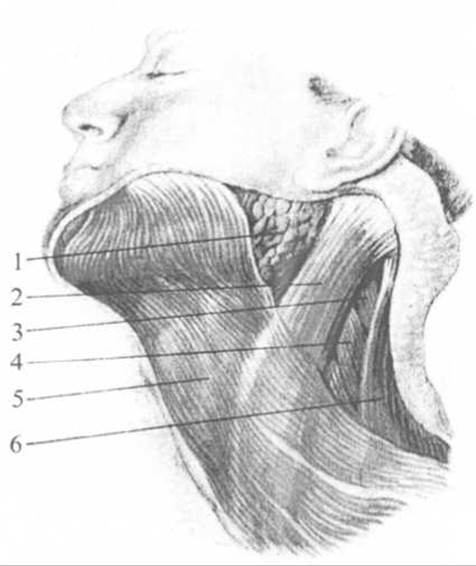
Fig. 111. Superficial Muscles of the neck
1 — parotid gland, 2 — sternocleidomastoid muscle, 3 — splenius muscle, 4 — levator scapulae muscle, 5 — platysma, 6 — trapezius muscle
The sternocleidomastoid muscle (m. sternocleidomastoideus) is the strongest muscle of the neck, situated beneath the platysma. When the HEAD is turned to the side, its contours stand out under the skin as a distinct muscular ridge. The muscle has two heads: a sternal head, which originates from the anterior surface of the manubrium of the Sternum, and a clavicular head, which arises from the sternal end of the clavicle. Converging, both heads form a single belly that extends superiorly and posteriorly. Above the clavicle between the heads lies a small, shallow lesser supraclavicular fossa (fossa supraclavicularis minor). The muscle inserts into the mastoid process of the Temporal bone and the lateral part of the superior nuchal line. Function: acting unilaterally, the muscle pulls the mastoid process downward and medially, tilting the head to the same side while rotating it to the opposite side, with the face turning slightly upward. Bilateral contraction of both muscles flexes the cervical spine and extends the head (pulling it backward). If the Head and Neck are fixed by other muscles, the sternocleidomastoid can assist in elevating the Pectoral Girdle and partially lifting the rib cage, thereby aiding inspiration.
Innervation: Accessory nerve (XI).
Last update: 08/08/2026
Editorial and Educational Adaptation: This material has been compiled based on the primary/original source text. The project team performed an editorial review, corrected technical inaccuracies, structured sections, and adapted the content for an educational format.
What was processed:
- elimination of formatting defects (OCR errors, structural breaks, corrupted characters);
- editorial organization of content;
- standardization of terminology in accordance with academic sources;
- verification of factual statements against the original source text.
All mentions of the author, publication year, and origin of the primary text have been preserved in accordance with the source.