TEXTBOOK OF PEDIATRIC GYNECOLOGY - 2013
Chapter 11. EXPRESSION OF SEXUALITY IN ADOLESCENT GIRLS. CONTRACEPTION. PROBLEMS OF TEENAGE PREGNANCY
The reproductive health of young people is a major public health concern, largely driven by the specific behavioral patterns of this social group. The transition into adulthood is accompanied by high sexual activity, making it increasingly critical to examine how trends in sexual, reproductive, and marital behavior align with a healthy lifestyle and how these trends impact population health.
The Challenge of modern adolescent Puberty is that physical maturation occurs significantly earlier than moral resilience and a sense of responsibility develop. As a result, many teenagers become sexually active before they are genuinely ready for it.
Parents often feel uncomfortable discussing sex and Contraception with their children and frequently remain unaware of when their teenagers become sexually active. Consequently, the issues of early sexual debut, poor awareness of contraceptive Methods, and a lack of understanding regarding a healthy lifestyle among young people require urgent attention.
Preventing teenage Pregnancy is a pressing medical and social issue. Despite the proactive efforts of physicians, educators, and other specialists who promote healthy lifestyles and family planning, early sexual debut combined with Central Nervous system immaturity remains characteristic of adolescents. Low awareness of contraceptive methods and devices, along with their insufficient use, leads to an increased risk of unintended pregnancy, thereby necessitating an individualized approach to selecting suitable contraception for girls in this age group.
Teenagers prefer contraceptives that are highly effective, safe for their health, widely accessible, and easy to use. Equally important for young patients are the reversibility of the method—meaning the rapid restoration of fertility after discontinuation—as well as affordability, confidentiality, economic benefits, and other criteria.
None of the currently available contraceptive methods fully meets all these requirements. Therefore, when prescribing contraception to adolescents, it is essential to weigh all the pros and cons, balancing the relative risks of adverse effects on the young body against the harmful consequences of teenage pregnancy.
Most traditional contraceptive methods are unsuitable for adolescents. The symptothermal method (which relies on rhythm, basal body Temperature, and Changes in the quantity and quality of cervical mucus) is effective only with regular ovulatory menstrual cycles and high behavioral motivation, which are typically lacking in teenage girls. The vaginal Diaphragm is also rarely used by adolescents because it requires specific skills for proper sizing and correct placement (Fig. 39).
Class="center">
Fig. 39. Assessing the patient's contraceptive needs
NATURAL FAMILY PLANNING METHODS
Natural methods can be used if a girl is able to determine the beginning and end of the fertile period in her Menstrual cycle. The fertile period is the time when pregnancy can occur.
The effectiveness of natural methods is moderate (9–20 pregnancies per 100 women During the first year of use).
Calendar method. Days are counted to determine the start and end of the fertile period. This requires knowing the duration of previous menstrual cycles:
— the girl should record the length of each menstrual cycle for at least 6 months while using non-Hormonal contraception or abstaining from sexual intercourse;
— the first day of menstrual bleeding is considered the first day of the cycle;
— subtract 18 days from the shortest menstrual cycle to find the first day of the fertile (unsafe) period; then subtract 11 days from the longest menstrual cycle to determine the last day of the fertile (unsafe) period for that woman.
For example: the longest cycle is 30 days, and the shortest is 26 days. The calculation is as follows:
short cycle — 26 days - 18 days = 8 days; long cycle — 30 days - 11 days = 19 days.
Based on these calculations, the fertile period spans from the 8th to the 19th day of the menstrual cycle. To prevent pregnancy, sexual intercourse must be avoided during this time.
Basal body temperature method. The fertile period is determined by measuring rectal temperature:
— in the morning, without getting out of bed, at the same time using a dedicated thermometer for 7–10 minutes;
— the temperature is recorded on a chart;
— the basal temperature rises by 0.2–0.5 °C during ovulation. If no temperature increase occurs, it is assumed that ovulation did not take place;
— the fertile period is considered to be the time from the beginning of the menstrual cycle until the basal body temperature remains elevated for 3 consecutive days;
— if a woman has a condition accompanied by fever, the method is not advisable to use at that time.
The cervical mucus method (used in the absence of Inflammatory Diseases of the reproductive Organs). A young woman determines her fertile phase by observing vaginal mucus secretions. When clear, stretchy mucus is present, she may be fertile. The last day of such discharge is called the "peak day," indicating that ovulation is either imminent or has just occurred. Following menstrual bleeding, most women experience a few days without vaginal discharge, known as "dry days." To observe the mucus and properly apply the method, sexual abstinence should be maintained for at least one cycle. These observations are carried out throughout the day, as mucus consistency may change; records are kept using specific symbols: bleeding — red color, "dry days" — letter "D", fertile days — letter "F", opaque, infertile mucus — letter "I". Upon the appearance of mucus or a feeling of vaginal moisture, sexual intercourse should be avoided. The last day of clear, stretchy mucus marks the "peak" of the fertile period, therefore sexual abstinence is continued for an additional 3 days.
The symptothermal method is a combination of the cervical mucus and basal body temperature methods.
Coitus interruptus (withdrawal) is a family planning method in which the man completely withdraws his Penis from the Vagina prior to ejaculation:
— before sexual intercourse, the couple agrees on coordinating their actions;
— prior to intercourse, the man empties his bladder and wipes the glans penis to remove any residual sperm from a previous ejaculation;
— before ejaculation, the man withdraws his organ from the vagina to prevent semen from coming into contact with the woman's genitalia.
The algorithm for prescribing natural contraception methods is presented in Fig. 40.
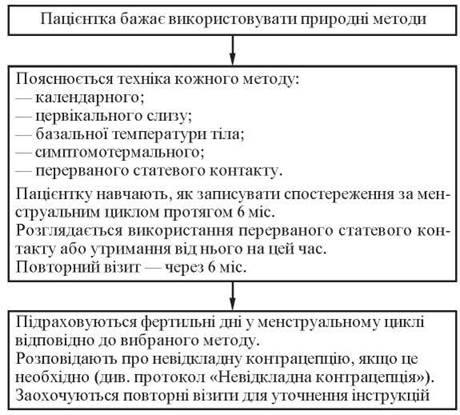
Fig. 40. Algorithm for prescribing natural contraception methods
The method of choice for young people who do not engage in regular sexual activity may be the combined use of mechanical and chemical barrier contraceptives, such as condoms used alongside Spermicides. It is important to note that condoms and spermicides offer several advantages over other contraceptive methods and devices. Barrier methods are the only highly reliable means of protection against Sexually Transmitted Infections. Furthermore, mechanical and chemical contraceptives have proven to be effective in preventing Cervical Cancer, The Development of which is triggered by Viruses such as the human papillomavirus. Nonoxynol-9, a component of condoms and certain spermicides, destroys trichomonads, gonococci, chlamydia, Mycoplasmas, Treponema pallidum, and many viruses, including Herpes simplex virus, hepatitis B, HIV, and human papillomavirus. This contraceptive approach demonstrates high efficacy (60–90%) and provides reliable protection against Sexually Transmitted Diseases and AIDS.
Last update: 08/08/2026
Editorial and Educational Adaptation: This material has been compiled based on the primary/original source text. The project team performed an editorial review, corrected technical inaccuracies, structured sections, and adapted the content for an educational format.
What was processed:
- elimination of formatting defects (OCR errors, structural breaks, corrupted characters);
- editorial organization of content;
- standardization of terminology in accordance with academic sources;
- verification of factual statements against the original source text.
All mentions of the author, publication year, and origin of the primary text have been preserved in accordance with the source.