Human Anatomy, Part 1 - K. A. Dyubenko, A. K. Kolomiysev, Y. B. Chaykovsky 2002
Special Part
Arthrology, artrologia [the study of bone joints] — Classification of joints and their general characteristics
Joints of the trunk — Joints of the vertebrae
Both continuous and discontinuous TYPES OF JOINTS are present in THE Vertebral Column. The following joints are distinguished: between the vertebral bodies, the vertebral arches, and the vertebral processes (Fig. 77).
The vertebral bodies are connected to each other by intervertebral discs, discus intervertebrales (Fig. 77A, C). An intervertebral disc is a fibrocartilaginous Structure. Externally, it appears as a fibrous ring, anulus fibrosus, the fibers of which run obliquely toward adjacent vertebrae. In the center of the disc lies The Nucleus pulposus, a remnant of the notochord. Due to the elasticity of the disc, the vertebral column cushions and absorbs the energy of impacts transmitted to it during walking, running, and jumping.
Class="center">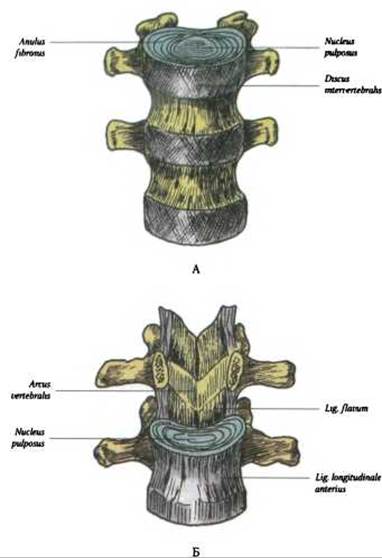
Fig. 77. Articulations of the vertebrae:
A - intervertebral discs; B - ligaments of the vertebral column
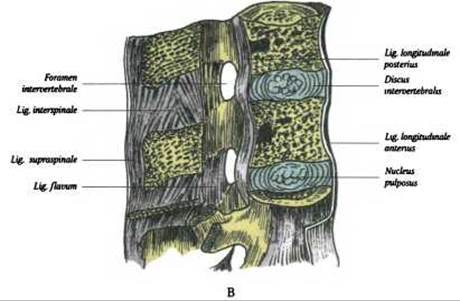
Fig. 77. Articulations of the vertebrae: C - ligaments and JOINTS OF THE vertebral column
The height of all intervertebral cartilages accounts for 1/4 of the entire length of the vertebral column. Their thickness varies: it is greatest in the lumbar region and smallest in the thoracic region. In the cervical and lumbar regions, it is greater anteriorly than posteriorly, whereas in the thoracic region, the reverse is true.
Two longitudinal ligaments run along the vertebral bodies: the anterior and the posterior. The anterior longitudinal ligament, lig. longitudinale anterius, is located on the anterior surface of the vertebral bodies. It originates from the anterior tubercle of the atlas arch and extends to the first sacral vertebra. The posterior longitudinal ligament, lig. longitudinale posterius, runs within the vertebral canal from the body of the second cervical vertebra to the first sacral vertebra and limits spinal flexion. Both ligaments are firmly connected to the intervertebral discs by means of fibrous bundles.
Connections of the vertebral arches. The gaps between the vertebral arches are closed by the ligamenta flava, ligg. flavae (Fig. 77B, C). Between the spinous processes of the vertebrae lie the interspinous ligaments, ligg. interspinales, which at the tips of the processes transition into the supraspinous ligament, lig. supraspinale; the latter runs as a rounded longitudinal cord along the entire length of the vertebral column. In the cervical region above the seventh vertebra, these ligaments thicken in the sagittal plane, extend beyond the spinous processes, and attach to the external occipital protuberance and crest, forming the nuchal ligament, lig. nuchae. The spaces between the transverse processes of the vertebrae are spanned by the intertransverse ligaments, ligg. intertransversaria. They reach their greatest development in the thoracic and lumbar Regions of the vertebral column.
Connections of the vertebral processes. The inferior articular processes of a superior vertebra articulate with the superior articular processes of the adjacent inferior vertebra via zygapophysial joints, articulationes zygapophysiales. According to the shape of their articular surfaces, they are classified as plane joints, except in the lumbar spine, where they are cylindrical. The articular capsule attaches along the margins of the articular surfaces, restricting their movement, although greater amplitudes of motion are possible when slight displacements in a single direction are combined (for example, during flexion or extension of the spine as a whole).
Last update: 08/08/2026
Editorial and Educational Adaptation: This material has been compiled based on the primary/original source text. The project team performed an editorial review, corrected technical inaccuracies, structured sections, and adapted the content for an educational format.
What was processed:
- elimination of formatting defects (OCR errors, structural breaks, corrupted characters);
- editorial organization of content;
- standardization of terminology in accordance with academic sources;
- verification of factual statements against the original source text.
All mentions of the author, publication year, and origin of the primary text have been preserved in accordance with the source.