Fundamentals of General and Pharmaceutical Hygiene - Dykyi I.L. 2003
Hygiene of Pharmaceutical Production
Sanitary and hygienic requirements for the conditions of industrial drug manufacturing. Methods for monitoring compliance with sanitary and anti-epidemic regimes
The primary objective of Sanitary and hygienic measures in drug manufacturing, in accordance with GMP guidelines, is to prevent microbial and cross-contamination of medicinal products, ensure environmental safety during production, and maintain optimal working conditions. Potential sources of both microbial and cross-contamination can be eliminated only by implementing comprehensive sanitation and hygiene programs tailored to the specific manufacturing environment.
Special requirements apply to the Organization OF THE production of sterile and aseptically prepared drugs due to the stringent standards governing this group of medications. The sanitary and hygienic conditions of their manufacture—including sanitary standards for production facilities, Processing equipment, and personnel training—form the foundation of practical guidelines for ensuring pharmaceutical quality management (GMP).
The production of sterile and aseptically prepared medicinal products must be carried out in so-called “cleanrooms” with controlled conditions for mechanical and microbial contamination, as well as Temperature, humidity, and airflow velocity.
Currently, regulatory documents (WHO GMP, RD 64-125-91) define 4 classes of cleanroom cleanliness depending on the type of technological operation being performed.
The optimal air temperature in cleanrooms should be maintained at 21 ± 2 °C in winter and 23 ± 2 °C in summer, with relative humidity kept within 30-50%, taking technological requirements into account. A constant pressure differential of 3-5 mmHg must be maintained between rooms of different cleanliness classes.
Objective: to understand the principles of drug manufacturing in compliance with GMP rules, to be able to determine the cleanliness Class of production facilities, and to identify violations of sanitary and hygienic requirements in the manufacturing environment.
QUESTIONS FOR SELF-STUDY
1. Principles of drug manufacturing in accordance with GMP guidelines.
2. Sanitary requirements for the Organization and Execution of the technological process.
3. Sanitary requirements for production facilities and equipment.
4. Sanitary requirements for the production of sterile products: THE PRINCIPLE OF barrier isolation technologies, cleanroom cleanliness classes.
5. Hygienic requirements for the ventilation of production facilities.
6. Sterilization and disinfection at pharmaceutical enterprises: Methods and efficiency control.
7. Personal hygiene of personnel at pharmaceutical manufacturing plants.
8. Methods for monitoring compliance with the Sanitary and anti-epidemic regime at pharmaceutical enterprises.
Task 1. Determination of the Cleanliness Class of a Production Facility
Air cleanliness monitoring in production facilities during the preparation of sterile drugs involves determining the number of particulate matter and viable microorganisms per 1 m3 of the test air.
1.1. Determination of Particulate Matter Count in the Air of Production Facilities
The number of particles is determined using devices such as AZ, PKZV, and others, which operate on the photoelectric particle detection principle. Monitoring must be performed while wearing sterile, lint-free fabric workwear and gloves.
Before bringing the device into a cleanroom, it must be wiped with a lint-free wipe with sealed edges, moistened with 76% ethyl alcohol. The transfer of the device into production facilities of cleanliness classes 1 and 2, and preferably class 3, must be carried out via a material airlock. Air cleanliness monitoring must be conducted at least twice a week before starting work at each of the recommended sampling points:
— in a room with an area up to 15 m2 — sample at point 1 (Fig. 2);
— in a room with an area of 15-100 m2 — samples at points 2, 4;
— in a room with an area exceeding 100 m2 — samples at points 1, 2, 3, 4, 5.
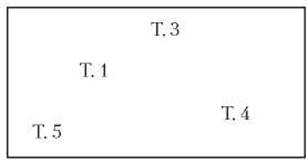
Fig. 2. Air sampling points for analysis
When monitoring air in narrow and long rooms with a width-to-length ratio > 1:5, samples should be taken at points 1, 2, 3, etc., at a distance of no more than 5 m from each other (Fig. 3).

Fig. 3. Air sampling points for analysis
Procedure. Measurement of particulate concentration should begin with the cleanest production area to prevent contamination of the instrument's chamber.
When using the AZ device, first turn on the pump, determine the nominal air flow rate, and pass air through the device for 5 min. Then, measure the particulate concentration in the air, starting with the continuous measurement channel. After verifying that the concentration does not exceed the measuring limit of the metered channel, perform measurements using this channel at least three times.
When using the PKZV device, particulate concentration measurements in the air are carried out across all size ranges: 0.5-1 µm, 1-2 µm, 2-5 µm, 5-10 µm, 10-25 µm, and >25 µm.
Data processing. When using the AZ device, the concentration of particles sized > 0.5 µm and > 5 µm at each monitoring point is determined as the average of three measurements. The air cleanliness of the controlled room is then determined as the average concentration of particles of the specified size across all air sampling points.
When using the PKZV device, the concentration of particles sized > 0.5 µm at each monitoring point is determined as the sum of the average values from three measurements for each size range, as well as for the 4th, 5th, and 6th size ranges. Subsequently, the air cleanliness of the controlled room is determined as the average concentration of particles of the specified size across all air sampling points.
Data processing is recommended to be carried out in accordance with Tables 14 and 15, which present the recorded results of particulate concentration measurements using the AZ and PKZV devices.
The cleanroom cleanliness class by particle count is considered achieved if the obtained results do not exceed the values given in Tables 7 and 8 of the Appendix (Classification of production areas for sterile product manufacturing).
1.2. Determination of Viable Microorganism Count in Production Facility Air
Monitoring of microbial air contamination in cleanrooms is performed using a bacteriological air sampler (Krotov apparatus). Personnel performing the monitoring must wear sterile cleanroom garments made of lint-free fabric and gloves.
Before transferring the device into the cleanroom—which must be done through a material airlock—it must be wiped with a lint-free wipe with sealed edges moistened with 76% ethyl alcohol.
Monitoring of microbial contamination of production area air must be carried out at least twice a week before starting work at each of the recommended points (see Tables 1 and 2 in the section "Determination of Particulate Concentration in Production Facility Air").
Table 14 Example of recording particulate concentration measurement results in cleanroom air using the AZ device
|
Item No. |
Size range, µm |
Number of particles per 1 L of air at the monitoring point (instrument readings) |
Calculated number of particles (average) in room air |
|||||
|
Pt. 1 |
Pt. 2 |
Pt. 3 |
Pt. 4 |
Pt. 5 |
Per 1 L |
Per 1 m3 |
||
|
25.06.2002 |
Sterile powder vial filling room |
|||||||
|
1 |
404 |
210 |
430 |
388 |
380 |
|||
|
0.5 |
398 |
185 |
426 |
359 |
360 |
|||
|
398 |
130 |
410 |
401 |
310 |
||||
|
average |
400 |
175 |
413 |
382.7 |
350 |
344.14 |
344140 |
|
|
0 |
1 |
2 |
2 |
2 |
||||
|
1 |
1 |
1 |
0 |
0 |
||||
|
0 |
0 |
2 |
1 |
0 |
||||
|
5 |
0.3 |
0.7 |
1.7 |
1.0 |
0.7 |
0.88 |
880 |
|
Meat-peptone Agar is used to detect bacterial growth, and Sabouraud agar is used for fungal growth. Culture media are poured into Petri dishes in volumes not exceeding 15 ml each.
Procedure. Place an open Petri dish with culture medium into the Krotov apparatus (secure it on the disk). Air sampling should be carried out for 5 min at an air flow rate of 40 L/min. At each of the designated points, air samples are taken into two parallel Petri dishes (first onto MPA, then onto Sabouraud agar). After testing, the dishes are incubated in an incubator: cultures on MPA at 30-35 °C, and on Sabouraud agar at 20-25 °C for two days.
Data processing. Upon completion of incubation, the number of fungal and bacterial colonies grown on each of the two parallel Petri dishes is counted, the arithmetic mean is determined, and it is then multiplied by 5.
Table 15 Example of recording particulate concentration measurement results in cleanroom air using the PKZV device
|
Item No. |
Size range, µm |
Number of particles per 1 L of air at the monitoring point (instrument readings) |
Calculated number of particles (average) in room air |
|||||
|
1 |
25.06.2002 |
Primary packaging washing and sterilization loading room |
||||||
|
0.5-1 |
3243 |
3062 |
2998 |
2974 |
3192 |
|||
|
3119 |
3140 |
3200 |
3053 |
3039 |
||||
|
0.5-1 |
3301 |
2187 |
3165 |
3142 |
3168 |
|||
|
average |
3221 |
3063 |
3454.3 |
3056.3 |
3133.0 |
3185.52 |
3 185 520 |
|
|
1-2 |
175 |
183 |
190 |
187 |
208 |
|||
|
184 |
202 |
165 |
180 |
215 |
||||
|
163 |
199 |
178 |
192 |
197 |
||||
|
average |
174 |
194.7 |
177.7 |
186.3 |
206.7 |
187.88 |
187 880 |
|
|
2-5 |
28 |
30 |
21 |
25 |
24 |
|||
|
31 |
33 |
25 |
27 |
22 |
||||
|
25 |
29 |
28 |
30 |
28 |
||||
|
average |
31.7 |
30.7 |
23 |
27.3 |
24.7 |
27.48 |
27 480 |
|
|
5-10 |
7 |
9 |
7 |
5 |
6 |
|||
|
8 |
6 |
11 |
12 |
8 |
||||
|
10 |
11 |
13 |
8 |
8 |
||||
|
average |
8.3 |
8.7 |
10.3 |
8.3 |
7.3 |
8.58 |
8580 |
|
|
10-25 |
1 |
0 |
1 |
2 |
0 |
|||
|
2 |
0 |
1 |
1 |
1 |
||||
|
1 |
1 |
1 |
2 |
0 |
||||
|
average |
1.3 |
0.3 |
1.0 |
1.7 |
0.3 |
0.92 |
920 |
|
|
>25 |
0 |
0 |
0 |
0 |
0 |
|||
|
0 |
0 |
0 |
0 |
0 |
||||
|
0 |
0 |
0 |
0 |
0 |
||||
|
0 |
0 |
0 |
0 |
0 |
0 |
|||
|
Total result 0.5 |
||||||||
|
5 |
||||||||
The cleanroom cleanliness class by viable microorganism count is considered achieved if the obtained results do not exceed the values given in Tables 7 and 8 of the Appendix (classification of production areas for sterile product manufacturing).
Task 2. Determination of Microbial Contamination of Equipment, Production Garments, and Personnel Hands
The swab method is used to assess the microbial contamination of equipment, production garments, and personnel hands.
Sterile cotton swabs on Glass (metal) rods embedded in cotton-gauze tube plugs are prepared in the laboratory. 2 ml of sterile 0.9% sodium chloride solution (or Water for injection) is poured into test tubes, which is used to moisten the swab at the sampling site by tilting the tubes.
To take a swab from equipment (apparatus, pipelines), a moistened swab is passed several times over its surface, delineated by a sterile 10 x 10 cm template frame. Swabs from small items are taken from the entire surface.
To take a swab from workwear, a moistened swab is used to wipe 4 areas of 25 cm each (using a sterile 5 x 5 cm template frame) on the lower part of each sleeve, the upper front surface of the garment, and the headwear. One to two swabs are used per set of clothing.
When assessing microbial contamination of personnel's hands, swabs are taken by thoroughly wiping the palm, the back of the hand, between the fingers, and the nail beds with a moistened swab, repeating the procedure for the other hand.
After taking the swabs, inoculation onto nutrient media is performed by carefully streaking the surface several times.
Meat-peptone agar poured into Petri dishes is used to detect bacterial growth, and Sabouraud medium is used for Fungi.
After testing, the dishes are incubated in a thermostat: those with MPA at 30-35 °C, and those with Sabouraud agar at 20-25 °C for 2 days.
Recording results. In the production of non-sterile medicines, swabs from equipment (apparatus, pipelines) must contain no more than 10 colonies of non-spore-forming microorganisms on two parallel Petri dishes.
In the production of sterile medicines within Grade A and B (Class 1 and 2) cleanrooms, equipment surfaces after Treatment with disinfectants or after sterilization must be sterile. During operation, internal equipment surfaces must remain sterile. Surface swabs are allowed to contain no more than 2 colonies of non-spore-forming microorganisms on two parallel Petri dishes, and in Grade C (Class 3) cleanrooms — no more than 5 colonies of non-spore-forming microorganisms on two parallel Petri dishes.
Workwear after sterilization, regardless of the type of product manufactured (sterile or non-sterile), must meet sterility requirements. During operation, no more than 10 colonies of non-spore-forming microorganisms in total on two dishes are allowed in swabs from the workwear of a single employee (in the production of non-sterile medicines). In the production of sterile products during operation, no more than two colonies of non-spore-forming microorganisms in total on two dishes are permitted in swabs from the workwear of a single employee in Grade A-B (1-2) cleanrooms, and no more than 5 colonies in Grade C (3) cleanrooms.
Swabs from personnel hands taken after antiseptic treatment should show no microorganisms. During operation, no more than 10 colonies of non-spore-forming microorganisms are allowed in hand swabs from a single employee engaged in the production of non-sterile medicines, 2 colonies for an employee working in Grade A-B (1–2) cleanrooms, and no more than 5 colonies for an employee working in Grade C (3) cleanrooms. The test results should be presented in the form of tables (see below).
Table 16 Cleanroom Class Assessment
|
Number of particles in 1 m3 of air (mean value) |
Number of viable microorganisms in 1 m3 of air |
Compliance with regulatory documentation |
||
|
0.5—5 µm |
>5 µm |
GMP WHO |
RD 64-125-91 |
|
Table 17 Microbiological test results
|
Control objects |
Number of colonies |
Compliance with regulatory requirements |
|
|
fungi |
|||
|
Equipment |
|||
|
Workwear |
|||
|
Personnel hands |
|||
Last update: 08/08/2026
Editorial and Educational Adaptation: This material has been compiled based on the primary/original source text. The project team performed an editorial review, corrected technical inaccuracies, structured sections, and adapted the content for an educational format.
What was processed:
- elimination of formatting defects (OCR errors, structural breaks, corrupted characters);
- editorial organization of content;
- standardization of terminology in accordance with academic sources;
- verification of factual statements against the original source text.
All mentions of the author, publication year, and origin of the primary text have been preserved in accordance with the source.