MEDICAL BIOLOGY, HUMAN ANATOMY, PHYSIOLOGY AND PATHOLOGY - Y.I. Fedonyuk 2010
ANATOMY, PHYSIOLOGY, PATHOLOGY
SECTION 6. THE RESPIRATION PROCESS AND ITS PATHOLOGY
PRINCIPAL BRONCHI
At the level of the fifth thoracic vertebra, the Trachea bifurcates into two principal Bronchi—right and left—which approach the hilum of the lung. The right bronchus is wider yet shorter than the left, containing 6-8 cartilaginous rings, whereas the left contains 9-12. It has a more vertical orientation, appearing as a direct continuation of the trachea. The mucous membrane of the bronchi and trachea shares an identical Structure.
The Lungs (pulmones) (derived from the Greek pneumon, whence Pneumonia—inflammation of the lungs) are located within the thoracic cavity on either side of The Heart and are enveloped in a serous membrane, the Pleura, which forms two closed pleural sacs around them. The lungs are cone-shaped (Fig. 6.6), with their base resting against the Diaphragm and their apex extending 2-3 cm above the clavicle into the neck region. Three surfaces are distinguished in the lungs: costal (convex, adjacent to the Ribs), diaphragmatic (the base, resting on the diaphragm), and mediastinal (the medial surface facing the Organs of the Mediastinum). The mediastinal surface features the hilum of the lung, through which the principal bronchus, pulmonary artery, and nerves enter, and from which two Pulmonary Veins and Lymphatic vessels exit. All these structures comprise the ROOT of the lung.
Class="center">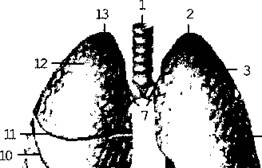
Fig. 6.6. Trachea, principal bronchi, and lungs
Each lung is divided by fissures into lobes. The anterior border of the left lung features the cardiac notch, the site where the Pericardium (heart sac) comes into contact with it.
Last update: 08/08/2026
Editorial and Educational Adaptation: This material has been compiled based on the primary/original source text. The project team performed an editorial review, corrected technical inaccuracies, structured sections, and adapted the content for an educational format.
What was processed:
- elimination of formatting defects (OCR errors, structural breaks, corrupted characters);
- editorial organization of content;
- standardization of terminology in accordance with academic sources;
- verification of factual statements against the original source text.
All mentions of the author, publication year, and origin of the primary text have been preserved in accordance with the source.