MEDICAL BIOLOGY, ANATOMY, HUMAN PHYSIOLOGY AND PATHOLOGY - Ya.I. Fedonyuk 2010
ANATOMY, PHYSIOLOGY, PATHOLOGY
CHAPTER 2. APPARATUS OF LOCOMOTION (THE MECHANISM OF MOVEMENT)
MUSCLES AND FASCIAE OF BODY REGIONS
MUSCLES AND FASCIAE OF THE LOWER LIMB
1. MUSCLES OF THE PELVIC GIRDLE
The Muscles of the Pelvic Girdle are divided into internal and external groups.
Internal pelvic Muscle group
1. The iliopsoas Muscle consists of two parts: the psoas major (originating from the lumbar vertebrae) and the iliacus (originating from the iliac fossa of the hip bone) (Fig. 2.99). Both muscles merge into a single tendon that exits through the muscular lacuna and inserts into the lesser trochanter of the Femur.
Class="center">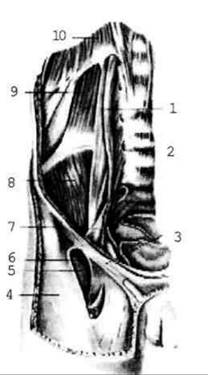
Fig. 2.99. MUSCLES AND FASCIAE of the posterior abdominal wall and the upper third of the thigh, right side:
1 - psoas major muscle; 2 - psoas minor muscle; 3 - inguinal ligament; 4 - fascia lata (partially removed); 5 - iliopsoas muscle; 6 - iliopectineal arch; 7 - iliac fascia (partially removed); 8 - iliacus muscle; 9 - quadratus lumborum muscle; 10 - lumbar part of the Diaphragm.
Function: flexes the thigh; with fixed lower limbs, it flexes the trunk.
2. The piriformis muscle originates from the pelvic surface of the sacrum and exits the pelvic cavity through the greater sciatic foramen, dividing it into the supra- and infrapiriform foramina. It inserts into the greater trochanter of the femur. Function: laterally rotates the thigh (supination).
3. The obturator internus muscle originates from the internal margin of the obturator foramen, exits through the lesser sciatic foramen, and inserts into the greater trochanter. Function: laterally rotates the thigh (supination).
External pelvic muscle group (Fig. 2.100)
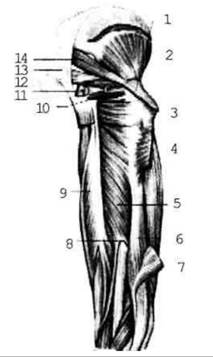
Fig. 2.100. Deep Muscles of the gluteal region and posterior aspect of the thigh:
1 - gluteus medius muscle (cut); 2 - gluteus minimus muscle; 3 - quadratus femoris muscle; 4 - gluteus maximus muscle (cut); 5 - adductor magnus; b - short HEAD of the biceps femoris; 7 - long head of the biceps femoris (cut); 8 -
tendinous hiatus; 9 - semimembranosus muscle; 10 - gemellus inferior muscle; 11 - obturator internus muscle (cut); 12 - gemellus superior muscle; 13 - sacrotuberous ligament; 14 - piriformis muscle.
1. The gluteus maximus muscle originates from the outer surface of the ilium and inserts into the gluteal tuberosity of the femur. Function: extends the thigh; with fixed lower limbs, it extends the trunk, maintaining the so-called "military posture".
2. The gluteus medius and gluteus minimus muscles lie deep to one another.
They originate from the outer surface of the ilium and insert into the greater trochanter. Function: abduct the thigh.
3. The obturator externus muscle originates from the external margin of the obturator foramen and inserts into the greater trochanter. Function: laterally rotates the thigh.
4. The quadratus femoris muscle originates from the ischial tuberosity and inserts into the greater trochanter. Function: laterally rotates the thigh.
5. The tensor fasciae latae muscle extends from the anterior superior iliac spine and inserts into the thickened portion of the fascia lata of the thigh. Function: it tightens the fascia and assists in thigh flexion.
Last update: 08/08/2026
Editorial and Educational Adaptation: This material has been compiled based on the primary/original source text. The project team performed an editorial review, corrected technical inaccuracies, structured sections, and adapted the content for an educational format.
What was processed:
- elimination of formatting defects (OCR errors, structural breaks, corrupted characters);
- editorial organization of content;
- standardization of terminology in accordance with academic sources;
- verification of factual statements against the original source text.
All mentions of the author, publication year, and origin of the primary text have been preserved in accordance with the source.