MEDICAL BIOLOGY, HUMAN ANATOMY, PHYSIOLOGY AND PATHOLOGY - Ya.I. Fedonyuk 2010
ANATOMY, PHYSIOLOGY, PATHOLOGY
SECTION 1. ORGAN. ORGAN SYSTEM. ORGANISM
BASICS OF GENERAL PATHOLOGY
4. General Data on Human Organism Development
Human Development—ontogeny—is divided into two periods: prenatal (intrauterine) and postnatal (extrauterine).
The prenatal period lasts from the moment of egg Fertilization until the birth of the child and consists of two phases: the embryonic phase (the first 2 months) and the fetal phase, which lasts from the 3rd to the 9th month.
At the moment of fertilization, a zygote is formed, possessing The properties of both sex Cells. Subsequently, During the first week, the zygote divides, resulting in The formation of numerous cells called blastomeres, which form a multicellular blastula. From this, a vesicle called the blastocyst is formed, consisting of an inner Cell mass—the embryoblast—and a peripheral cell group—the trophoblast. A cavity filled with extraembryonic mesenchyme lies between the embryoblast and the trophoblast. At this stage, the embryo begins to embed itself into the mucous membrane of the Uterus (implantation). The trophoblast cells produce projections called villi, which transform into the villous membrane—the chorion. The Placenta (afterbirth) develops from the chorion and the adjacent uterine mucosa. The embryo develops from the embryoblast.
During the 2nd week of embryonic life, the embryoblast cells divide into two layers, forming two vesicles: the ectoblastic or amniotic vesicle (from the outer layer of cells) and the entoblastic or yolk vesicle (from the inner layer of cells).
The 3rd week of embryonic life is the period of Gastrulation (The process of forming a trilaminar embryo), during which the mesoderm (middle germ layer), ectoderm (outer germ layer), entoderm (inner germ layer), and notochord (Spinal Cord) are formed. The latter is a derivative of the mesoderm, extends from the HEAD to the tail end of the embryo, and is located between its outer and inner layers.
The postnatal period lasts from birth to the death of the individual and is divided into the following periods:
- neonatal (1–10 days);
- infancy (10 days–1 year);
- early childhood (1–3 years);
- first childhood (4–7 years);
- second childhood (8–12 years);
- adolescence (pubertal) (13–16 years);
- youth (17–21 years);
- adulthood — period I (22–35 years), period II (36–60 years); elderly age (61–74 years);
- senile age (75–90 years);
- longevity (90 years and older).
Class="center">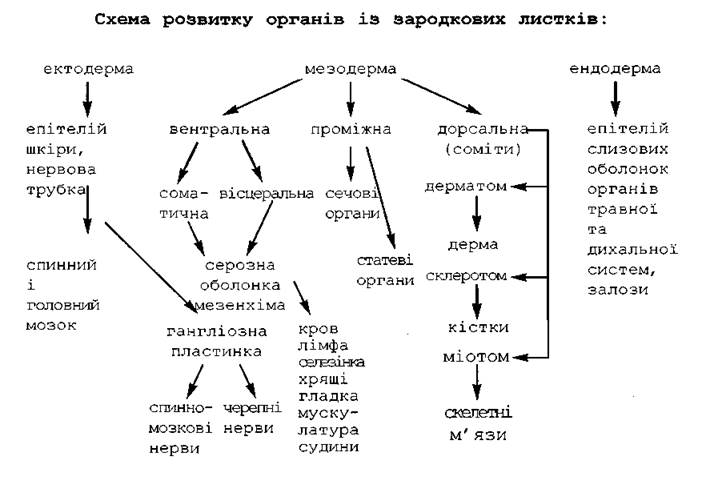
Last update: 08/08/2026
Editorial and Educational Adaptation: This material has been compiled based on the primary/original source text. The project team performed an editorial review, corrected technical inaccuracies, structured sections, and adapted the content for an educational format.
What was processed:
- elimination of formatting defects (OCR errors, structural breaks, corrupted characters);
- editorial organization of content;
- standardization of terminology in accordance with academic sources;
- verification of factual statements against the original source text.
All mentions of the author, publication year, and origin of the primary text have been preserved in accordance with the source.