BOTANY WITH BASICS OF HYDROBOTANY (AQUATIC PLANTS OF UKRAINE) - B.Ye. Yakubenko - 2011
X. SEED PLANTS
Family Lamiaceae (Mint family)
Mostly herbs, less commonly subshrubs or shrubs, with quadrangular stems and decussate (cross-opposite) leaves. Essential Oils are contained in the leaf mesophyll or in special glandular trichomes. Flowers are arranged in verticillasters (false whorls) gathered into panicles, racemes, or heads; the calyx is gamosepalous, tubular or campanulate with five Teeth, or bilabiate. The corolla consists of five petals and is often bilabiate, with a three-lobed lower lip and a two-lobed upper lip; sometimes the corolla appears unilabiate due to the underdevelopment of the upper lip, or it may look actinomorphic. There are four stamens fused to the corolla tube, two short and two long; sometimes, due to reduction, there are only two. The pistil is formed by two carpels, with a superior Ovary that is initially two-celled and later four-celled. Floral formula: ↑K(5)C(2)+(3)A(4)G(2). The fruit is a coenobium (four-nutlet schizocarp).
Most plants contain iridoid compounds and orobanchin. The family comprises 180 genera and up to 3,500 species distributed worldwide, but predominantly in the Mediterranean region. In Ukraine, it is represented by 40 genera and 167 species.
Skullcap (Scutellaria galericulata L.). A perennial herbaceous plant, 10-50 cm tall; uliginophyte, entomophilous, barochorous. The stem is erect, branched, 20-50 cm tall, quadrangular, with opposite leaf arrangement. Leaves are short-petiolate, hastate at the base, with one or two teeth, oblong-ovate or lanceolate, acute at the apex, with crenate-serrate margins.
Flowers are axillary, solitary or in pairs, bisexual, zygomorphic; the corolla is bluish-purple with an elongated, lighter-colored tube. The calyx is truncate at the apex, with a scale-like hollow appendage, nearly glabrous without glandular pubescence. The fruit is a four-nutlet schizocarp. It blooms in June-August (September). It propagates vegetatively and by seeds.
It grows along the banks of Water bodies, in floodplain meadows, in alder forests, and damp thickets throughout almost all of Ukraine; absent in Crimea.
A forage and medicinal plant. It serves as food for leaf beetles, waterfowl, and beavers.
Lesser skullcap or spear-leaved skullcap (Scutellaria hastifolia L.). A perennial herbaceous plant, 15-40 cm tall. Leaves are hastate at the base, with one or two teeth, oblong-ovate or lanceolate, acute at the apex, with crenate leaf margins.
Flowers are borne in pairs in the leaf axils, bisexual, zygomorphic, turned to one side; the corolla is blue-purple, paler on the underside.
Class="center">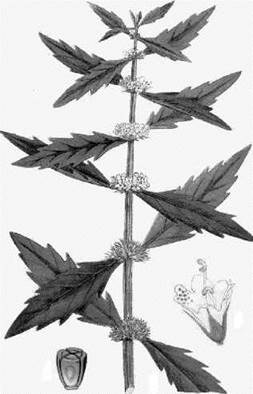
Fig. 162. European gypsywort (Lycopus europaeus)
It grows along the banks of water bodies, in floodplain meadows, in alder forests, and damp thickets throughout almost all of Ukraine; absent in Crimea.
A forage and medicinal plant.
European gypsywort (Lycopus europaeus L.). A perennial herbaceous plant, 30-120 cm tall; oxyhydrophyte, entomophilous, barochorous, zoochorous (Fig. 162). The ROOT System is taproot. The stem is erect and branched. Leaves are short-petiolate, opposite, oblong-ovate, coarsely toothed, with only the lower ones pinnately parted at the base, 5-8 cm long and 1.5-2 cm wide.
Flowers are arranged in dense axillary verticillasters spaced apart from one another. Flowers are bisexual, with a double, zygomorphic perianth. The calyx is spinose-toothed, with teeth longer than the tube; the corolla is bilabiate, white with pink specks in the throat. The upper part of the corolla tube is densely covered with hairs inside. There are 2 stamens (the other 2 are underdeveloped). The pistil has a bifid stigma. The fruit is a four-nutlet schizocarp. It blooms in July-September. It propagates vegetatively (via underground stolons) and by seeds.
It grows in bogs, floodplain meadows, along riverbanks, and in alder forests throughout Ukraine.
A honey-producing, tanning, medicinal, and dye plant (the plant juice yields a black dye). It is consumed by leaf beetles, leaf-mining flies, and beavers.
Gipsywort or tall bugleweed (Lycopus exaltatus L.f.). A perennial herbaceous plant, up to 1.5 m tall; oxyhydrophyte, entomophilous, barochorous. The stem is erect and quadrangular. Leaves are opposite, nearly sessile, broadly lanceolate, pinnately parted or dissected, up to 10 cm long and 2 cm wide. The stem and leaves are shortly pubescent.
Flowers are borne in axillary verticillasters; the calyx teeth are equal in length to the tube. The corolla is white, with a spotted lower lip. The fruit is a four-nutlet schizocarp. It blooms in July-August. It propagates vegetatively and by seeds.
It blooms in July-August. The corolla lacks pink specks. It grows in bogs, floodplain meadows, along the shores of water bodies, in thickets, and in damp places throughout Ukraine.
Marsh woundwort (Stachys palustris L.). A perennial herbaceous pubescent plant, 30-150 cm tall (Fig. 163). Leaves are oblong-lanceolate, crenate-serrulate, with the lower leaves short-petiolate and rounded or cordate at the base, and the upper leaves sessile. Verticillasters are 4-10-flowered. The corolla is reddish-purple. Plants feature underground shoots that are tuberously thickened at the ends. It blooms in June-August.

Fig. 163. Marsh woundwort
It grows in meadows, along banks of water bodies, in marshes, and as a weed in crops and vegetable gardens across Ukraine, rarely in Crimea. It is a honey plant. It serves as food for phytonematodes, gastropods (pond snails), cyprinid fish, waterfowl, beavers, and nutrias.
Water mint (Mentha aquatica L.). A perennial herbaceous plant 30-100 cm tall (Fig. 164). In their vegetative state, members of the mint genus are easily recognized by their characteristic pleasant scent. Water mint differs from other species in the genus by its large, long-petioled ovate leaves and the presence of a terminal globose inflorescence In addition to two or three axillary ones.

Fig. 164. Water mint
The rhizome is optimally developed with adventitious roots at the nodes; the stem is quadrangular, hairy, or occasionally glabrous. Lateral shoots frequently develop in the leaf axils. Leaves are ovate and serrate. Flowers are pink, with a corolla tube that is hairy on the inside. It blooms in July and August.
It grows along the banks of water bodies and in water on silty soils almost throughout Ukraine; it is rare in Crimea.
A variety of this species is cultivated as peppermint. It is an essential oil and medicinal plant.
It serves as forage for gastropods (pond snails, ramshorn snails) and beavers.
Corn mint (Mentha arvensis L.). A perennial herbaceous plant 15-60 cm tall.
Leaves are ovate or oblong-elliptic. Stems and leaves are pubescent. The corolla is lilac or pinkish-lilac. It blooms in June–
August. The species is extremely polymorphic, comprising a complex array of forms.
It grows along banks of water bodies and in marshes almost throughout Ukraine, rarely in Crimea (along the bed of the Biyuk-Karasu River). Medicinal. It serves as food for waterfowl and beavers.
Horse mint (Mentha longifolia (L.) Huds.). A perennial herbaceous plant 30-100 cm tall. The stem is soft-pubescent. Leaves are pubescent, oblong or lanceolate, acuminate, serrate, and nearly sessile. The calyx is pubescent, with subulate teeth. The corolla is pink or lilac. It blooms in July–August.
An essential oil and honey plant. It is consumed by nutrias.
It grows along the banks of water bodies and in damp locations, and is occasionally cultivated. It is distributed primarily in the Carpathians and the Right-Bank region; it is rare in Crimea and the Left-Bank region.
Last update: 07/08/2026
Editorial and Educational Adaptation: This material has been compiled based on the primary/original source text. The project team performed an editorial review, corrected technical inaccuracies, structured sections, and adapted the content for an educational format.
What was processed:
- elimination of formatting defects (OCR errors, structural breaks, corrupted characters);
- editorial organization of content;
- standardization of terminology in accordance with academic sources;
- verification of factual statements against the original source text.
All mentions of the author, publication year, and origin of the primary text have been preserved in accordance with the source.