Plant Physiology - Musiyenko M.M. 2001
Root Nutrition of Plants
Interrelation of carbohydrate and nitrogen metabolism in plants
The ROOT System of plants not only provides the uptake of mineral elements and Water from the soil, but also establishes favorable conditions for converting nutrients into transport-ready forms (via reduction, incorporation into Organic compounds, etc.). Finally, it is precisely in the roots that A number of Amino Acids and physiologically active substances, such as Cytokinins and Gibberellins, are synthesized.
Sucrose serves as a universal precursor for various metabolic syntheses (Fig. 134).
Class="center">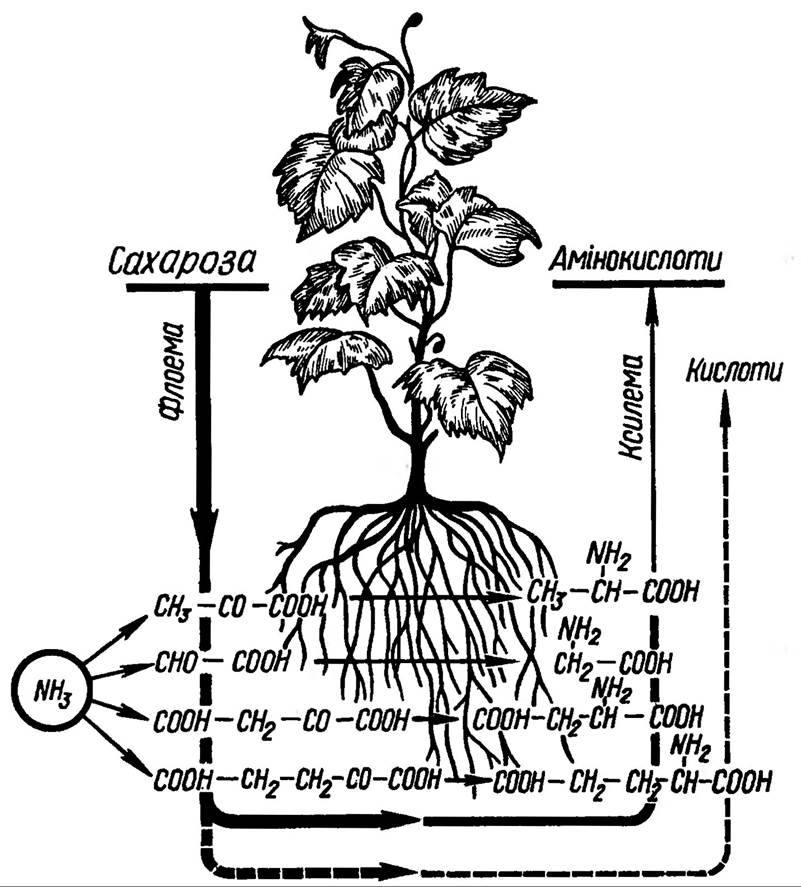
Fig. 134. Nutrient cycling in the plant Organism
It is metabolically inert and susceptible only to the enzyme invertase, which is absent in the vascular bundles but active in other Tissues.
Root Cell METABOLISM also utilizes certain organic compounds produced by rhizosphere microorganisms (Vitamins, amino acids, and several others).
Upon reaching its destination, sucrose is cleaved into glucose or fructose.
Subsequently, these Monosaccharides are incorporated into Cell wall polymers (Cellulose, pectic substances) or serve as respiratory substrates, supplying ATP and organic acids for metabolism, with a significant portion utilized in Amino acid synthesis. Organic acids act as ammonia acceptors, and their synthesis occurs even in aerial roots. This synthesis takes place exclusively in specific root zones: it peaks in the root Hair zone, while subsequent zones facilitate their transport to the aerial parts. The concentration of free amino acids is lowest in the meristematic zone, where active Protein Synthesis is observed.
The roots also synthesize Porphyrins, certain vitamins, phytohormones, Alkaloids, and Other Compounds.
Substances synthesized in the root are partially integrated into the root's own metabolism, support exchange processes with the soil solution, and a fraction of them are released into the soil, thus shaping its specific rhizosphere.
Last update: 07/08/2026
Editorial and Educational Adaptation: This material has been compiled based on the primary/original source text. The project team performed an editorial review, corrected technical inaccuracies, structured sections, and adapted the content for an educational format.
What was processed:
- elimination of formatting defects (OCR errors, structural breaks, corrupted characters);
- editorial organization of content;
- standardization of terminology in accordance with academic sources;
- verification of factual statements against the original source text.
All mentions of the author, publication year, and origin of the primary text have been preserved in accordance with the source.