BIOCHEMISTRY - L. Stryer - 1984
VOLUME 2
PART II GENERATION AND STORAGE OF METABOLIC ENERGY
CHAPTER 18. AMINO ACID DEGRADATION AND THE UREA CYCLE
18.18. Blocking Phenylalanine Hydroxylation Can Lead to Severe Mental Retardation
Phenylketonuria, an inborn error of phenylalanine METABOLISM, differs from alkaptonuria in that it can exert a devastating effect on the Organism. Untreated patients with phenylketonuria almost invariably suffer from severe mental retardation. Indeed, approximately 1% of the patients in psychiatric institutions are found to have phenylketonuria. The Brain weight of such patients is subnormal, nerve myelination is impaired, and deep tendon Reflexes are hyperactive. The life expectancy of untreated patients is drastically shortened; half of them die by the age of 20, and three-quarters by the age of 30.
Class="center">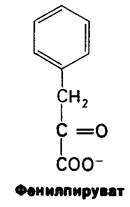
Phenylketonuria is caused by the absence or deficiency of phenylalanine hydroxylase or, less frequently, its tetrahydrobiopterin cofactor. Because phenylalanine cannot be converted into Tyrosine, it accumulates in all Body Fluids. Certain Metabolic pathways of phenylalanine that are quantitatively negligible under normal conditions become prominent in phenylketonuria. The most significant of these is the Transamination of phenylalanine to yield phenylpyruvate. The name of the disease itself derives from the high concentration of this phenylketone in the urine. Phenylpyruvate is further converted into phenyllactate, phenylacetate, and o-hydroxyphenylacetate. The α-amino group of glutamine forms an amide bond with the carboxyl group of phenylacetate to yield phenylacetylglutamine.
Numerous other aberrations in Amino acid metabolism are associated with phenylketonuria, particularly concerning the Metabolism of Aromatic Compounds. The Skin and Hair of patients with phenylketonuria are lighter in color than those of their siblings. Tyrosine hydroxylation is the initial step in The formation of the pigment melanin. In phenylketonuria, this reaction is competitively inhibited by the high concentration of phenylalanine, leading to a diminished production of melanin. The biochemical basis for the mental retardation in untreated phenylketonuria remains an enigma.
Infants with phenylketonuria appear normal at birth, but in the absence of Treatment, severe impairments manifest within the first year of life. The treatment of phenylketonuria involves adhering to a low-phenylalanine diet. The goal is to ensure that phenylalanine intake does not exceed the metabolic requirements for growth and maintenance. Proteins naturally containing low levels of phenylalanine, such as milk casein, are hydrolyzed, and phenylalanine is removed by adsorption. A phenylalanine-restricted diet must be initiated immediately after birth to prevent irreversible brain damage. In one study of phenylketonuria patients whose treatment was initiated within the first few weeks of life, the mean IQ (intelligence quotient) was 93, whereas in a control group of siblings whose treatment began at the age of one year, the mean IQ was 53.
Early Diagnosis of phenylketonuria is of paramount importance and is carried out through mass screening programs. In recent years, newborn urine has been tested by The addition of FeCbl3, which yields an olive-green color in the presence of phenylpyruvate. Currently, Blood phenylalanine concentration serves as the preferred diagnostic criterion due to its greater reliability. The incidence of phenylketonuria is approximately 1 case per 20,000 live births.
"Nature never reveals her secrets more clearly than when she allows us to trace her workings away from beaten paths; nor is there any better way to advance in practical medicine than to direct our inquiries toward the elucidation of the normal laws of nature by the careful study of morbid conditions."
William Harvey (1657)
The disease is inherited as an autosomal recessive trait. Heterozygotes, who account for approximately 1.5% of the typical population, show no apparent abnormalities. Carriers of the phenylketonuria Gene exhibit reduced levels of phenylalanine hydroxylase and, correspondingly, elevated blood phenylalanine concentrations. However, these criteria are not absolute because the blood phenylalanine levels of defective gene carriers and normal individuals overlap to some extent. A more precise test for carrier status is the measurement of the disappearance kinetics of intravenously administered phenylalanine. It is noteworthy that high blood phenylalanine concentrations in a pregnant woman can lead to fetal developmental abnormalities. This is a striking example of maternal-fetal interaction at THE MOLECULAR LEVEL.
Last update: 06/08/2026
Editorial and Educational Adaptation: This material has been compiled based on the primary/original source text. The project team performed an editorial review, corrected technical inaccuracies, structured sections, and adapted the content for an educational format.
What was processed:
- elimination of formatting defects (OCR errors, structural breaks, corrupted characters);
- editorial organization of content;
- standardization of terminology in accordance with academic sources;
- verification of factual statements against the original source text.
All mentions of the author, publication year, and origin of the primary text have been preserved in accordance with the source.