BIOCHEMISTRY - L. Stryer - 1984
VOLUME 1
PART I. CONFORMATION AND DYNAMICS
CHAPTER 8. ZYMOGEN ACTIVATION: DIGESTIVE ENZYMES AND CLOTTING FACTORS
PROBLEMS
1. Compare Lysozyme, Carboxypeptidase A, and Chymotrypsin.
a) Which of these Enzymes requires a metal ion for activity?
b) Which of these enzymes consists of a single polypeptide chain?
c) Which of these enzymes is rapidly inactivated in the presence of diisopropyl fluorophosphate?
d) Which of these enzymes is formed by the proteolytic Cleavage of a specific zymogen?
2. Proton transfer from an enzyme to a substrate is often a key step in catalysis.
a) Does this step occur in catalysis by chymotrypsin, lysozyme, and carboxypeptidase A?
b) If so, identify the proton donor in each case.
3. It is often the case that a nucleophilic group of an enzyme attacks a substrate molecule. Which group serves as the nucleophile in catalysis by chymotrypsin and carboxypeptidase A?
4. List the factors responsible for the catalytic power of enzymes.
5. TPCK (tosyl-L-phenylalanine chloromethyl ketone) is used as an affinity label for chymotrypsin. It inactivates chymotrypsin by alkylating Histidine-57.
a) Design an affinity label for Trypsin that is analogous to TPCK.
b) How would you determine its Specificity?
c) What other Serine protease might be inactivated by this trypsin affinity label?
6. A specific inhibitor of Elastase is an aldehyde derivative of one of its substrates:
Class="center">
This aldehyde is an analog of an intermediate formed during elastase catalysis.
a) Which residue in the Active Site of elastase will this aldehyde covalently bind to first?
b) What type of covalent bond will be formed?
7. Boronic acids represent another type of transition-state analogs for enzymes that form acyl-enzyme intermediates. Acetylcholinesterase is an enzyme that hydrolyzes the ester bond in acetylcholine:
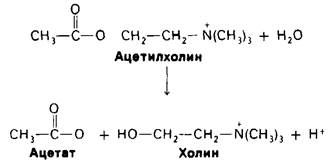
Acetylcholinesterase is specifically inhibited by the following boron-containing analog of acetylcholine:

How can this boron-containing analog bind to the active site of acetylcholinesterase?
8. Like prothrombin, factor X requires vitamin K for its synthesis. Factor X, like prothrombin, contains γ-carboxyglutamate residues in its N-terminal region. However, unlike Thrombin, activated factor X retains this portion of the molecule. What functional consequences might result from this difference between the two activated factors?
9. Antithrombin III forms a stable, non-dissociating complex with thrombin, but not with prothrombin. How can this be explained?
10. Fibrin, like Myosin, keratin, and epidermin, consists of rod-like structures formed by intertwining α-helices. These α-helical coiled coils (Sec. 2.9) contain repeating heptapeptide units (a b c d e f g) with hydrophobic residues at a and d. Can you explain what accounts for this structural regularity?
Last update: 06/08/2026
Editorial and Educational Adaptation: This material has been compiled based on the primary/original source text. The project team performed an editorial review, corrected technical inaccuracies, structured sections, and adapted the content for an educational format.
What was processed:
- elimination of formatting defects (OCR errors, structural breaks, corrupted characters);
- editorial organization of content;
- standardization of terminology in accordance with academic sources;
- verification of factual statements against the original source text.
All mentions of the author, publication year, and origin of the primary text have been preserved in accordance with the source.