Biochemistry - Chemical Reactions in Living Cells, Volume 2 - D. Metzler 1980
Biosynthesis: How New Molecules Are Formed
Biosynthesis of Monomers
Formation of Branched Chains
Branched carbon chains typically form through standard reactions, though in some instances their synthesis involves addition and rearrangement steps. Let us compare the biosynthetic pathways leading to three different branched five-carbon units. The first of these pathways involves the Condensation of an acetyl group with a propionyl group (Fig. 11-8). In this process, propionyl-CoA is presumably first carboxylated to methylmalonyl-CoA prior to condensation. Decarboxylation and reduction yield an acyl-CoA derivative with a methyl group at the C-2 position. The resulting branched compound (likely bound to an acyl carrier protein) serves as an intermediate in the synthesis of Branched-Chain Fatty acids (Chapter 12, Section D).
Class="center">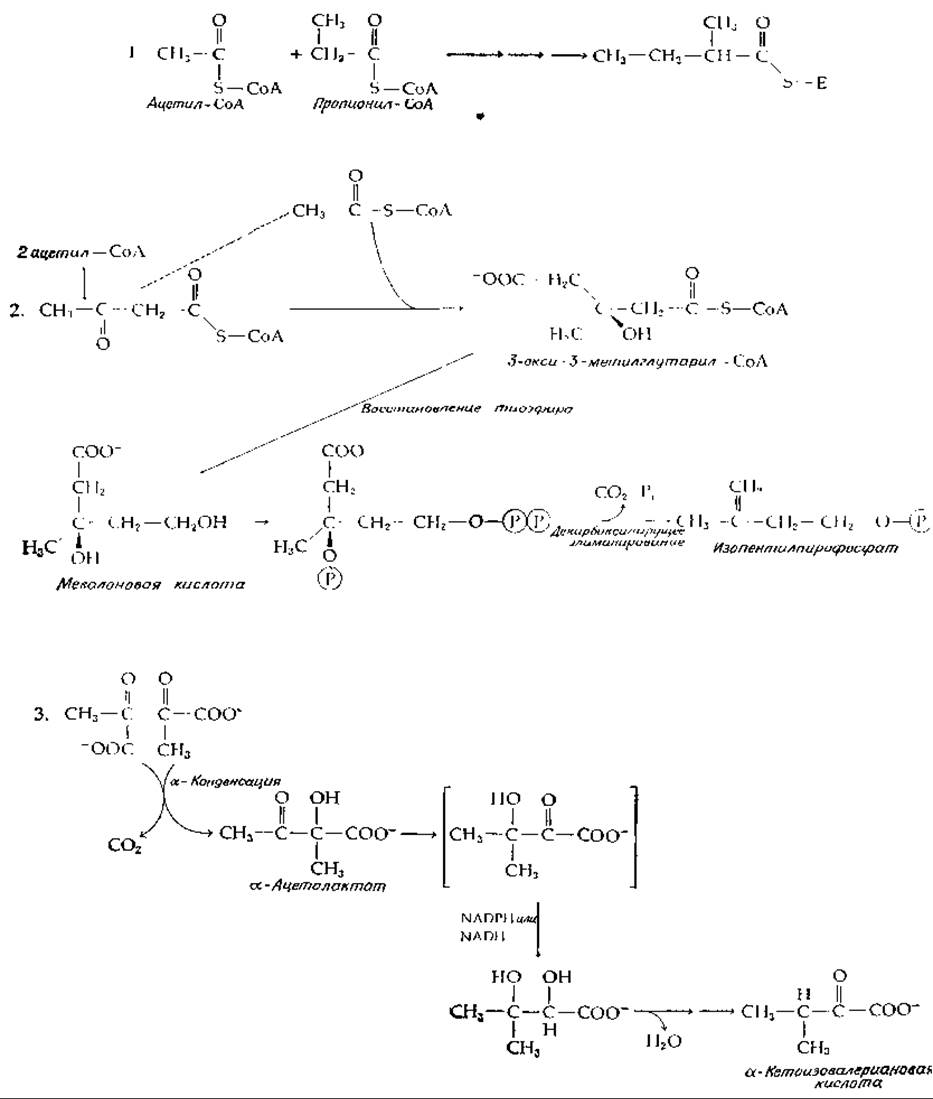
FIG. 11-8. Formation of three five-carbon branched units.
The second branched five-carbon unit (Fig. 11-8), in which the branching point is shifted by one carbon atom down the chain to the C-3 position, plays a critical role in The Biosynthesis of Polyprenyl (Isoprenoid) Compounds and Steroids. Here, the starting Materials are three two-carbon units, one of which undergoes decarboxylation. Initially, two acetyl units condense to form acetoacetyl-CoA; subsequently, a third acetyl unit—previously transferred from acetyl-CoA to an enzyme S–H group [25a]—condenses with acetoacetyl-CoA via an ester condensation. The thioester bond linking the resulting compound to the enzyme is then hydrolyzed, releasing 3-hydroxy-3-methylglutaryl-CoA as the product. The thioester group in this compound is subsequently reduced to an alcohol through standard pathways. The resulting mevalonic acid was originally identified as a growth factor for microorganisms, but it was later shown to be an active precursor in hepatic Cholesterol Biosynthesis. Through three sequential phosphate group transfers from ATP, followed by the release of CO2, mevalonic acid is converted into isopentenyl pyrophosphate (prenyl pyrophosphate).
The third type of branched carbon unit (Fig. 11-8) is α-ketoisovaleric acid, the precursor of valine, which is formed via Transamination. The starting materials are two Pyruvate molecules that couple via an α-condensation reaction (in the presence of thiamine pyrophosphate), followed by decarboxylation. The resulting α-acetolactate features a branched chain, yet it cannot directly form an α-amino acid. To achieve this, a rearrangement must occur wherein the methyl group shifts to the β-position (Chapter 7, Section L). Elimination of a Water molecule from the diol yields the enol of the desired α-keto acid (Fig. 11-8). The isoleucine precursor is synthesized in an analogous manner; in this case, one pyruvate molecule condenses (with concomitant decarboxylation) with a molecule of α-ketobutyrate. Alternatively, the keto acid precursor of leucine is generated by chain elongation of the five-carbon branched precursor of valine (Fig. 11-7).
Last update: 06/08/2026
Editorial and Educational Adaptation: This material has been compiled based on the primary/original source text. The project team performed an editorial review, corrected technical inaccuracies, structured sections, and adapted the content for an educational format.
What was processed:
- elimination of formatting defects (OCR errors, structural breaks, corrupted characters);
- editorial organization of content;
- standardization of terminology in accordance with academic sources;
- verification of factual statements against the original source text.
All mentions of the author, publication year, and origin of the primary text have been preserved in accordance with the source.