Biochemistry - The Chemical Reactions of Living Cells, Volume 2 - D. Metzler 1980
Coenzymes — specialized natural reagents
Coenzyme A and Phosphopantetheine
Isolation of a New Coenzyme
The Need for a specific coenzyme in biological Acetylation reactions was first recognized by Lipmann in 1945 [1]. The attachment of acetyl groups to other molecules is a common reaction in living Cells; one such example is The formation of acetylcholine, an essential "chemical transmitter" of nerve impulses (Chap. 16, Sec. B, 4). In the organic chemistry laboratory, acetylation is carried out using reactive compounds such as acetic anhydride or acetyl chloride; Lipmann wanted to find out what nature uses instead. The approach developed by Lipmann to search for biologically "active acetate" was subsequently used with great success in solving many biochemical problems.
First, Lipmann developed a test system: he tested the ability of fresh Liver tissue extracts to catalyze the acetylation of sulfanilamide:
Class="center">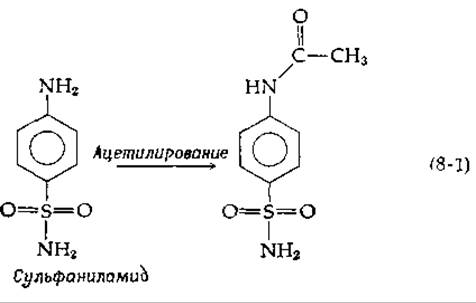
A specific color reaction could be used to quantitatively determine very small amounts of the product. Thus, The rate of sulfanilamide acetylation under standard conditions served as a measure of The activity of the biochemical acetylation system. Lipmann soon discovered that the reaction requires ATP and that ATP is cleaved to ADP simultaneously with the formation of acetylsulfanilamide.
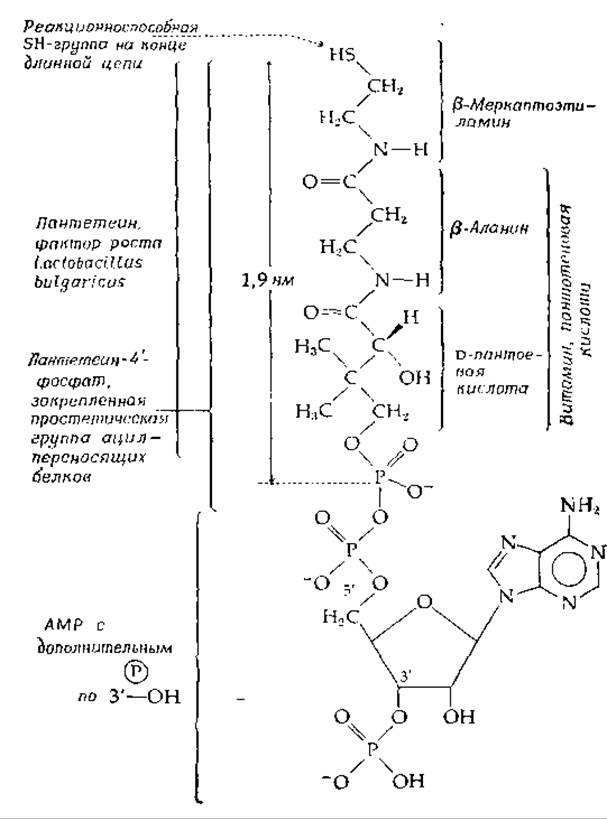
FIG. 8-1. Coenzyme A—the coenzyme of acyl Group activation.
The second discovery was that upon dialysis or ultrafiltration, the liver extract practically lost its ability to catalyze the acetylation reaction. Apparently, the liver extract contained a vital substance that could pass through a semipermeable dialysis membrane. When the dialysate or ultrafiltrate was concentrated and added back to the extract, the acetylation capacity was restored. The unknown substance was not destroyed by boiling, and Lipmann suggested that it was a previously unknown coenzyme, which he named coenzyme A (the coenzyme of acetylation). This test system was then used to estimate The amount of coenzyme in a given volume of dialysate or any other sample. When small amounts of CoA were added to the test system, only a partial restoration of acetylating activity was observed, and the degree of restoration was proportional to the amount of CoA. Using this test system to evaluate various fractionation Procedures, Lipmann soon isolated the acetylation coenzyme in pure form from Yeast and liver tissue.
Last update: 06/08/2026
Editorial and Educational Adaptation: This material has been compiled based on the primary/original source text. The project team performed an editorial review, corrected technical inaccuracies, structured sections, and adapted the content for an educational format.
What was processed:
- elimination of formatting defects (OCR errors, structural breaks, corrupted characters);
- editorial organization of content;
- standardization of terminology in accordance with academic sources;
- verification of factual statements against the original source text.
All mentions of the author, publication year, and origin of the primary text have been preserved in accordance with the source.