Human Biochemistry, Volume 1 - Murray R. 1993
Bioenergetics and Metabolism of Carbohydrates and Lipids
Regulation of Lipid Metabolism and Energy Sources in Tissues
Regulation of Fatty Acid Oxidation – Interconversion of Major Nutrients (Fig. 28.9)
The fact that animals can accumulate fat while subsisting entirely on CARBOHYDRATES demonstrates how readily carbohydrates are converted into fats. The most crucial reaction in this pathway is The conversion of Pyruvate into acetyl-CoA, which serves as the Starting Material for the synthesis of long-chain Fatty acids. However, because the reaction catalyzed by pyruvate dehydrogenase is irreversible, the direct conversion of acetyl-CoA (derived from Fatty acid oxidation) back into pyruvate is impossible. Furthermore, net synthesis of oxaloacetate does not occur in The Citric Acid Cycle; as acetyl-CoA condenses with an oxaloacetate molecule, one molecule of oxaloacetate is simply regenerated by the end of the cycle. For this same reason, fatty acids with an even number of carbon atoms—which yield exclusively acetyl-CoA upon oxidation—cannot be converted into glucose and Glycogen.
Only the terminal three-carbon fragment of a fatty acid molecule with an odd number of carbon atoms acts as a potential substrate for glycogen synthesis, because propionate is generated exclusively from this portion of the molecule during oxidation. Nevertheless, radiolabeled carbon atoms from fatty acids can be detected in glycogen after passing through The Citric Acid cycle. This is because oxaloacetate is an intermediate in both the citric acid cycle and Gluconeogenesis. The carbon skeletons of several nonessential Amino Acids can be derived from carbohydrates at various Stages of the citric acid cycle. Conversely, through the reversal of these pathways, glucogenic amino acids can serve as precursors for the carbon skeletons of citric acid cycle intermediates or their precursors. Consequently, these Amino acids are readily converted via gluconeogenesis into glucose and glycogen. Ketogenic amino acids serve as a source of acetoacetate, which is subsequently converted into acetyl-CoA in extrahepatic Tissues.
Class="center">
Fig. 28.8. Interrelationships of metabolic processes occurring in adipose tissue, Liver, and extrahepatic tissues. Hatched areas indicate the localization of lipoprotein lipase in capillary walls; FFA, free fatty acids; VLDL, very-low-density Lipoproteins.
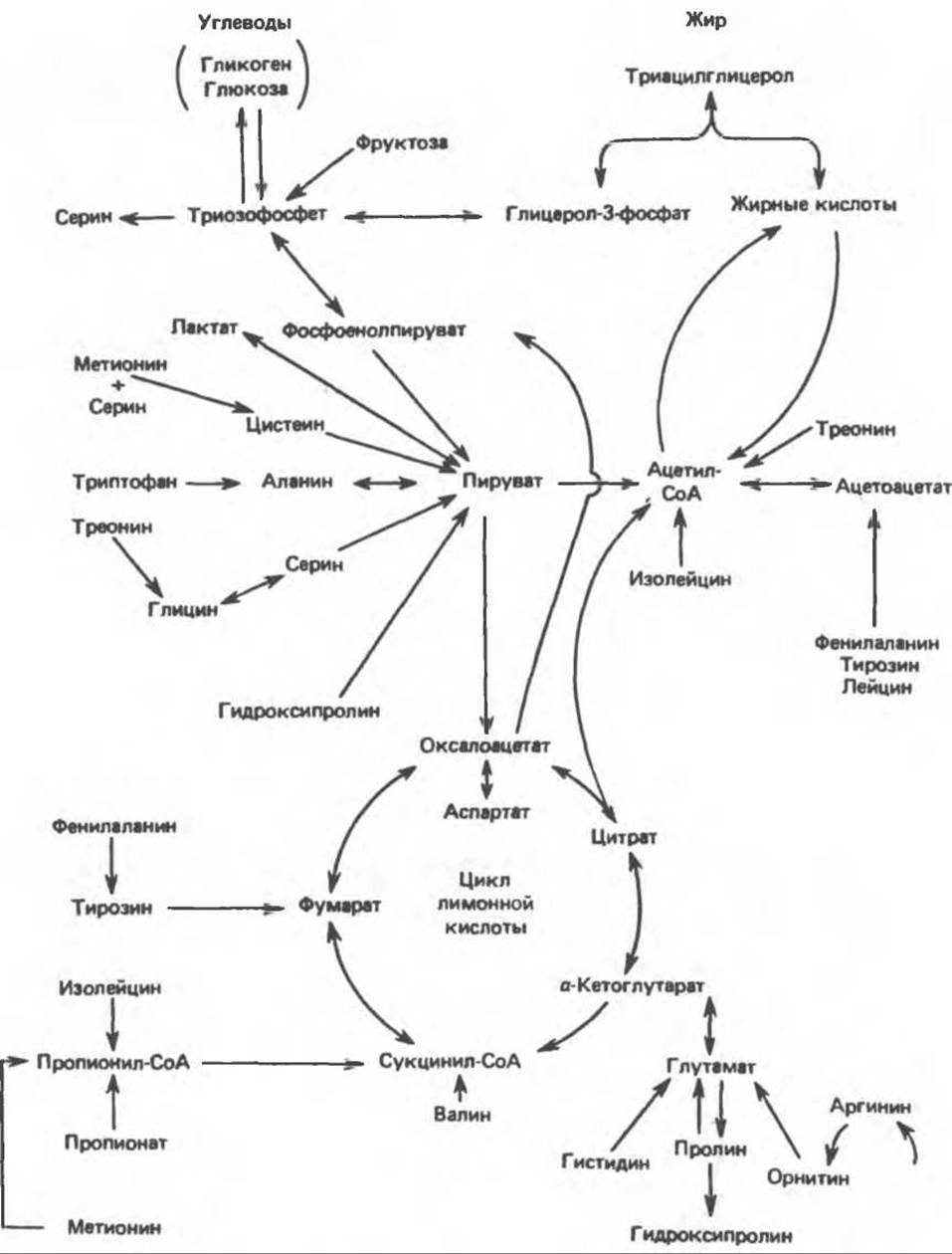
Fig. 28.9. Interconversion of major nutrients.
For the same reasons discussed above that preclude the direct conversion of fatty acids into carbohydrates, fatty acids cannot be converted into glucogenic amino acids either. Similarly, the breakdown pathways of ketogenic amino acids are irreversible. All of these amino acids belong to the category of Essential Amino Acids. The conversion of glucogenic amino acid carbon skeletons into fatty acids is possible either via The formation of pyruvate and acetyl-CoA, or through the reversal of extramitochondrial citric acid cycle reactions from α-ketoglutarate to citrate, followed by the generation of acetyl-CoA via ATP-citrate lyase (see Chapter 23). However, PROTEIN AND AMINO acid degradation under physiological conditions, such as during starvation, is normally accompanied by fat mobilization. Consequently, the conversion of amino acids into fat is of little quantitative significance, except when animals are fed a high-protein diet.
Last update: 06/08/2026
Editorial and Educational Adaptation: This material has been compiled based on the primary/original source text. The project team performed an editorial review, corrected technical inaccuracies, structured sections, and adapted the content for an educational format.
What was processed:
- elimination of formatting defects (OCR errors, structural breaks, corrupted characters);
- editorial organization of content;
- standardization of terminology in accordance with academic sources;
- verification of factual statements against the original source text.
All mentions of the author, publication year, and origin of the primary text have been preserved in accordance with the source.