Biochemical Foundations of Human Vital Activity - Volkov, N.I., Nesen, E.N. 2000
Biochemistry of Sports
Biochemical Factors of Fatigue
Biochemical factors of fatigue during prolonged high- and moderate-intensity exercise
The primary causes of fatigue during prolonged high- and moderate-intensity exercises are factors associated with a reduced energy supply in working Muscles (depletion of intramuscular Glycogen stores, accumulation of incomplete fat oxidation products, excessive accumulation of NH3 and IMP, and the onset of hypoglycemia), as well as impaired electrochemical coupling in working muscles and a decline in Central Nervous system function under conditions of marked hyperthermia, dehydration, and electrolyte imbalance (Fig. 152). Thus, the fatigue that occurs during prolonged high- and moderate-intensity exercises is complex in nature.
In most cases, the primary driver of fatigue during prolonged high- and moderate-intensity exercises is A change in the volume and composition of intramuscular energy substrates (Fig. 153). Across a broad range of sustained workloads (starting from 25% VO2max and above), carbohydrate oxidation accounts for a significant share of ATP resynthesis. Fat oxidation is characteristic only of exercises whose relative intensity does not exceed 50% of VO2max.
Class="center">
Fig. 152 Contribution of various factors to The Development of fatigue during prolonged muscular work
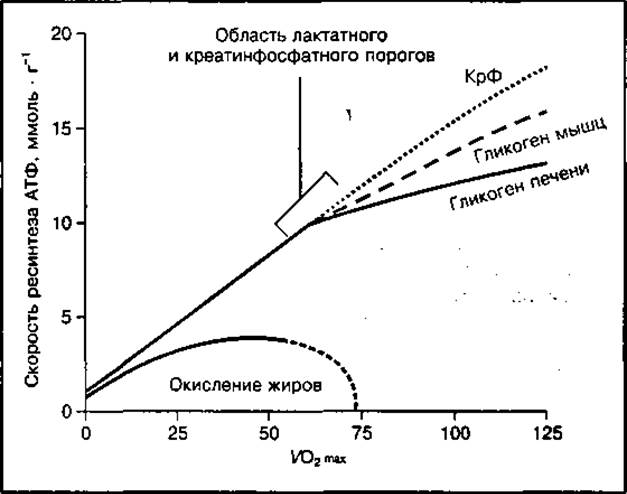
Fig. 153 Changes in the relative contribution of various Energy Sources to ATP resynthesis during prolonged exercises of varying intensity

Fig. 154 Changes in Blood glucose, fatty acid, and lactate concentrations during prolonged exercise
Anaerobic energy sources (PCr and glycogen) significantly impact the Energy supply of work only in those types of prolonged exercises whose relative intensity exceeds the lactate and creatine phosphate thresholds, which are localized at 60–75% of VO2max.
Due to the changing nature of energy supply during prolonged work, the dynamics of key biochemical blood parameters also shift (Fig. 154). Blood glucose levels drop noticeably during prolonged work lasting longer than 90 minutes. Blood lactic acid and free fatty acid levels remain at baseline (resting) values until the body's carbohydrate reserves are substantially depleted. From that point onward, the concentration of these metabolites in the blood tends to rise.
Specific causes of fatigue during prolonged work may stem from the working muscles' inability to maintain the required rate of ATP resynthesis due to depleted carbohydrate stores, as well as central nervous system disruptions caused by the accumulation of ammonia and Ketone Bodies in the body. Fig. 155 demonstrates that supplemental glucose intake prevents the development of pronounced hypoglycemia during work and significantly enhances performance during prolonged exercises.
Thus, for any exercise, one can identify the leading, most heavily loaded components of METABOLISM and body system Functions, the capacities of which determine an athlete's ability to perform exercises at the required level of intensity and duration. These may include regulatory systems (CNS, Autonomic nervous system, neurohumoral), vegetative support systems (Respiration, Circulation, blood), and the effector (motor) system.
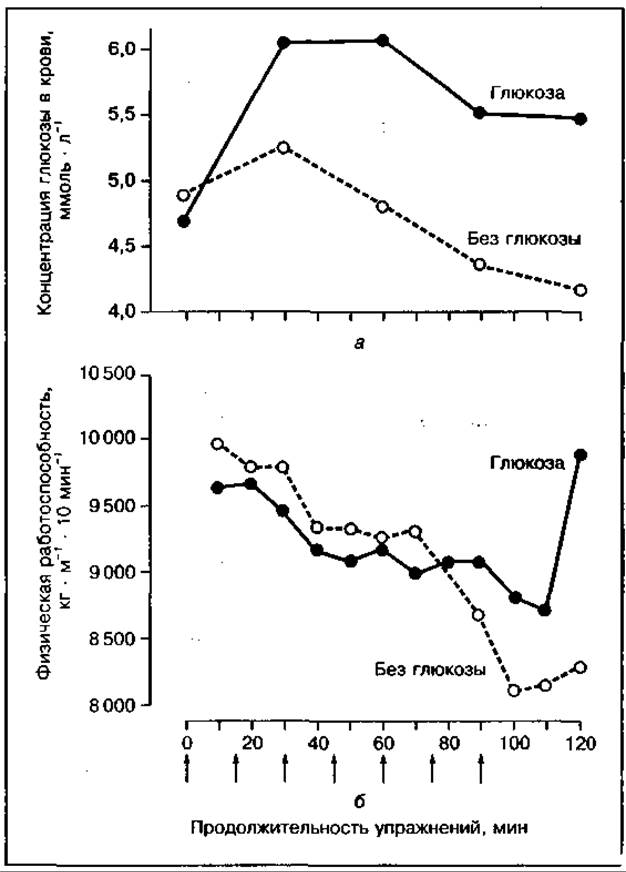
Fig. 155 Changes in blood sugar levels (a) and physical performance (b) with supplemental glucose administration (arrows) during prolonged work
A comprehensive analysis of fatigue in sports conducted by physiologists, biochemists, and experts in the theory and methodology of sports training (Ya.M. Kots, N.N. Yakovlev, V.N. Volkov, I.I. Volkov, V.D. Monogarov, V.N. Platonov, and others) has convincingly shown that fatigue should be viewed as a consequence of the failure of a specific component within the complex system of Organs and functions, or as a disruption of their interrelation. Any organ and its function can become the leading link in the development of fatigue if a discrepancy arises between the physical load level and the available functional reserves. Therefore, the ROOT causes of decreased performance may include the depletion of energy reserves, tissue Hypoxia, reduced enzymatic activity caused by tissue "working" metabolism, impaired integrity of functional structures due to insufficient plastic supply, altered Homeostasis, and disrupted neural and hormonal regulation, among others.
Elucidating the mechanisms of fatigue plays a vital role in sports practice by providing a rationale for the core principles of sports training. Specifically, fatigue is regarded as a factor that stimulates the mobilization of functional resources, defines the boundaries of optimal training loads, and ensures effective adaptation, successful competitive performance, and the Prevention of maladaptation.
This approach is of practical importance because it objectively justifies The system of alternating training loads of predominant orientation. Such a loading schedule helps explain the management of large work volumes combined with a high frequency of training sessions, high qualitative characteristics of work, and the prevention of over-fatigue and functional system strain resulting from intense training programs.
CONTROL QUESTIONS
1. What is meant by the state of fatigue, and what is its role in Structuring the sports training system?
2. What Biochemical changes in the body lead to the development of fatigue?
3. What are the leading Biochemical Factors of fatigue during short-term high-intensity exercises?
4. What are the main causes of fatigue during prolonged muscular work?
5. How does the initial level of energy substrates (PCr, glycogen) in working muscles affect the development of fatigue?
6. How do physical performance and blood glucose levels change with supplemental glucose intake during prolonged work?
Last update: 06/08/2026
Editorial and Educational Adaptation: This material has been compiled based on the primary/original source text. The project team performed an editorial review, corrected technical inaccuracies, structured sections, and adapted the content for an educational format.
What was processed:
- elimination of formatting defects (OCR errors, structural breaks, corrupted characters);
- editorial organization of content;
- standardization of terminology in accordance with academic sources;
- verification of factual statements against the original source text.
All mentions of the author, publication year, and origin of the primary text have been preserved in accordance with the source.