Invertebrate Zoology: A Study Guide - T. A. Dauda 2014
Multicellular Animals
Arthropods
Subphylum Tracheata - Class Insecta - Orders with Incomplete Metamorphosis - Order Hemiptera, or True Bugs
There are over 30,000 known species of true bugs (Hemiptera). Many of them are agricultural pests, while others are parasites of mammals, birds, and humans. However, the true bug order also includes predatory species that are beneficial to humans because they destroy harmful insects.
True bugs possess piercing-sucking mouthparts shaped like a proboscis. The basal part of the forewings is thick, hard, and leathery, whereas the apical part is soft, thin, and transparent. The second pair of wings is thin and membranous. At rest, both the hind wings and the distal PARTS OF THE forewings fold beneath the hardened basal portions of the first pair. This heterogeneous Structure OF THE hemelytra gave the order its scientific name, Hemiptera (meaning "half-winged"). In some species, the hemelytra are uniform (pond skaters), while in others they are shortened or absent (bed bug). The ducts of scent glands open on the ventrolateral surface of the metathorax; their secretion is well known for the characteristic unpleasant odor typical of bugs.
Among herbivorous bugs, cereal pests—various shield bugs, such as the sunn pest, the Austrian shield bug, and the Mauritian or black shield bug (see Fig. 68)—are of the greatest practical importance. These major crop pests are active in Central Asia, Ukraine, Crimea, and the Caucasus. In spring, they migrate from overwintering sites to grain fields, where they feed on cereal stems, weakening and eventually killing them. The sunn pests also reproduce in these fields. Females lay clusters of 70–100 eggs each, from which larvae hatch after two weeks.
Class="center">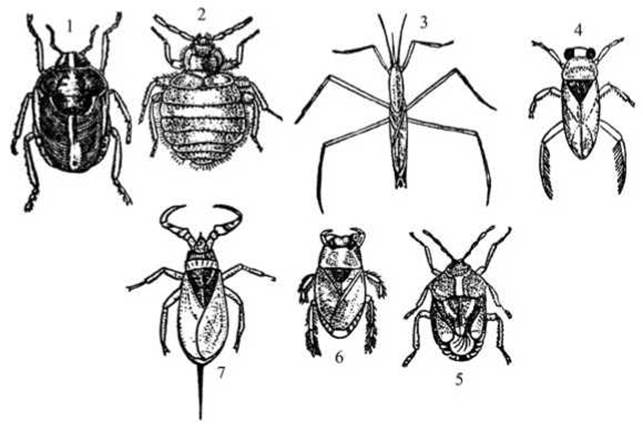
Fig. 68 Representatives of the order Hemiptera (True Bugs):
1 — sunn pest; 2 — bed bug; 3 — large pond skater; 4 — backswimmer; 5 — cabbage bug; 6 — saucer bug; 7 — Water scorpion.
They molt five times before transforming into adults, which migrate from grain crops to overwintering habitats, such as forests and shelterbelts. Both larvae and adult bugs attack the ears of grain, destroying and damaging the filling kernels.
Sunn pests are actively controlled. In early spring at their overwintering sites, fallen leaves are raked into piles and covered with soil. Biological control Methods are highly effective: chickens are released into bug overwintering sites and fields, where they devour enormous numbers of the pests. The Use of egg parasitoid insects, which lay their eggs inside the eggs of the shield bugs, is also of great importance.
Garden crops are damaged by various crucifer-feeding bugs, such as the rapeseed bug and the ornate bug. They feed on wild and cultivated Brassicaceae, posing a particular threat to cabbage, mustard, and rapeseed.
True bugs frequently parasitize birds and mammals. They inhabit animal nests, tree hollows, and burrows, where they attack their hosts and feed on their Blood. The bed bug leads a similar lifestyle in human dwellings. This species is wingless, with only small rudiments of hemelytra remaining in place of wings. A characteristic feature of bed bugs that makes control difficult is their ability to endure prolonged starvation. They can survive without food for more than six months, allowing them to persist in uninhabited premises. Bed bugs deposit their eggs in wall crevices, beneath wallpaper, and in household furniture. Their bites cause severe irritation, and they occasionally act as vectors of infectious diseases.
Among terrestrial bugs, there are numerous predatory species that eliminate harmful insects. Certain groups of predatory bugs have adapted to aquatic life. Various pond skaters and water runners are common On the surface of rivers, lakes, and ponds. These bugs glide effortlessly across the water surface on slender, widely spaced legs that are water-repellent. They hunt for food on the water surface and spend the winter on land. A small number of pond skater species live on the open ocean surface, often far from the shore.
Among the bugs inhabiting the water Column, the large predatory backswimmer is widely distributed. Its hind legs are modified into swimming oars, allowing these bugs to swim rapidly upside down (ventral side up). Backswimmers are also capable of flight, covering quite considerable distances. Their bites are painful. Other agile aquatic bugs, such as saucer bugs, are also found in freshwater habitats.
All aquatic bugs breathe atmospheric air. Their spiracles are located at the tip of the abdomen, which is briefly exposed above the water surface from time to time for Respiration. The water scorpion is a remarkable example of adaptation to atmospheric breathing via a long respiratory tube at the end of the abdomen, combined with raptorial forelegs; it typically resides in shallow water among fallen leaves.
Last update: 13/08/2026
Editorial and Educational Adaptation: This material has been compiled based on the primary/original source text. The project team performed an editorial review, corrected technical inaccuracies, structured sections, and adapted the content for an educational format.
What was processed:
- elimination of formatting defects (OCR errors, structural breaks, corrupted characters);
- editorial organization of content;
- standardization of terminology in accordance with academic sources;
- verification of factual statements against the original source text.
All mentions of the author, publication year, and origin of the primary text have been preserved in accordance with the source.