Fundamentals of Molecular Biology - V.I. Rezyapkin 2009
RNA, RNA Processing
rRNA Processing
Processing is required for the maturation of both prokaryotic and eukaryotic rRNAs.
Prokaryotes
The formation of rRNA in prokaryotes occurs As a result of the processing of a primary transcript (30 S) containing The nucleotide sequences of all three rRNAs (16S, 23S, and 5S), as well as tRNA. During maturation, individual rRNAs and tRNAs are cleaved from the primary transcript (Fig. 5.23).
Class="center">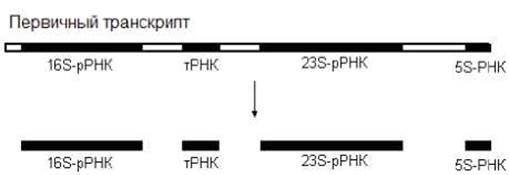
Fig. 5.23. Processing of prokaryotic rRNA
Eukaryotes
The large mammalian rRNAs—18S, 5.8S, and 28S—are synthesized as a single primary transcript designated as 45S RNA. The 45S RNA is methylated during METABOLISM/31.html">Transcription, with ribose residues undergoing methylation predominantly. Individual rRNAs are excised from the 45 S RNA and subsequently assemble with 5S rRNA to form Ribosomes (Fig. 5.24).
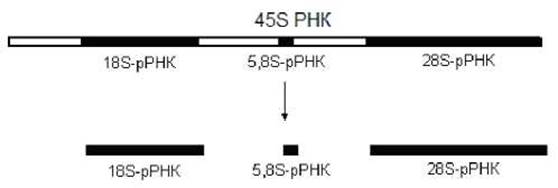
Fig. 5.24. Processing of mammalian rRNA
In some primitive eukaryotes, the nucleotide sequences corresponding to 26S RNA within the primary transcript contain an intron. Consequently, processing involves not only the excision of individual rRNAs from the primary transcript but also the removal of the intron via autosplicing (Fig. 5.25).
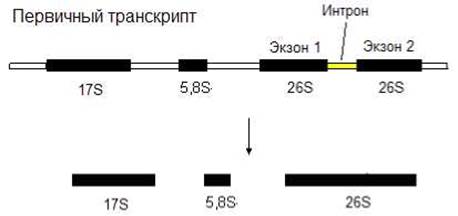
Fig. 5.25. Processing of rRNA in Tetrahymena thermophila
The presence of various types of RNA in living Cells drives essential biological processes primarily associated with the expression of Genetic information encoded in DNA. To acquire functional activity, RNA must in most cases undergo complex post-transcriptional modifications. As a rule, only prokaryotic mRNA does not require processing to exhibit its biological properties.
Last update: 12/08/2026
Editorial and Educational Adaptation: This material has been compiled based on the primary/original source text. The project team performed an editorial review, corrected technical inaccuracies, structured sections, and adapted the content for an educational format.
What was processed:
- elimination of formatting defects (OCR errors, structural breaks, corrupted characters);
- editorial organization of content;
- standardization of terminology in accordance with academic sources;
- verification of factual statements against the original source text.
All mentions of the author, publication year, and origin of the primary text have been preserved in accordance with the source.