BIOTECHNOLOGY - V. H. Herasymenko - 2006
Part II. Special Biotechnologies
Chapter 24. BIOTECHNOLOGY FOR THE PRODUCTION OF BIOMASS FROM THE UNICELLULAR ALGA SPIRULINA
24.6. CULTIVATION OF SPIRULINA FOR USE IN THE PHARMACEUTICAL INDUSTRY
Wherever ecological and climatic conditions permit, Spirulina is cultivated in open ponds. The advantage of this method is The ability to utilize natural energy resources. The main disadvantages of such systems include the difficulty of maintaining pure cultures and The Need for heating systems under unfavorable conditions. Open-type facilities are utilized in Bulgaria, Italy, Mexico, Israel, Chile, Brazil, Thailand, India, China, the USA (California), Central Asia, and Kazakhstan.
In temperate climate regions, preference is given to cultivating the alga in protected ground conditions (the areal method). Japan cultivates Spirulina in greenhouses covering 10 thousand ha, Italy covers 2.5 thousand ha, France 3 thousand ha, Ukraine 12 ha, and Moldova 1 ha.
The cultivation process is carried out in special photosynthesizing units. Located on protected ground inside a greenhouse (Fig. 24.2), these photounits are filled with a nutrient medium of a precisely defined composition that replicates the Water chemistry of Lake Chad. At the "Spirulina LTD" company, the highest purity artesian water is used for this purpose. The optimal conditions for the areal cultivation of Spirulina are an illumination of 4-6 klx per m2 and a nutrient medium Temperature of 26-28 єС.
The morphological state of the culture depends on The ratio of spiral to filamentous forms. The sustained dominance of one form or another indicates the adaptation of the culture to the given cultivation conditions. Small additions of nitrogen and carbon in the form of ammonium bicarbonate increase the proportion of spiral forms in the culture (Berestov V.A., 1999).
In the absence of greenhouses, photobioreactors are used, which can be installed in any suitable premises. Various designs of photobioreactors have been proposed: vertical, horizontal, as well as polyethylene and Glass tubular ones.
In Ukraine, vertical tiered-type systems are used for growing Spirulina. A terrace-cascade system for microalgae cultivation, featuring rational utilization of natural and artificial lighting, was developed by specialists at the Institute of Botany of the National Academy of Sciences of Ukraine (Berestov V.A., 1999).
The Institute of Hydrobiology of the National Academy of Sciences of Ukraine has created closed tubular systems for the mass cultivation of Spirulina with a total volume of nearly 10,000 kg of hydromass; operational experience has been accumulated and the conditions for its production have been optimized. Technologies for biomass dehydration, preservation, and subsequent Processing have been developed. In cooperation with the Institute of Nutrition of the Ministry of Health of Ukraine, a biomedical evaluation of the obtained biomass was carried out, and A number of technologies for the food and pharmaceutical Applications of Algae-based preparations were developed and tested in practice (Berestov V.A., 1999).
The advantage of closed-type systems over open ones lies in the ability to maintain culture purity, the availability of automation, the creation of conditions that prevent the contamination of the suspension, and the provision of high productivity for the cultivated algal strains.
Class="center">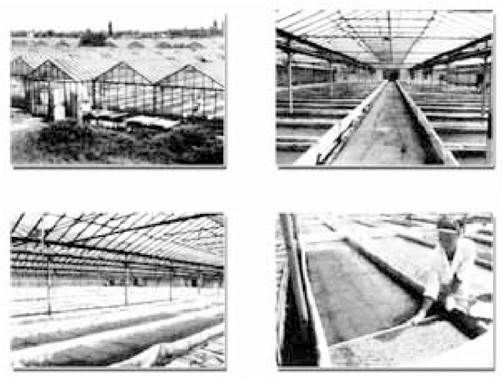
Fig. 24.2. General view of the SPIRULINA CULTIVATION TECHNOLOGY at the "Spirulina LTD" company in Mykolaiv
(according to Berestov V. A., 1999)
Ukraine became the 61st country in the world to cultivate Spirulina. In Russia, Spirulina is grown in small quantities at Moscow State University (MSU), and on an industrial scale in Sochi (Agro-Viktoriya LLC). All of them market a vitamin product named "SPLAT". A single tablet contains 0.25 g of pure Spirulina and nearly 0.25 g of additives that improve its taste and solubility. Among the CIS countries, Ukraine has achieved the greatest success in mastering the technology of blue-green algae cultivation and studying their therapeutic and preventive properties for numerous human diseases.
Numerous studies have established that Spirulina biomass contains absolutely all the substances necessary for normal human physiological function. Spirulina is a universal systemic bioprotector and biocorrective agent capable of resolving more than 300 biochemical "malfunctions" in our body at various stages (Berestov V.A., 1999).
The Cell wall of S. platensis contains alginates—unique biocompatible polyanionic (acidic) Polysaccharides that have the ability to rid the bodies of humans and animals of radionuclides (strontium, cesium) and heavy metals (lead, cadmium, etc.).
In the former Soviet Union, the Spirulina-based preparation was designated as "Product No. 001A", and its composition and characteristics were classified.
Last update: 11/08/2026
Editorial and Educational Adaptation: This material has been compiled based on the primary/original source text. The project team performed an editorial review, corrected technical inaccuracies, structured sections, and adapted the content for an educational format.
What was processed:
- elimination of formatting defects (OCR errors, structural breaks, corrupted characters);
- editorial organization of content;
- standardization of terminology in accordance with academic sources;
- verification of factual statements against the original source text.
All mentions of the author, publication year, and origin of the primary text have been preserved in accordance with the source.