Anatomy of the Vessels and Nerves of the Trunk (Angioneurology) - Chornokulskyi S. T. 2011
Lymphatic Vessels and Nodes of the Trunk
Lymphatic Vessels and Nodes of the Abdomen
The Lymphatic vessels and nodes of the abdomen are also subdivided into parietal and visceral groups.
Nodi lymphoidei parietales abdominis
are grouped primarily around the Abdominal Aorta and INFERIOR VENA CAVA. These include lateral aortic, preaortic, retroaortic, left, right, and intermediate lumbar nodes; as well as lateral caval, precaval, and retrocaval nodes. On the anterior and superior walls of the Abdominal cavity, along the corresponding Blood Vessels, lie the inferior epigastric and inferior diaphragmatic Lymph Nodes, respectively. The most numerous among the parietal nodes are the lumbar nodes (11–41).*
* The numbers in parentheses indicate the quantity of nodes.
Nodi lymphoidei viscerales abdominis
are concentrated around the unpaired visceral Branches of the Abdominal Aorta and their ramifications (celiac, superior and inferior mesenteric). Associated with these ramifications are the right/left gastric, splenic, pancreaticoduodenal, hepatic, paracolic, ileocolic, mesocolic, sigmoid, and superior rectal nodes.
Class="center">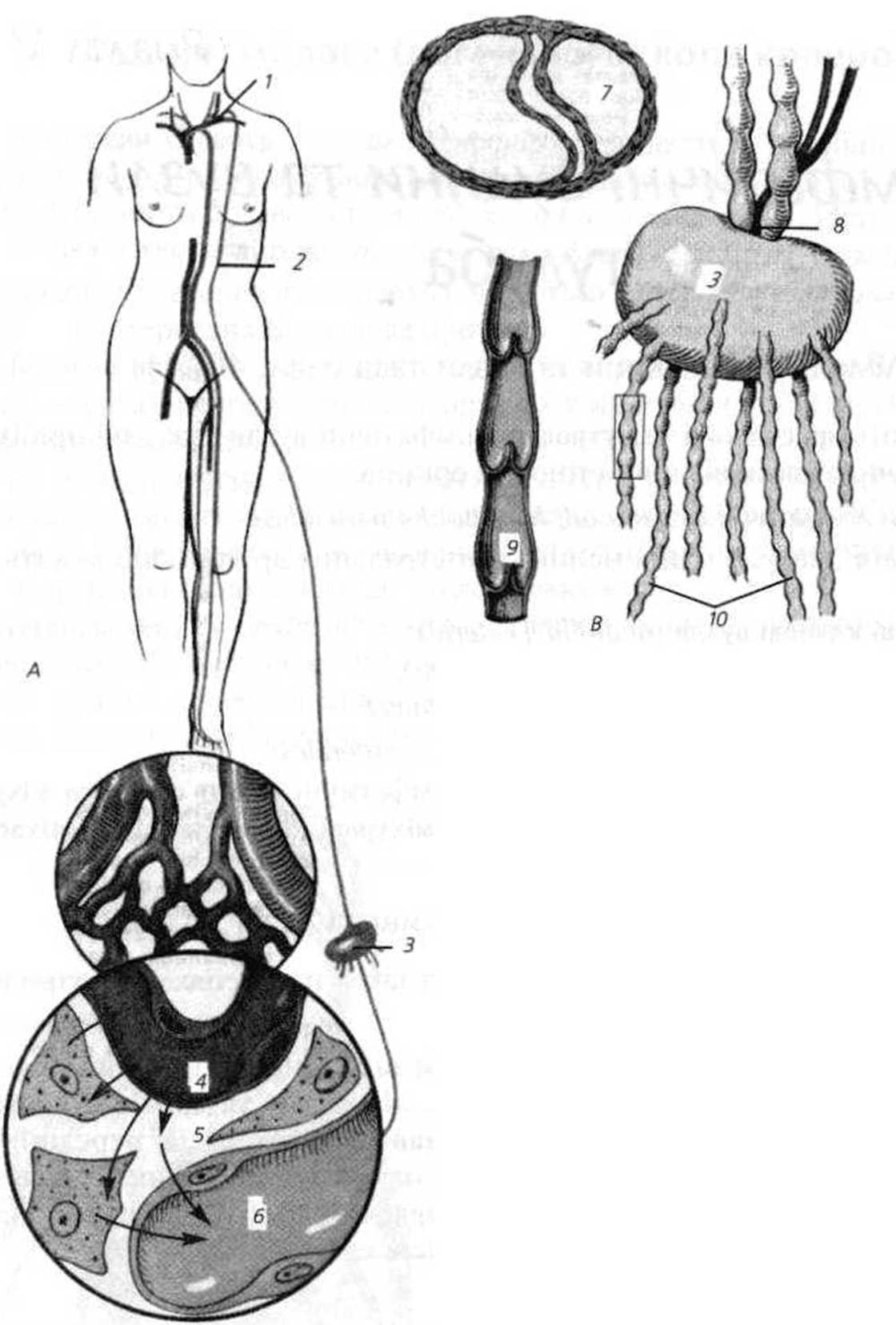
Fig. 40. General diagram of lymph transport pathways.
A:
1 - site of entry of the Thoracic duct (75% of lymph) into the left venous angle;
2 - thoracic duct (ductus thoracicus);
3 - lymph node (nodus lymphoideus);
4 - blood capillary (hemocapillary);
5 - intercellular space;
6 - lymphatic capillary (lymphocapillary)
B:
3 - lymph node with lymphatic vessels;
7 - lymphatic vessel with a valve in cross-section;
8 - efferent lymphatic vessel (vas lymphaticum efferens);
9 - valve and valve sinus (valvula et sinus valvulae) (in section);
10 - afferent lymphatic vessels (vasa lymphatica afferentia)
In the mesentery of the Small Intestine, numbering from 60 to 400 and known as the "superior mesenteric nodes," they constitute the largest regional group in The Human Body. From the central subgroup of these nodes (25%), efferent lymphatic vessels run directly to the thoracic duct, forming the intestinal trunks (trunci intestinales).
Ultimately, lymph from all visceral nodes of the abdomen is drained into the thoracic duct. From the parietal abdominal nodes, lymph flows into the right and left lumbar trunks, which merge to form the cisterna chyli and subsequently the thoracic duct.
Last update: 11/08/2026
Editorial and Educational Adaptation: This material has been compiled based on the primary/original source text. The project team performed an editorial review, corrected technical inaccuracies, structured sections, and adapted the content for an educational format.
What was processed:
- elimination of formatting defects (OCR errors, structural breaks, corrupted characters);
- editorial organization of content;
- standardization of terminology in accordance with academic sources;
- verification of factual statements against the original source text.
All mentions of the author, publication year, and origin of the primary text have been preserved in accordance with the source.