Diagnosis and treatment of patients with recurrent gastroduodenal bleeding - Shaprynskyi V.O. 2009
Surgical treatment of recurrent gastroduodenal ulcer bleeding
Options for gastric resection in recurrent gastric and duodenal ulcers
Gastric resection is one of the most effective operations for PEPTIC ULCER DISEASE resistant to conservative Treatment and with a negative medical vagotomy test.
Since 1881, when Billroth first performed a gastric resection, distal gastric resection was long considered the standard Surgical treatment for peptic ulcer disease. For a long time, there was a search for the most appropriate method to restore gastrointestinal tract continuity. No other resection of any part of the gastrointestinal tract offers such a wide and rich choice of reconstructive Methods compared to the options for GI tract reconstruction after gastric resection.
However, over the last few decades, distal gastric resection has been performed less and less frequently and has limited indications. Gastroenterostomy was one of the first surgical treatments for gastric and duodenal ulcers, with a 50% recurrence rate. Subsequently, gastric resection became the treatment of choice for peptic ulcer disease. After studying the mechanisms of gastric acid secretion and The Role of the Vagus nerve (n.vagus), vagotomy and pyloroplasty gained significant popularity, which reduced the number of resections performed worldwide tenfold. However, with the further advancement of science, the role of gastrin in the Pathogenesis of peptic ulcer disease was proven, leading to the popularity of antrectomy supplemented by truncal vagotomy, which theoretically should have been highly effective in treating PUD. Nevertheless, numerous studies showed that this was only a theoretical justification, and further in-depth Study of the pathogenesis of peptic ulcer disease, as well as the complications arising after gastric resection, replaced these methods with proximal selective vagotomy. Currently, with the proven role of Helicobacter pylori (H. pylori) and its effective treatment with Antibiotics and antisecretory drugs, gastric resection as a surgical treatment for peptic ulcer disease is used very rarely, in exceptional cases of severe, often combined, complications of PUD. At The current stage of surgical development, resection methods are used when ulcer malignancy is suspected or confirmed, as well as in cases of recurrent peptic ulcer disease after previously performed organ-preserving treatments.
After gastric resection, reconstruction of gastrointestinal tract continuity must be performed in a way that minimizes the risk of early and late post-resection syndromes. Given modern knowledge of gastric innervation and motility, the choice of reconstruction method depends on the following factors: the patient's condition, the level of resection, and the surgeon's expertise, which also plays a major role. Reconstruction of gastric continuity can be performed using three main methods: 1) Billroth I (gastroduodenostomy), 2) Billroth II (loop gastrojejunostomy), and 3) Roux-en-Y (end gastrojejunostomy). It should be noted that each type of gastrointestinal reconstruction is characterized by its own early and late post-gastrectomy symptoms.
The extent of distal gastric resection depends on the patient's pathology and the indications for surgical treatment. Antrectomy involves resection of 40-50% of the distal Stomach. Resection of 2/3-3/4 of the distal stomach involves removing 50-80% of The Stomach. During subtotal gastrectomy, 80-99% of the stomach is removed, sparing the gastric fundus. Ultrasubtotal gastrectomy involves removing 99% of the stomach, including the fundus, leaving only a narrow area of the gastric cardia (Fig. 10.4.1; 10.4.2).
Billroth I gastric resection.
GI tract reconstruction after distal gastric resection using the Billroth I modification involves creating a gastroduodenal anastomosis. Performing this operation requires mobilization of the duodenum using the Kocher maneuver, which subsequently reduces suture line tension in the anastomosis area. There are many modifications of this surgical Procedure, which differ from each other in the method of gastroduodenostomy (Fig. 10.4.3).
Gastroduodenostomy (Billroth I) is considered the most physiological method of restoring gastrointestinal tract continuity after distal gastric resection. This method is the most physiological because normal pancreatobiliary neural stimulation by food is preserved, and a feedback neural response to the stomach is present; direct mixing of food with gastric juice and subsequently with duodenal juice occurs, ensuring good Digestion and nutrient absorption; and the contact time of Bile with the gastric mucosa is reduced.
A contraindication to performing gastroduodenostomy is suture tension in the anastomosis area. This situation may occur if a large portion of the stomach is removed or if significant adhesions are present in the duodenal region.
Billroth II gastric resection.
Billroth II (loop gastrojejunostomy) was first performed by Billroth in a patient with gastric antrum Cancer. After distal gastric resection, gastrointestinal continuity was restored by creating a gastrojejunal anastomosis. The jejunal loop can be placed anterior to the transverse colon (antecolic gastrojejunostomy) or posterior to it (retrocolic gastrojejunostomy). Neither type of anastomosis has an advantage over the other in terms of better gastric emptying function; however, when performing distal gastric resection for malignant neoplasms, antecolic gastrojejunostomy is preferred, as retrocolic placement carries a risk of anastomotic stenosis due to disease progression. The afferent loop should be as short as possible and should be anchored to the greater curvature of the stomach. There are many modifications of loop gastrojejunostomy (Fig. 10.4.4).
Today, GI tract reconstruction using the Billroth II modification is performed after resection for gastric malignancies. However, if resection is performed for gastric ulcer disease and high tissue tension is observed along the line of the future anastomosis, preference is always given to Billroth II loop gastrojejunostomy.
Performing the Billroth II modification is not always appropriate during subtotal (greater than 80%) gastric resection, as There is a high risk of alkaline reflux esophagitis, which is extremely difficult to manage medically.
Class="center">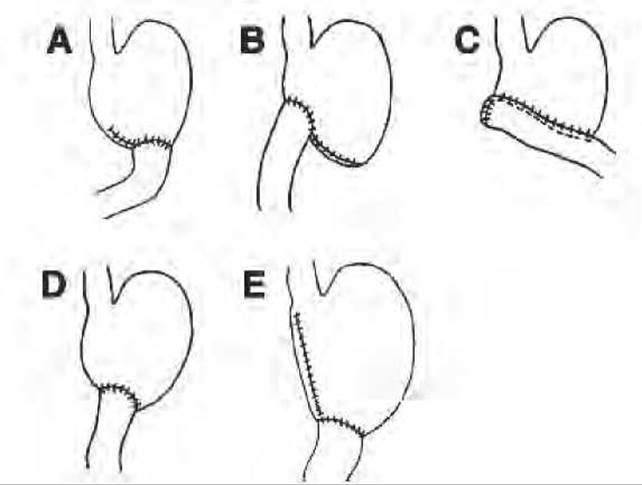
Fig. 10.4.3. Variants of Billroth I gastric resection. (A) Billroth I, (B) Horsley, (C) von Haberer-Finney, (D) von Haberer, (E) Shoemaker.
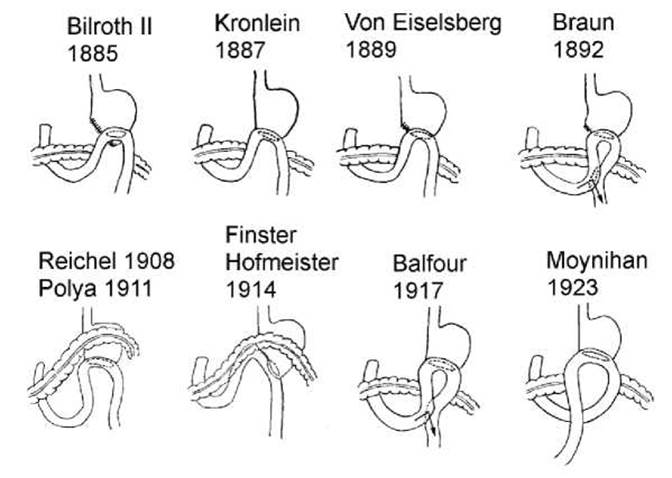
Fig. 10.4.4. Variants of Billroth II loop gastrojejunostomy modifications.
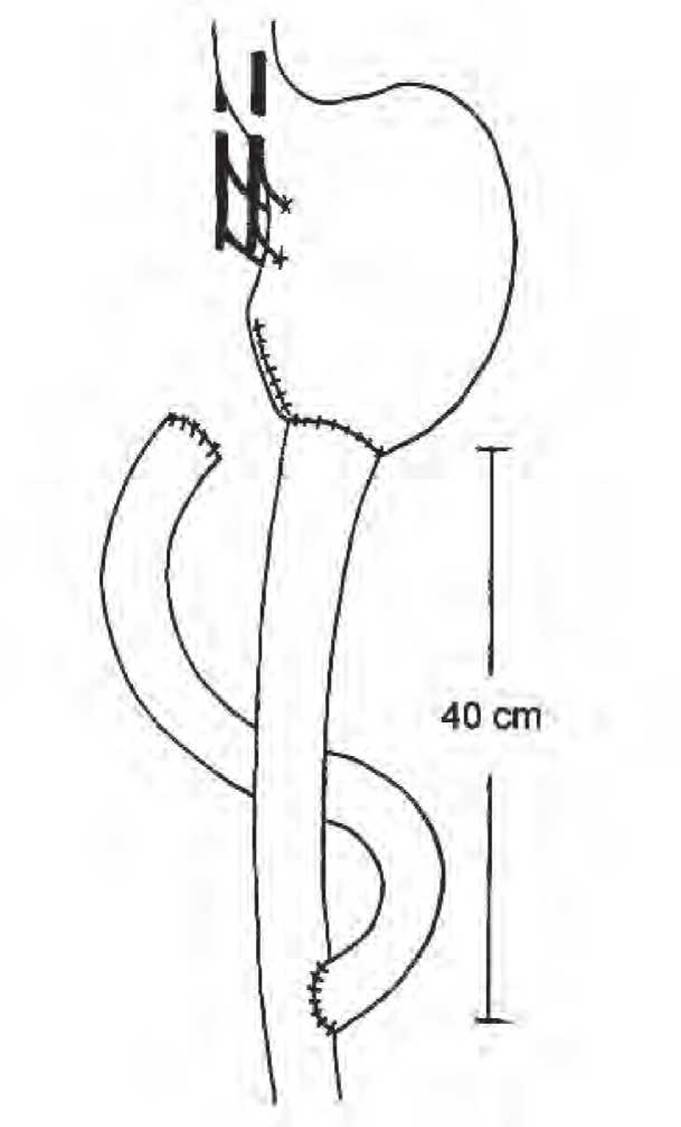
Fig. 10.4.5. Roux-en-Y gastrojejunostomy (Y-shaped anastomosis).
Gastric resection with Roux-en-Y GI tract reconstruction (Y-shaped anastomosis).
The Roux-en-Y gastrojejunal anastomosis is named after Caesar Roux, who popularized this operation in 1980. This operation completely prevents bile from entering the gastric lumen.
This anastomosis is performed as follows: a loop of the Small Intestine is divided 15-20 cm from the ligament of Treitz. The distal end of the divided intestine is anastomosed to the gastric remnant. The proximal end is anastomosed to the small intestine approximately 40 cm distal to the gastrojejunal anastomosis. A length of 40 cm is the most optimal distance of the jejunal limb between the anastomoses, as a shorter loop cannot prevent bile reflux into the stomach, while a longer one leads to gastric stasis and malabsorption syndrome. End gastrojejunostomy can also be antecolic or retrocolic. Each has its advantages. Thus, antecolic placement prevents potential loop stenosis in case of tumor progression, while retrocolic placement provides the shortest path from the stomach to the small intestine and reduces the risk of suture tension in the anastomosis area.
Roux-en-Y end gastrojejunostomy is most commonly performed during subtotal, ultrasubtotal gastric resection, and gastrectomy. It is also frequently used in reoperations when patients have previously undergone gastric resection, for the Surgical Treatment of post-gastrectomy syndromes.
End gastrojejunostomy is contraindicated in the presence of delayed gastric emptying syndrome. If there is no other surgical option, Roux-en-Y gastrojejunostomy should always be performed after a prior ultrasubtotal gastric resection (Fig. 10.4.5).
Last update: 11/08/2026
Editorial and Educational Adaptation: This material has been compiled based on the primary/original source text. The project team performed an editorial review, corrected technical inaccuracies, structured sections, and adapted the content for an educational format.
What was processed:
- elimination of formatting defects (OCR errors, structural breaks, corrupted characters);
- editorial organization of content;
- standardization of terminology in accordance with academic sources;
- verification of factual statements against the original source text.
All mentions of the author, publication year, and origin of the primary text have been preserved in accordance with the source.