Tuberculosis - I.T. Pyatnochka 2005
Historical Overview
Tuberculosis as a disease has been known since ancient times. Its MAIN CLINICAL MANIFESTATIONS were described by Hippocrates, Galen, and Avicenna. The contagious nature of tuberculosis was already asserted in the 16th century by Fracastoro. The first monograph, Phthisiologia, or a Treatise of Consumptions, was published by Richard Morton (1689), who designated the science of tuberculosis as "phthisiology" (derived from the Greek phthisis, meaning wasting or consumption). In the 17th century, the French anatomist Sylvius, describing the affected Lungs of patients who died of consumption, introduced the term "tubercule" (tuberculum). However, it was not until the 19th century in France that pathologists and clinicians G. Bayle and later R. Laënnec proved that the tubercle and caseous necrosis represent the specific morphological substrate of tuberculosis. In 1865, the French physician Jean-Antoine Villemin experimentally demonstrated the infectious nature of tuberculosis, although he was unable to identify the pathogen.
In 1882, the German bacteriologist Robert Koch discovered the CAUSATIVE AGENT OF tuberculosis, which became known as Koch's bacillus (KB). He also was the first to obtain tuberculin in hopes of successfully treating tuberculosis patients. While these expectations were not realized, tuberculin has been used for diagnostic purposes for over a century (Fig. 1).
The clinical and morphological features of tuberculosis in various anatomical locations were studied by Nikolai Pirogov, who was the first to describe the typhoid form of Miliary tuberculosis and the histological Structure OF THE tubercular granuloma. Subsequently, The Study of pathomorphological changes in Pulmonary Tuberculosis was continued by Alexei Abrikosov and Alexander Strukov.
In 1887, Robert Philip founded the world's first tuberculosis dispensary in Edinburgh, Scotland. This novel institution provided patients with both medical and social care, which later laid the foundation for organizing the antituberculosis service in our country as well.
Class="center">
Fig. 1. R. Koch (1843–1910)
In 1882 in Rome, Carlo Forlanini proposed artificial pneumothorax for the Treatment of patients with pulmonary tuberculosis.
In 1895, Wilhelm Conrad Röntgen discovered X-rays, which are still widely used in medicine today. However, it is well established that they had been discovered 17 years earlier by the Ukrainian scientist from Galicia, Ivan Puluj (1845–1918). Nevertheless, Puluj made the official announcement of his discovery 7 days after Röntgen, to whom priority was given and the Nobel Prize was awarded.
In 1909, the first free hospital for tuberculosis patients was opened in Moscow.
A major milestone of the early 20th century was The Development of the BCG vaccine (Bacillus Calmette–Guérin) by French scientists Albert Calmette and Camille Guérin in 1919. Mass vaccination began in 1935. Concurrently, for the active detection of pulmonary tuberculosis, Manuel Abreu introduced mass miniature radiography (photofluorography) for the population in Brazil in 1924.
In 1944, the American bacteriologist from Odesa, Selman Waksman, discovered streptomycin, for which he was awarded the Nobel Prize in Physiology or Medicine (1952). Somewhat later, PAS, thiacetazone, and INH preparations (the most effective being isoniazid, synthesized in Fox's laboratory in Great Britain in 1951) came into clinical practice, and since 1965, rifampicin—the most potent antimycobacterial drug—has been applied.
A significant contribution to the theory and practice of national phthisiology was made by F. H. Yanovsky, who organized the first bacteriological laboratory in Kyiv, established the first sanatoriums, and refined clinical diagnostic Methods.
In 1922, the Kyiv Tuberculosis Institute was established on The basis of the 9th City Tuberculosis Hospital (Kyiv, 32 Otradna St., currently Manuilsky St.). Professor F. H. Yanovsky was the initiator of its creation and the HEAD of the institute's Academic Council (Fig. 2).
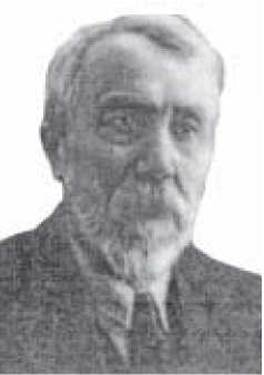
Fig. 2. F. H. Yanovsky (1860–1928)
The luminaries of phthisiology rightfully include our compatriots O. A. Kysel, O. S. Mamolat, M. M. Amosov, M. S. Pylypchuk, B. P. Yashchenko, Yu. I. Feshchenko, V. M. Petrenko, J. B. Bialyk, O. V. Panasiuk, V. P. Melnyk (Kyiv), B. M. Khmelnytsky, A. H. Khomenko (Kharkiv), I. T. Stukalo, and Yu. V. Kulachkovsky (Lviv).
Last update: 10/08/2026
Editorial and Educational Adaptation: This material has been compiled based on the primary/original source text. The project team performed an editorial review, corrected technical inaccuracies, structured sections, and adapted the content for an educational format.
What was processed:
- elimination of formatting defects (OCR errors, structural breaks, corrupted characters);
- editorial organization of content;
- standardization of terminology in accordance with academic sources;
- verification of factual statements against the original source text.
All mentions of the author, publication year, and origin of the primary text have been preserved in accordance with the source.