Intensive Care of Acute Poisoning - A. V. Hovenko 2010
General characteristics of acute poisoning
Exotoxic Shock
Treatment of exotoxic shock
The Treatment of Exotoxic Shock combines etiotropic, pathogenetic, and symptomatic approaches.
Exotoxic shock progresses rapidly; therefore, early therapeutic interventions—starting at the pre-hospital stage—are of critical importance. The General Principles of comprehensive management for exotoxic shock are shown in Fig. 1.
The core principles of anti-shock therapy in Acute Poisoning include:
- restoration of adequate hemocirculation;
- accelerated elimination of the toxin from the body;
- restoration of impaired organ and system Functions, taking into account the selective toxicity of chemical compounds.
The hypovolemic nature of shock in acute poisoning and severe Circulatory Disorders necessitate the restoration of adequate circulating Blood volume (CBV) while simultaneously normalizing its rheological properties. The Development of shock occurs during the toxicogenic stage of acute poisoning, when the chemical agent remains in the body and exerts its specific toxic effect. Its continued presence leads to Functional and Structural damage across various Organs and systems, driving the progression and irreversibility of shock, and potentially causing death. Consequently, treatment can only be successful if the toxic substance or its metabolites are removed from the body early and completely.
Colloidal, crystalloid, and salt-free solutions should be included in the infusion therapy for exotoxic shock.
Class="center">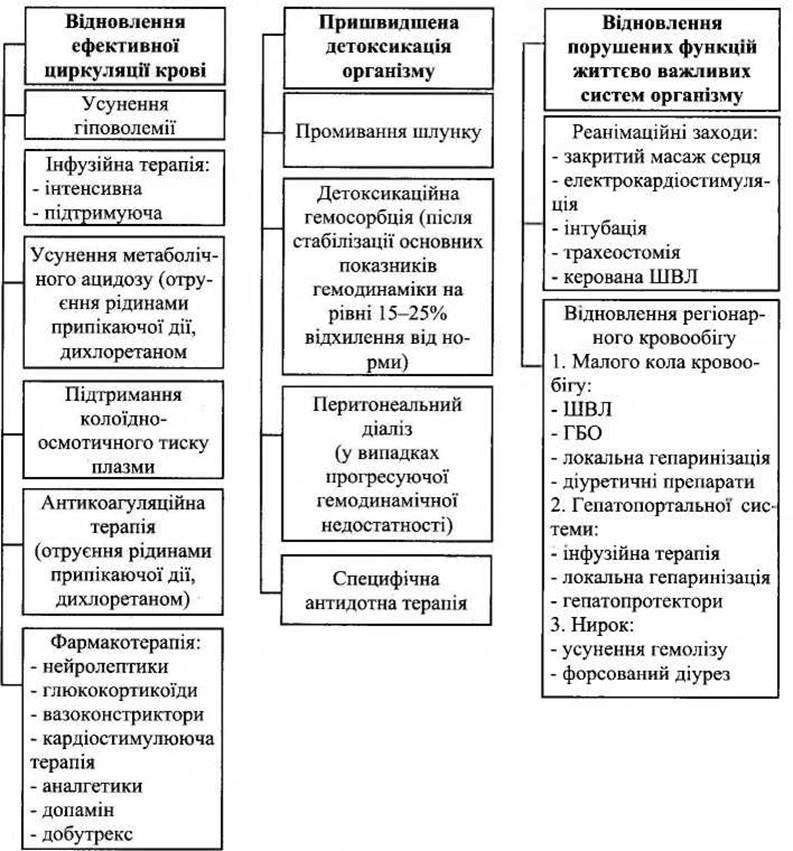
Fig. 1. Management scheme for exotoxic shock.
The volume, duration, and infusion rate of solutions are determined by the severity of hemodynamic disorders in each specific case and the stabilization of hemodynamic parameters. Patients presenting with decompensated shock, marked by sharply reduced key hemodynamic indicators (by 50% or more) and blood pressure dropping below 80 mm Hg, require intensive infusion therapy: rapid IV bolus administration of 400–500 mL of colloidal solutions, followed by continuous drip infusion at a rate of 750–1000 mL/h using an infusion pump. Intensive infusion therapy is continued until hemodynamic parameters improve by 40–50% from baseline. As a rule, the total volume of administered fluid amounts to 2–3 L.
Subsequently, maintenance infusion therapy is administered via intravenous drip at a rate of 300–500 mL/h. The fluid volume ranges from 3–5 L per day, though it may be increased when clinically indicated.
One of the primary complications during infusion therapy is Pulmonary Circulation overload, which is difficult to predict even with dynamic central venous pressure monitoring. A reliable criterion for the early Diagnosis of pulmonary hyperhydration is pulmonary artery pressure measured via a Swan-Ganz catheter, or circulating blood volume (CBV) measured by impedancemetry. An increase exceeding 20% of the control value (18 mL/100 g of tissue) serves as an indication to restrict infusion, while an increase of 40% or more indicates that infusion should be discontinued.
Last update: 08/08/2026
Editorial and Educational Adaptation: This material has been compiled based on the primary/original source text. The project team performed an editorial review, corrected technical inaccuracies, structured sections, and adapted the content for an educational format.
What was processed:
- elimination of formatting defects (OCR errors, structural breaks, corrupted characters);
- editorial organization of content;
- standardization of terminology in accordance with academic sources;
- verification of factual statements against the original source text.
All mentions of the author, publication year, and origin of the primary text have been preserved in accordance with the source.