Human Anatomy Part 1 - K. A. Dyubenko, A. K. Kolomiytsev, Yu. B. Chaykovsky 2002
Special Part
Urinary System, systema urinarium - General Information
Urinary Organs - Urinary Bladder - Topography of the Urinary Bladder
Skeletotopy. The Urinary Bladder is located in the anterior part of the lesser pelvis, directly behind the Pubic Symphysis. In infants and young children, the greater part of the bladder lies above the symphysis, whereas in the elderly, it is situated deep within the pelvic cavity.
Anteriorly, the urinary bladder is adjacent to the pubic symphysis and pubic bones, from which it is separated by a layer of loose Connective Tissue. Fractures of these bones may result in bladder injury. Between the urinary bladder and the pubic symphysis lies the retropubic space (spatium retropubicum).
Class="center">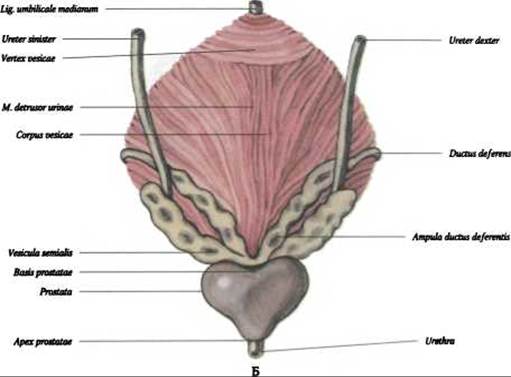
Fig. 312. Urinary bladder (vesica urinaria):
B — posterior view (after F. Kiss and J. Szentágothai)
Syntopy. The Base of the urinary bladder is adjacent to the Prostate Gland (prostata), which closely embraces the neck of the bladder and the initial part of the Urethra, resting above the pelvic Diaphragm. Posterior to the bladder lie the Seminal Vesicles and the ampullae of the Ductus Deferentes. The posterior wall of the bladder is related to the rectum in males, and to the Uterus and Vagina in females. The Ureter runs along the posterolateral surface of the urinary bladder. On its lateral surfaces are the ductus deferentes, Branches of the internal iliac vessels, and the vesical venous plexus. The peritoneal-covered areas of the urinary bladder are in contact with loops of the sigmoid colon, Small Intestine, and occasionally the transverse colon.
Last update: 08/08/2026
Editorial and Educational Adaptation: This material has been compiled based on the primary/original source text. The project team performed an editorial review, corrected technical inaccuracies, structured sections, and adapted the content for an educational format.
What was processed:
- elimination of formatting defects (OCR errors, structural breaks, corrupted characters);
- editorial organization of content;
- standardization of terminology in accordance with academic sources;
- verification of factual statements against the original source text.
All mentions of the author, publication year, and origin of the primary text have been preserved in accordance with the source.