FISHES OF THE FAMILY CYPRINIDAE IN THE WATER BODIES OF UKRAINE - V. V. Zamorov - 2015
GENUS BIGHEAD CARP (ARISTICHTHYS) - ARISTICHTHYS OSHIMA
A keel on the belly is present only from the Base of the pelvic fins to the anus. Gill rakers are not fused together (247-294). The chewing surface of the pharyngeal Teeth lacks grooves. One species is known in South China. It has been acclimatized in many other regions, including Ukraine.
Bighead carp - Aristichthys nobilis (Richardson)
Morphological features: D III 7; A III 11-13; P I 16-18; VII 78; C I 17 I; l. l. 96-113; Squ1 27-33, Squ2 24-28, vert. 36-41, sp. br. 247294, sp. br.2 428-478, d. f. 4-4. Maximum length 100 cm, body weight up to 20 kg, lifespan up to 20 years (Fig. 59).
The body is deep and laterally compressed. In fish with a standard length l of 46.2 cm (43.8-48.5) on average, the maximum body depth is 28.7% of l, which is twice the maximum body width and 2.8 times the minimum body depth.
Class="center">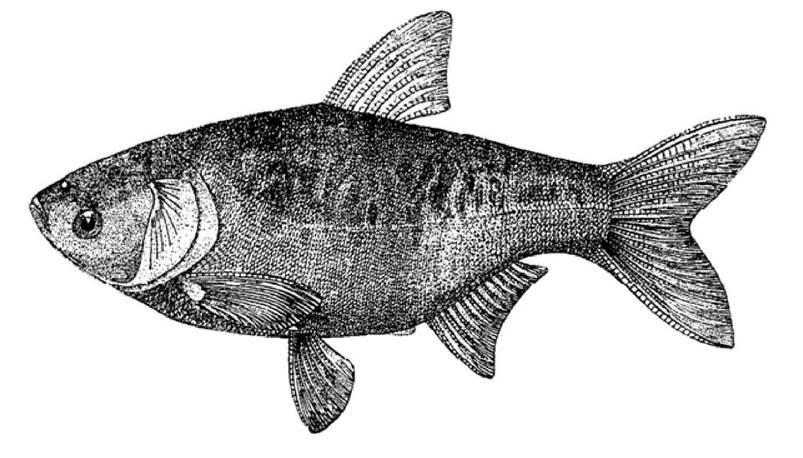
Fig. 59. Bighead carp Aristichthys nobilis
The dorsal profile of the body rises from the anterior end of the HEAD in a moderately gentle semi-arc, with the highest point located at the Water/144.html">Origin of the dorsal fin base. The predorsal distance is equal to half of l. The ventral profile is curved in a steeper arc, with the pelvic fins positioned at its midpoint. The dorsal margin of the body is slightly rounded, while the ventral margin is sharper, featuring a somewhat indistinct keel extending from the base of the pelvic fins to the anus. The caudal peduncle is of moderate length, deep, and laterally compressed; its length (18% of l) is 1.7 times greater than its depth and almost equals the P-V distance. The bases of the unpaired fins are of moderate size. The length of the dorsal fin base (11.1% of l) is nearly equal to the height of the anal fin, and the height of the former (16.1% of l) slightly exceeds the base length of the latter.
The pectoral fins are large, with a length of about 1/5 of l; their tips are pointed and extend well beyond the base of the pelvic fins. The remaining fins have rounded tips, especially in juveniles. The notches in the dorsal and anal fins are slight, while the caudal fin has a moderately rounded excavation. The lobes of the caudal fin are relatively short; the length of the lower lobe is slightly, and that of the upper lobe noticeably, greater than the height of the dorsal fin. All fins have a rather thick membrane. The body scales are small, particularly towards the dorsal and ventral margins. The lateral line originates with seismosensory channels on the head behind the nostrils, runs along the sides of the forehead to the top of the gill opening, and then continues onto the body. Here it is uneven, initially running slightly downwards and backwards (over the first 10-12 scales), and then, intersecting the vertical line through the midpoint of the P-V distance, it assumes a horizontal position, sometimes forming a small upward bend at this point. In some cases (as an anomaly), it is interrupted here, and occasionally even bifurcated.
The head is relatively large, deep, rounded-conical, and somewhat pointed at the anterior end. Its length is noticeably less than 1/3 of l and very close to the maximum body depth. Expressed as a percentage of head length, its depth is 77.1%. The Mouth is semi-superior, with its apex situated above the horizontal axis of the body. The length of the upper jaw is slightly less, and that of the lower jaw noticeably greater than 1/3 of the head length. The forehead is broad, its width being slightly less than 1/2 of the head length. The eyes are small, widely spaced, positioned very low (with the center of the eye below the horizontal axis of the body), and located much closer to the anterior end of the head (snout length is 38.1% of c) than to the posterior end (postorbital distance is 54.8% of c). The operculum is broad and covered with radial grooves diverging from its apex. The gill membranes are thick, very wide, and reliably seal the gill opening when water is pumped into the Oral Cavity.
The species is distributed in the rivers and lakes of South China, and has been recorded in the Amur River basin since 1960.
An introduced species. Along with other Amur species (such as topmouth gudgeon and grass carp), it was brought to Ukraine in the 1950s. Because natural reproduction conditions are absent in Ukraine, only artificial propagation is practiced.
Last update: 07/08/2026
Editorial and Educational Adaptation: This material has been compiled based on the primary/original source text. The project team performed an editorial review, corrected technical inaccuracies, structured sections, and adapted the content for an educational format.
What was processed:
- elimination of formatting defects (OCR errors, structural breaks, corrupted characters);
- editorial organization of content;
- standardization of terminology in accordance with academic sources;
- verification of factual statements against the original source text.
All mentions of the author, publication year, and origin of the primary text have been preserved in accordance with the source.