THE CARP FAMILY (CYPRINIDAE) OF UKRAINIAN WATER BODIES - V. V. Zamorov - 2015
THE GENUS SILVER CARP (HYPOPHTHALMICHTHYS) - HYPOPHTHALMICHTHYS BLEEKER
Body laterally compressed. Dorsal fin short (seven
branched rays), without a thickened bony ray, positioned slightly behind the vertical of the pelvic fin base; anal fin elongated at the base (11-15 branched rays). Scales very small (l. l. 110-125). A sharp keel runs along the ventral side of the body from the throat to the anus. Eyes located very low, below the longitudinal axis of the body. Barbels absent. Mouth semi-superior, oblique in lateral view, its tip situated above the longitudinal axis of the body. Pharyngeal bones with large through-openings. Pharyngeal Teeth robust, uniserial, 4 - 4, strongly compressed, with a striated masticatory surface adapted for squeezing out planktonic Algae. Gill membranes not fused to the interbranchial septum, but joined together to form a large fold across the interbranchial septum. Gill rakers very long, thin, connected to each other into a continuous ribbon along the entire anterior margin of the gill arch. In adult fish, there are up to 13-14 rakers per 1 mm of the gill arch. Above each epibranchiale on the inner side, There is a special suprabranchial organ, the Structure and likely function of which ("suction" of pressed planktonic food into the Pharynx) has been described in detail in the literature.
Intestinal length exceeds body length (l) more than tenfold.
Silver carp - Hypophthalmichthys molitrix (Valenciennes)
Morphological features: D III 7; A III 11-15, P I 17; V II 7; C I 17 I; l. l. 103-118; Squ1 24-32, Squ2 16-23, vert. 36-38, sp. br. 652-811, d. f. 4-4. Maximum length 100 cm, weight up to 16 kg or more, lifespan up to 20 years (Fig. 58).
Body slightly elongated, deep, noticeably compressed laterally. Scales very small, especially near the dorsal and ventral margins of the body. The lateral line originates at the upper point of the gill opening and runs backward unevenly, first curving down toward the Base of the pectoral fin, then horizontally to the end of the anal fin, and further along the median axis of the caudal peduncle.
Class="center">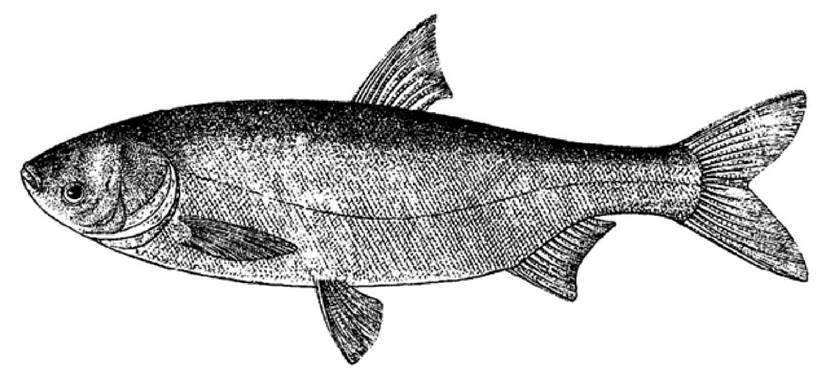
Fig. 58. Silver carp Hypophthalmichthys molitrix
The keel along the ventral margin of the body extends from the throat to the anus, being more distinct in the V-A interval (in the form of a low membrane), covered with scales only at the very beginning and naked further back. The dorsal fin originates on the vertical of the mid-pelvic fin and is obliquely truncated posteriorly. Pectoral fins extend beyond the Water/144.html">Origin of the pelvic fins, sometimes only reaching them, and rarely falling short. Caudal fin fairly long, deeply notched. The operculum features radial striation diverging fan-wise from its upper corner. Eye relatively large, surrounded by a fairly prominent fold that is more distinct anteriorly. Lower jaw longer, with a tubercle at the anterior end; upper jaw has a weak notch at the corresponding position.
In 16 silver carp specimens with a mean body length (l) of 37.2 cm, certain body proportions were noted based on mean plastic characters. Body depth H approaches 1/3 l, antedorsal distance equals half of l, postdorsal distance constitutes 40.3% l, anteventral 44.8%, and anteanal 68.6%. The maximum body thickness, pelvic fin length, and anal fin base length fall within the range of 14.3% and 16.8%. The length of the lower lobe of the caudal fin equals 1/5 l, the upper lobe is slightly less, as is the length of the pectoral fin, while the P-V distance is slightly greater. The height of the dorsal fin constitutes 1/10 l; body depth h and anal fin height are somewhat greater. The V-A distance and HEAD length are slightly greater than 1/4 l. As a percentage of head length, head height is 83.6, and eye diameter is 13.9. Upper jaw length is slightly greater than 1/4 c, lower jaw approaches 1/3, and snout length exceeds 1/3. Forehead width is close to 1/2, and the postorbital distance is significantly greater.
The species is distributed in rivers and lakes of the Amur basin in the north down to the Yangtze and Xijiang basins in the south.
Introduced species. Along with other Amur species (topmouth gudgeon, grass carp), it was brought to Ukraine in the 1950s. Finding no conditions for natural reproduction in Ukraine, it is propagated exclusively through artificial breeding.
Last update: 07/08/2026
Editorial and Educational Adaptation: This material has been compiled based on the primary/original source text. The project team performed an editorial review, corrected technical inaccuracies, structured sections, and adapted the content for an educational format.
What was processed:
- elimination of formatting defects (OCR errors, structural breaks, corrupted characters);
- editorial organization of content;
- standardization of terminology in accordance with academic sources;
- verification of factual statements against the original source text.
All mentions of the author, publication year, and origin of the primary text have been preserved in accordance with the source.