FISHES OF THE FAMILY CYPRINIDAE IN THE WATER BODIES OF UKRAINE - V. V. Zamorov - 2015
GENUS GRASS CARP - CTENOPHARYNGODON STEINDACHNER
Body elongate, slender, and slightly compressed laterally. The back in front of the dorsal fin and the belly behind the Base of the pelvic fins are not laterally compressed. The origins of the dorsal and pelvic fins lie on almost the same vertical line. Scales are medium-sized. The lateral line (40-45 scales) runs along the middle of the body. Well-developed seismosensory canals are present on the HEAD. The interorbital space is wide. The Mouth is subterminal, with its posterior margin aligned with the
vertical of the anterior margin of the eye. The opercle features radial grooves. Gill rakers are short and sparse, numbering about 12. Pharyngeal Teeth are biserial, 2.5-4.2, 2.4-4.2, 2.4-5.2, 1.4-5.2, 2.5-5.2, sharply serrated; their crowns are strongly compressed laterally, laterally folded, with a longitudinal groove on the masticatory surface. The Peritoneum is dark brown (almost black). In other morphological characters, it resembles the genus Leuciscus and is closely related to the genus Scardinius. Represented by a single species in East Asia. An acclimatized species.
Grass carp - Ctenopharyngodon idella (Valenciennes)
Morphological features: D III 7; A III 8; P I 15-18; V 8; C I 17 I; L. l. 37-42; Squ1 7-8, Squ2 9-10; vert. 41-46; sp. br. 15-18; d. f. 2.5-5.2, (2.4-4.2). Maximum length 120 cm, weight over 3000 g, lifespan exceeds 25 years (Fig. 57).
Class="center">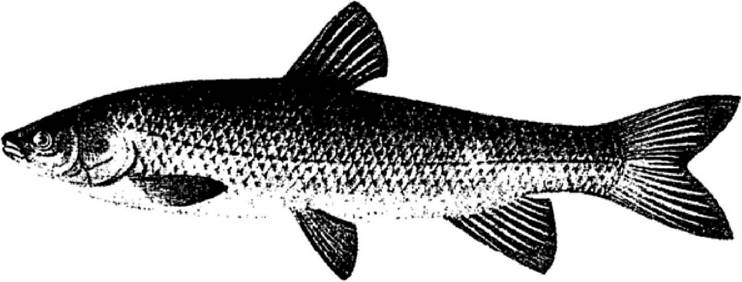
Fig. 57. Grass carp Ctenopharyngodon idella
Body moderately deep, thickened, and slender, with its maximum body depth (H) approximately equaling one-fourth of the body length (l) and exceeding the maximum body width by more than one and a half times. Behind the occiput, the dorsal profile rises almost straight, with a barely perceptible slope, to the Water/144.html">Origin of the dorsal fin base, and then immediately slopes down to the level of the upper base of the caudal fin. The ventral profile behind the head is nearly horizontal up to THE ORIGIN OF the anal fin base, rising only slightly thereafter to the level of the lower base of the caudal fin.
The caudal peduncle is moderately elongated and low; its length averages 16.5% of l and exceeds the minimum body depth by 1.3 times. The origins of the dorsal (D) and pelvic (V) fins are located on almost the same vertical line passing through the midpoint of l. The preanal distance is 76.5% of l. The V-A distance is nearly equal to H and one-fourth of l, while the P-V distance is noticeably greater. The postdorsal distance is 2.5 times the length of the caudal peduncle. The length of the anal fin base, particularly the dorsal fin base (D), is close to 1/10 of l. The unpaired fins are moderately high: the height of D equals the length of the caudal peduncle, whereas the height of A is 1.3 times smaller.
The length of the paired fins is moderate; the pectoral fin length is one and a half times smaller than the P-V distance, and the pelvic fin length is correspondingly smaller than the V-A distance. The caudal lobes are short; the length of the upper lobe equals P, while the lower lobe is slightly longer, approaching 1/5 of l. The head is of medium length, one-fourth of l, and high. As a percentage of head length, head height is 74.3%. The eyes are of moderate size (eye diameter is 16.5% of l), positioned fairly low on the sides of the head at the level of the longitudinal body axis, and are one and a half times closer to the tip of the snout than to the posterior margin of the opercle. The forehead is broad, noticeably wider than the postorbital distance, which constitutes 55.2%. The mouth is small and terminal. The length of the upper jaw is slightly less than, and that of the lower jaw slightly greater than, 30% of the head length. The intestine length in grass carp is 2.3-2.6 times l, which is associated with its herbivorous diet consisting of higher aquatic vegetation.
The species is distributed in rivers and lakes of the Amur River basin in the north down to the Xi Jiang River basin in the south.
An introduced species. Brought to Ukraine in the 1950s. Because natural reproduction conditions are absent in Ukraine, it is maintained exclusively through artificial propagation.
Last update: 07/08/2026
Editorial and Educational Adaptation: This material has been compiled based on the primary/original source text. The project team performed an editorial review, corrected technical inaccuracies, structured sections, and adapted the content for an educational format.
What was processed:
- elimination of formatting defects (OCR errors, structural breaks, corrupted characters);
- editorial organization of content;
- standardization of terminology in accordance with academic sources;
- verification of factual statements against the original source text.
All mentions of the author, publication year, and origin of the primary text have been preserved in accordance with the source.