PLANT BIOPHYSICS - Y. I. Posudin - 2004
II. TRANSPORT PROCESSES IN THE SOIL-PLANT-ATMOSPHERE SYSTEM
11. ELECTRICAL TRANSPORT
11.3. MEASUREMENT OF ACTION POTENTIALS
Electrochemical Methods rely on the ability of redox reactions to proceed not only upon direct contact but also when spatially separated. Consider a reductant Red1 and an oxidant Ox2 placed in separate vessels. If metal electrodes are immersed into the solutions and connected by an external conductor, while the solutions are joined by a salt bridge (Fig. 11.1), the reductant will donate electrons to the first electrode E1 and undergo oxidation (Red->Ox1). Electrons will flow through the external circuit to the second electrode E2, which transfers them to the oxidant, causing the latter to be reduced (Red7->Ox2). Thus, the following reaction takes place:
Class="center">

Fig. 11.1. Principle of operation of electrochemical methods (explanation in the text).
This process is accompanied by electron transport through the external circuit and ion transport through the internal circuit. If the external circuit prevents electron flow, such an electrochemical Cell can be used for potential measurements.
One of the electrodes must respond to Changes in the concentration of the substance being determined. This electrode is called the indicator or working electrode. To prevent it from reacting with sample components, it is made of noble metals (Hg, Pt, Au) or inert Materials (such as graphite).
The second electrode is called the reference electrode; it serves as a baseline reference for the parameter measured by the indicator electrode. Silver-silver chloride (AgCl) or calomel (Hg7Cl2) electrodes are commonly used. The appearance of a reference electrode is shown in Fig. 11.2.

Fig. 11.2. Appearance of the reference electrode: 1 - sleeve, 2 - Glass tube, 3 - electrode, 4 - stopper, 5 - cotton plug, 6 - electrolyte solution, 7 - silver chloride Column.
A typical setup for measuring resting and action potentials is shown in Fig. 11.3. The indicator electrode (Ag/AgCl or Hg7Cl2), which is in contact with the plant, transmits a signal to an electrometer with a high input impedance (200 TΩ). The electrometer is interfaced with a computer for signal Processing and analysis. The reference electrode makes contact with the Base of the plant.
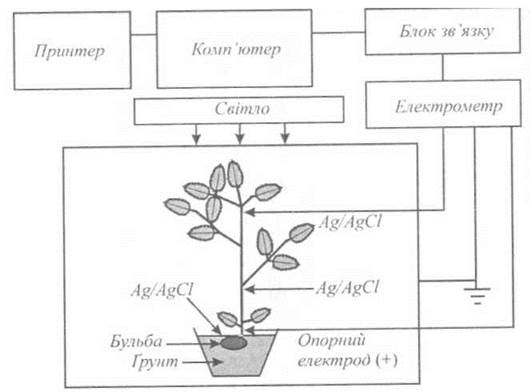
Fig. 11.3. Typical setup for measuring resting and action potentials.
Last update: 07/08/2026
Editorial and Educational Adaptation: This material has been compiled based on the primary/original source text. The project team performed an editorial review, corrected technical inaccuracies, structured sections, and adapted the content for an educational format.
What was processed:
- elimination of formatting defects (OCR errors, structural breaks, corrupted characters);
- editorial organization of content;
- standardization of terminology in accordance with academic sources;
- verification of factual statements against the original source text.
All mentions of the author, publication year, and origin of the primary text have been preserved in accordance with the source.