BIOLOGY Volume 2 - A Guide to General Biology - 2004
12. MICROBIOLOGY AND BIOTECHNOLOGY
12.17. Biosensors
12.17.2. Monitoring Blood Glucose Levels
A widely used example of a biosensor is the Blood glucose meter employed by diabetic patients (Fig. 12.31). The biosensor contains the enzyme glucose oxidase in an immobilized form. The enzyme oxidizes the glucose in the blood, releasing electrons that generate an electric current proportional to The amount of glucose present. The biosensor is highly sensitive, capable of measuring glucose concentration in a single drop of blood and providing results within 20 seconds.
It is hoped that in the future such sensors could be implanted into the Blood Vessels beneath the Skin of diabetic patients, enabling them to monitor their Insulin requirements more precisely. If a biosensor were connected to a mini-pump so that it could automatically administer insulin when needed, the patient would effectively be provided with an artificial Pancreas. Such fine control would help reduce the secondary complications of diabetes, such as eye and Kidney damage, which occur in some patients As a result of sharp spikes in insulin concentration following injections.
Class="center">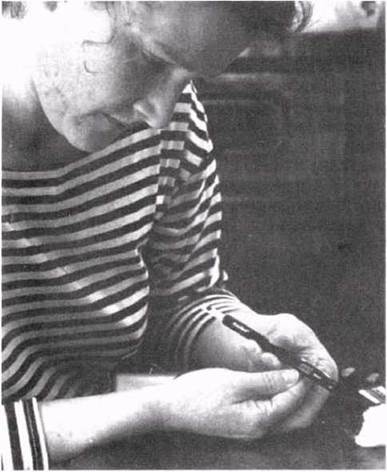
Fig. 12.31. A patient measuring their blood sugar level using an Exactech biosensor. After a pinprick, the patient places a drop of blood onto the test strip (protruding on the left in the photo). The digital display shows the blood sugar level, enabling the patient to accurately calculate the required insulin dose.
Last update: 06/08/2026
Editorial and Educational Adaptation: This material has been compiled based on the primary/original source text. The project team performed an editorial review, corrected technical inaccuracies, structured sections, and adapted the content for an educational format.
What was processed:
- elimination of formatting defects (OCR errors, structural breaks, corrupted characters);
- editorial organization of content;
- standardization of terminology in accordance with academic sources;
- verification of factual statements against the original source text.
All mentions of the author, publication year, and origin of the primary text have been preserved in accordance with the source.