BIOLOGY Volume 2 - A Guide to General Biology - 2004
16. PLANT COORDINATION AND REGULATION
16.2. Plant Growth Substances
16.2.9. Ethylene (Ethene)
Discovery of the Plant Growth-Regulating Properties of Ethylene
By the early 1930s, it was known that ethylene gas accelerates the ripening of citrus fruits and exerts various effects on plant growth. It was later established that a gas with similar effects is produced by certain fruits, such as bananas. In 1934, it was discovered that ripening apples release ethylene itself, and even later it was shown that ethylene is produced by A wide variety of ripe fruits and other plant Organs, especially when damaged. Trace amounts of ethylene are emitted by virtually all plant organs.
Structure of Ethylene
The structural formula of ethylene is shown in Fig. 16.25.
Class="center">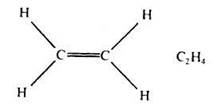
Fig. 16.25. Structural formula of ethylene (ethene).
Synthesis and Distribution of Ethylene
As noted above, ethylene is produced by many, and possibly all, plant organs. Although ethylene is a gas, it generally does not diffuse freely through the internal air spaces of a plant because it rapidly escapes into the surrounding environment. However, it has been demonstrated that a Water-soluble precursor of ethylene is transported via the xylem from waterlogged roots to the shoots.
Effects of Ethylene
Ethylene is best known for its stimulating effect on fruit ripening, which is accompanied by a sharp increase in Respiration rate (the so-called Climacteric phase) in certain species (Section 16.3.5). Like ABA, it sometimes acts as a growth inhibitor and can induce the abscission of fruits and leaves. Its effects are summarized in Table 16.4.
Practical Applications OF Ethylene
Ethylene induces flowering in pineapples and stimulates the ripening of tomatoes and citrus fruits. To delay fruit ripening, produce is often stored under oxygen-depleted conditions, and ripening is subsequently controlled by introducing an oxygen-ethylene mixture. The patented compound ethephon decomposes to release ethylene upon application; it is sprayed onto rubber trees to stimulate the flow of latex from their trunks.
Last update: 06/08/2026
Editorial and Educational Adaptation: This material has been compiled based on the primary/original source text. The project team performed an editorial review, corrected technical inaccuracies, structured sections, and adapted the content for an educational format.
What was processed:
- elimination of formatting defects (OCR errors, structural breaks, corrupted characters);
- editorial organization of content;
- standardization of terminology in accordance with academic sources;
- verification of factual statements against the original source text.
All mentions of the author, publication year, and origin of the primary text have been preserved in accordance with the source.